
A medical expert offers commentary on the recent FDA accelerated approval of pirtobrutinib, discussing the implications of the BRUIN trial findings that supported this decision for chronic lymphocytic leukemia treatment.
A medical expert offers commentary on the recent FDA accelerated approval of pirtobrutinib, discussing the implications of the BRUIN trial findings that supported this decision for chronic lymphocytic leukemia treatment.
Hua-Jay “Jeff” Cherng, MD, discusses efficacy and safety considerations for the use of bispecific antibodies in patients with DLBCL.
Linvoseltamab induced durable responses in patients with relapsed or refractory multiple myeloma, including those with high-risk features.
Sunil Iyer, MD, discusses the design of the phase 3 COMMANDS trial in patients with lower-risk myelodysplastic syndrome with anemia.
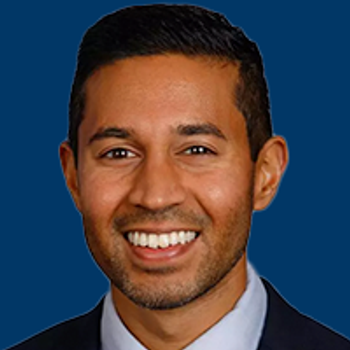
Sunil Iyer, MD, expands on the potential role of imetelstat for select patients with lower-risk myelodysplastic syndrome.
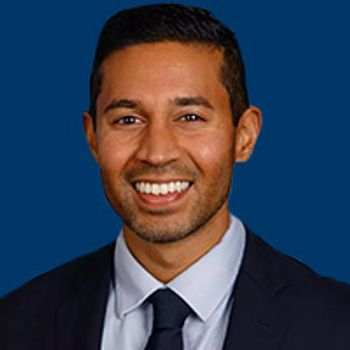
Sunil Iyer, MD, expands on the impact of the FDA’s approval of luspatercept on the management of lower-risk myelodysplastic syndrome.
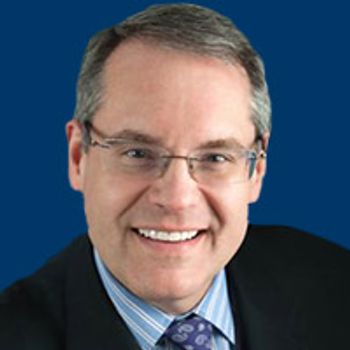
Joseph G. Jurcic, MD, discusses the benefits and limitations of several JAK inhibitors for patients with myelofibrosis.
In case you missed it, read a recap of every episode of OncLive On Air recorded in January 2024.
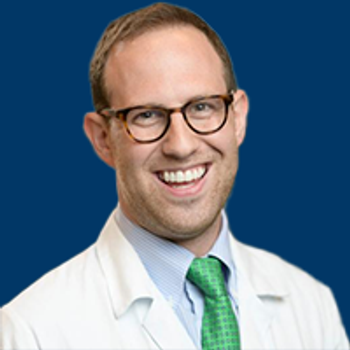
The Herbert Irving Comprehensive Cancer Center has developed processes to actively screen any patient with a relevant mutation for an open trial.
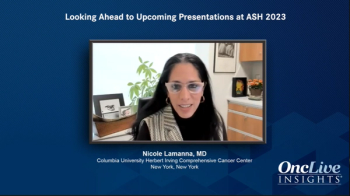
Nicole Lamanna, MD, looks ahead at the future of treatment of B-cell malignancies, highlighting exciting therapeutic developments.
A hematologist/oncologist discusses ongoing research on targeted therapy for patients with relapsed/refractory chronic lymphocytic leukemia.
Comprehensive insights on clinical and patient factors that inform treatment selection and sequencing for patients with B-cell malignancies.
In case you missed it, here is a recap of the most popular episodes of OncLive On Air® from 2023.
Expert perspectives on the toxicities seen with targeted therapies in chronic lymphocytic leukemia and how they’re mitigated and managed.
An expert on hematologic malignancies discusses recent data from ASH 2023 in relapsed/refractory CLL/SLL, highlighting the ALPINE study investigating zanubrutinib versus ibrutinib.
Nicole Lamanna, MD, discusses the results from the ongoing BGB-11417-101 study investigating combination zanubrutinib plus sonrotoclax in patients with treatment-naïve CLL/SLL.
A hematologist/oncologist previews updated data presented at ASH 2023 for patients with B-cell malignancies.
Nicole Lamanna, MD, gives an overview of targeted therapies and the role of prognostic markers in the treatment of B-cell malignancies.
Expert insights into the evolving treatment landscape for chronic lymphocytic leukemia (CLL), emphasizing upcoming clinical data to be presented at ASH 2023.
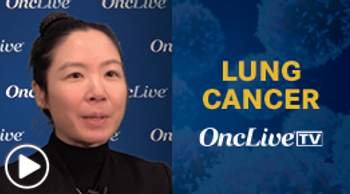
Catherine Ann Shu, MD, discusses key therapeutic advances in the adjuvant setting for patients with early-stage non–small cell lung cancer.
Nicole Lamanna, MD, discusses how the use of novel agents could address resistance associated with current treatment options for patients with chronic lymphocytic leukemia.
Nicole Lamanna, MD, discusses the challenges of resistance in patients with CLL, highlights treatment being developed for patients who progress on BTK inhibitor– or venetoclax-based regimens, and emphasizes the need for further enrollment onto clinical trials.

Moshe Kelsen, MBA, discusses ongoing initiatives that aim to improve diversity, equity, and inclusion for patients with cancer receiving treatment at Columbia University.
Jennifer Effie Amengual, MD, discusses considerations for community oncologists looking to refer patients with relapsed/refractory follicular lymphoma (FL) to the ongoing second-line, phase 3 SYMPHONY-1 trial (NCT04224493).
Jennifer Effie Amengual, MD, discusses unmet needs in FL that SYMPHONY-1 aims to address; the potential benefits of tazemetostat plus lenalidomide and rituximab in patients who are refractory to rituximab or who relapse within 24 months of their initial therapy; and where this regimen may fit into the relapsed/refractory FL treatment paradigm alongside investigative CAR T-cell therapies.
In this sixth episode of OncChats: Understanding Lynch Syndrome and Cancer Risk, Fay Kastrinos, MD, MPH, shares future considerations for optimizing the identification of Lynch syndrome and other efforts underway to prevent colorectal cancer in those who have this condition.
In this fifth episode of OncChats: Understanding Lynch Syndrome and Cancer Risk, Fay Kastrinos, MD, MPH, highlights progress made with regard to colon cancer treatment and Lynch syndrome, including leveraging immunotherapy.
In this fourth episode of OncChats: Understanding Lynch Syndrome and Cancer Risk, Fay Kastrinos, MD, MPH, explains the implications of Lynch syndrome genotype on risk of colorectal cancer.
In this third episode of OncChats: Understanding Lynch Syndrome and Cancer Risk, Fay Kastrinos, MD, MPH, discusses testing guidance for identifying Lynch syndrome.

Brian Henick, MD, discusses the 3-year updated data from a phase 2 trial investigating treatment with neoadjuvant atezolizumab plus chemotherapy in patients with resectable non–small cell lung cancer.