Columbia University Herbert Irving Comprehensive Cancer Center | Strategic Alliance Partners
Latest from Columbia University Herbert Irving Comprehensive Cancer Center

In this second episode of OncChats: Understanding Lynch Syndrome and Cancer Risk, Fay Kastrinos, MD, MPH, delves into the epidemiology of Lynch syndrome, the pathogenic variants in the mismatch-repair genes that cause the condition, and criteria utilized to identify it.
In this first episode of OncChats: Understanding Lynch Syndrome and Cancer Risk, Fay Kastrinos, MD, MPH, provides a brief overview of Lynch syndrome and its prevalence in the United States and beyond.
Adana A.M. Llanos, PhD, MPH, discusses the relationship between prediagnostic allostatic load and breast cancer clinicopathology in Black women.
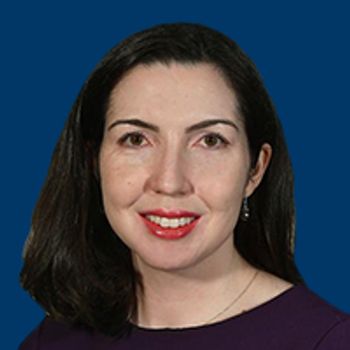
Julia E. McGuinness, MD, discusses the rationale for combining this novel PI3K inhibitor with fulvestrant and emphasized the importance of developing increasingly mutant-specific PI3K inhibitors in hormone receptor–positive breast cancer.
Brian Henick, MD, discusses the different ways to identify biomarkers of immunotherapy response in patients with lung cancer and how refining these approaches may improve individualized treatment approaches in the future.
Brian Henick, MD, discusses the importance of further exploring biomarkers in the immune microenvironment for immunotherapy in patients with lung cancer.
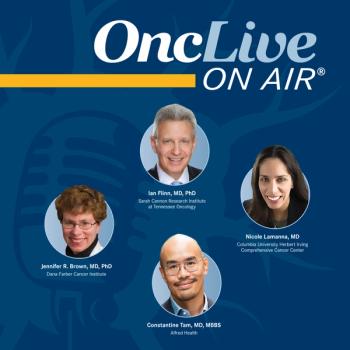
Drs Flinn, Lamanna, Brown, and Tam discuss the FDA approval of zanubrutinib in chronic lymphocytic leukemia and small lymphocytic lymphoma.
Lamanna discussed key efficacy and safety data with zanubrutinib from the SEQUOIA and ALPINE trials, the advantages of zanubrutinib compared with previous therapeutic options, and how the approval of the agent will affect the use of next-generation BTK inhibitors in chronic lymphocytic leukemia and small lymphocytic lymphoma .
Richard D. Carvajal, MD, discusses the implications of the FDA approval of tebentafusp in uveal melanoma, the possibility of exploring tebentafusp in other HLA subtypes, and other areas of intriguing research in uveal melanoma.
Ran Reshef, MD, discusses findings from the phase 3 BMT CTN 1703 trial examining graft-vs-host disease prophylaxis in reduced intensity conditioning.
Adana A.M. Llanos, PhD, MPH, discusses the role of social and biological determinants on cancer risk.
Gordana Vunjak-Novakovic, PhD, BS, MS, discusses the clinical need for personalizing cancer care.
Andrea Baccarelli, MD, PhD, discusses the effect of environmental factors on cancer diagnoses.

Judith Karp, MD, Azra Raza, MD, and Michelle M. Le Beau, PhD, discuss their proudest career accomplishments, including the investigation of potential treatments using a patient’s first cancerous cell, advances in cytogenetics, and a rational design for clinical trials involving cell cytokinetics..
Judith Karp, MD, Azra Raza, MD,, and Michelle M. Le Beau, PhD, discuss how their gender has shaped their professional lives, from working as some of the only female clinical faculty at their institutions to being compared to their male colleagues and denied opportunities when working independently from men.

Judith Karp, MD; Azra Raza, MD; and Michelle M. Le Beau, PhD, share the challenges they chose to mold into career goals, including developing a new technology to study cell cytokinetics, identifying gene phenotypes, and recognizing that leukemia diseases stem from the same root issues in DNA.

Judith Karp, MD; Azra Raza, MD; and Michelle M. Le Beau, PhD, highlight the decades-long evolution of the leukemia field and express challenges such as defining the causes of leukemia and developing therapies to treat the disease and mitigate adverse effects like bone pain.
The combination of amivantamab-vmjw and lazertinib produced encouraging responses with acceptable safety in patients with EGFR-mutated non–small cell lung cancer who progressed on osimertinib and platinum-based chemotherapy.

Adana A.M. Llanos, PhD, MPH, discusses how to recognize social determinants of disparities in cancer care.
Dr Pro outlines the current role of duvelisib in peripheral T-cell lymphoma (PTCL), reviews some key adverse effects associated with the agent, and walks us through other important updates in PTCL presented at the 2021 ASH Annual Meeting and Exposition.

Neil Vasan, MD, discusses advances made in the treatment of patients with small HER2-positive breast cancer.
Steven L. Spitalnik, MD, discusses the evolution of red blood cell storage and the potential impact the Hemanext storage technique could have for patients with hematologic malignancies.
Steven L. Spitalnik, MD, discusses the goals for the Hemanext® blood storage system in patients with hematologic malignancies.
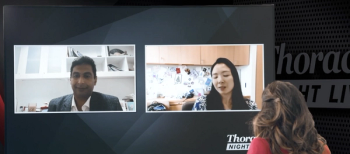
Isabel Preeshagul, DO, MBS; Catherine Ann Shu, MD; and Ashish Saxena, MD, PhD, discuss the latest findings in small cell lung cancer based on studies that were presented during the 2021 ESMO Congress, 2021 World Conference on Lung Cancer, and 2021 ASCO Annual Meeting.

Isabel Preeshagul, DO, MBS; Catherine Ann Shu, MD; and Ashish Saxena, MD, PhD, share insight on the data with novel targeted agents with impressive efficacy in patients with lung cancer, as seen at the 2021 ESMO Congress and the 2021 World Conference on Lung Cancer.
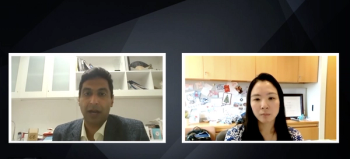
Isabel Preeshagul, DO, MBS; Catherine Ann Shu, MD; and Ashish Saxena, MD, PhD, highlight results with immunotherapy in the neoadjuvant and stage IV setting in lung cancer that were presented at the 2021 World Conference on Lung Cancer and the 2021 ESMO Congress.
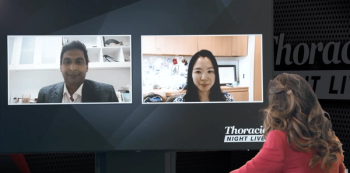
Isabel Preeshagul, DO, MBS; Catherine Ann Shu, MD; and Ashish Saxena, MD, PhD, discuss breakthroughs in adjuvant immunotherapy in lung cancer from data presented at the 2021 ESMO Congress and 2021 World Conference on Lung Cancer.

Dawn Hershman, MD, a leading breast cancer physician-scientist and pioneer in the burgeoning field of cancer care delivery research, has been named to the Giants of Cancer Care Class of 2021.
Suzanne Lentzsch, MD, discusses the utility of cellular therapies in multiple myeloma.

Naiyer A. Rizvi, MD, discusses the use of biomarkers to select patients with non–small cell lung cancer for treatment with immunotherapy.
