
Tina Cascone, MD, PhD, discusses of perioperative nivolumab vs placebo in patients with resectable non–small cell lung cancer.
Tina Cascone, MD, PhD, discusses of perioperative nivolumab vs placebo in patients with resectable non–small cell lung cancer.

Collaboration will aim to obtain CAP/CLIA certification of organoid-based assay, followed by clinical studies in multiple indications
Guillermo Garcia-Manero, MD, discusses the integration of luspatercept into real-world practice in ESA-naive, lower-risk MDS.
Oncology experts share topline insights from 19 of the most exciting abstracts from the 2025 ASCO Annual Meeting.
Dr Kuerer discusses the potential to omit surgery in patients with HER2-positive or triple-negative breast cancer who have pCR after neoadjuvant therapy.
Researchers found potential biomarkers that can highly predict which patients with stage III melanoma have better outcomes or are at high risk of recurrence.
Guillermo Garcia-Manero, MD, highlights clinical trial findings and real-world data for luspatercept in ESA-naive, lower-risk MDS.

Studies have suggested that pre-surgical SRT may be comparable to standard post-surgical SRT in patients with resectable brain metastases.
Guillermo Garcia-Manero, MD, discusses OS data from the COMMANDS trial for luspatercept in ESA-naive, lower-risk MDS.

Acalabrutinib plus BR prolonged duration of MRD negativity vs BR alone in previously untreated MCL, supporting the use of MRD as a prognostic biomarker.

Ibrutinib plus venetoclax led to complete responses and durable remissions in the first-line treatment of older patients with MCL.
Guillermo Garcia-Manero, MD, highlights recent shifts in the lower-risk myelodysplastic syndrome treatment paradigm.

MD Anderson researchers are enhancing CD19 CAR T-cell therapy outcomes in LBCL through precision medicine insights.

Researchers at MD Anderson Cancer Center have identified a novel target for high-risk multiple myeloma.

Lung cancer patients with high TTF-1 expression had improved survival outcomes following treatment with the KRAS inhibitor, sotorasib.
David S. Hong, MD, discusses the full FDA approval of larotrectinib for NTRK fusion–positive solid tumors.
CPRIT awards over $21 million to MD Anderson for cancer research and faculty recruitment.
The top 5 OncLive videos of the week cover insights in ovarian cancer, prostate cancer, chronic lymphocytic leukemia, and breast cancer.
Press release
Historic donation unites two renowned institutions under one new world-class center created to end childhood cancer
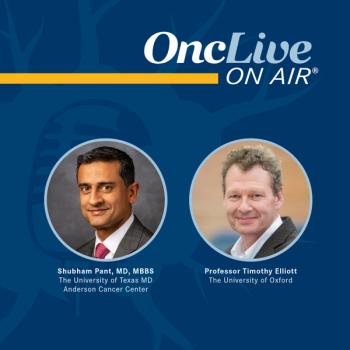
Pant and Elliott discuss research seeking to extend the benefits of cancer vaccines as cancer management and prevention strategies.
The top 5 OncLive videos of the week cover insights in myelodysplastic syndrome, lung cancer, hepatocellular carcinoma, colorectal cancer, and ovarian cancer.
Van Karlyle Morris, MD, discusses the efficacy of nivolumab plus ipilimumab according to stratification factors in dMMR/MSI-H mCRC.
Shannon Westin, MD, MPH, FACOG, contextualizes data from an exploratory biomarker analysis of the phase 3 DUO-E trial in pMMR recurrent endometrial cancer.
The top 5 OncLive videos of the week cover insights in colorectal cancer, prostate cancer, myeloma, renal cell carcinoma, and urothelial carcinoma.
John V. Heymach, MD, PhD, discusses updated findings from the phase 1b Beamion LUNG-1 trial of zongertinib in HER2-mutated advanced NSCLC.
Results from the first-in-human phase I trial were presented at the 2025 AACR Annual Meeting.
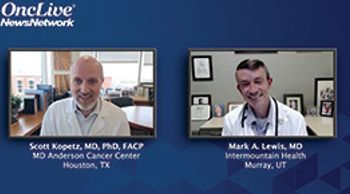
Scott Kopetz, MD, PhD, FACP, and Mark A. Lewis, MD, discuss how ctDNA assays have improved MRD detection in CRC.
Scott Kopetz, MD, PhD, FACP, and Mark A. Lewis, MD, discuss ongoing research in CRC utilizing ctDNA.