
Gary Gibbon, MD, pulmonologist and allergist, visited Chicago for a first-of-its-kind transplant procedure, becoming the first person in the U.S. to receive a double-lung and liver transplant for advanced lung cancer.
Gary Gibbon, MD, pulmonologist and allergist, visited Chicago for a first-of-its-kind transplant procedure, becoming the first person in the U.S. to receive a double-lung and liver transplant for advanced lung cancer.
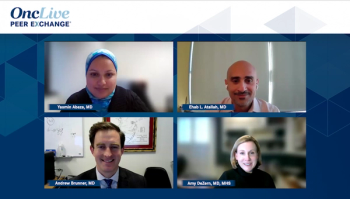
Following its comprehensive discussion on the treatment of MDS, the expert panel concludes with thoughts on the overall treatment landscape.
Experts on myelodysplastic syndromes offer their key takeaways from the 2023 ASH Annual Meeting in the higher-risk disease space.
Hematologist-oncologists review clinical trial data updates presented at ASH 2023 in higher-risk MDS.
A consequence of the Alabama Supreme Court’s in vitro fertilization ruling is an unacceptably high risk of infertility for patients with cancer.
Comprehensive insights on the current treatment landscape and remaining unmet needs for patients with higher-risk MDS.
The panel discusses emerging clinical trials in the MDS treatment space and offers key takeaways from the 2023 ASH Annual Meeting.
An MDS specialist discusses cytopenias associated with imetelstat treatment in patients with lower-risk MDS, highlighting findings from the IMerge clinical trial.
The expert panel discusses abstracts surrounding the IMerge clinical trial on imetelstat in patients with lower-risk myelodysplastic syndromes.
Northwestern Medicine scientists have discovered the Achilles heel of chemotherapy-resistant ovarian cancer—its hunger for cholesterol.
Amy DeZern, MD, MHS, discusses a retrospective study on healthcare claims for patients with MDS treated with luspatercept and reviews patient-reported outcomes from the COMMANDS trial.
Following ASH 2023, Andrew Brunner, MD, reviews key updates from the COMMANDS trial investigating frontline luspatercept in patients with lower-risk MDS.
Press Release
New technique made human T cells 100 times more potent at killing cancer cells.
Clinical insights on selecting appropriate erythropoiesis-stimulating agents in patients with myelodysplastic syndromes.
Hematologist-oncologists address adverse event management and discuss the unmet needs of patients with lower-risk MDS and symptomatic anemia.
The expert panel provides comprehensive insights on another patient case, a 77-year-old with MDS who presented with symptomatic anemia.
Continuing their discussion on the first patient profile, the expert panel focuses on the second-line treatment of patients with lower-risk MDS and symptomatic anemia.
Andrew Brunner, MD, presents the profile of a 72-year-old man with MDS and the panel offers their initial impressions on the case, focusing on the treatment decisions.
Amy DeZern, MD, MHS, provides clinical insights on the first-line treatment of patients with lower-risk MDS and symptomatic anemia.
Hematologist-oncologists discuss the risk stratification of patients with myelodysplastic syndromes and how patient risk status determines prognosis.
A panel of experts on myelodysplastic syndromes (MDS) introduce themselves and provide an overview of diagnosis practices, highlighting common symptoms and the typical patient presentation.
Dr Gradishar discusses the FDA approval of capivasertib plus fulvestrant for patients with advanced HR-positive, HER2-negative breast cancer harboring PIK3CA, AKT1, or PTEN alterations.
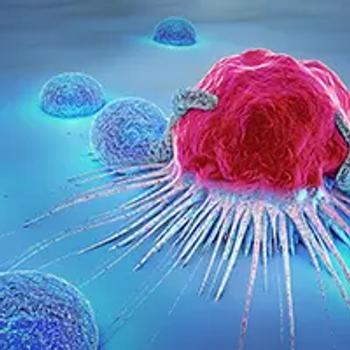
The transmembrane protein B7-H4 has emerged as an interesting therapeutic target in multiple solid tumors, with investigators mostly focusing on the development of antibody-drug conjugates aimed at the pathway.
Press Release
A new artificial intelligence tool may make it possible to spare breast cancer patients unnecessary chemotherapy treatments by using a more precise method of predicting their outcomes.
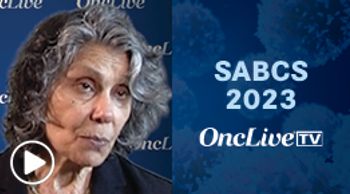
Seema A. Khan, MD, discusses 5-year clinical outcomes from the ECOG-ACRIN E4112 trial, which is evaluating the use of MRI and a 12-gene expression assay to optimize local therapy for patients with ductal carcinoma in situ.
Priya U. Kumthekar, MD, details the specialized program for fellows while reflecting on her own experiences, highlights her research in brain metastases, and offers advice to both fellowship directors and current fellows in oncology.
The Northwestern Medicine Canning Thoracic Institute Hispanic Program was recently launched to offer personalized care for lung and thoracic patients in their native language, making life-saving care more accessible for the Hispanic community and people who prefer to speak Spanish by removing cultural and linguistic barriers.
Press Release
Scientists develop ‘QR code for cancer cells,’ like tagging swans in a pond.
Press Release
Northwestern Medicine scientists report results of the first in-human clinical trial in which they used a novel, skull-implantable ultrasound device to open the blood-brain barrier and repeatedly permeate large, critical regions of the human brain to deliver chemotherapy that was injected intravenously.
A panel of skin cancer experts offer closing thoughts on intralesional therapy for treating melanoma and CSCC.