

R. Lor Randall, MD, FACS, discusses what’s next for TGCT treatment and the most important developments to come out of 2026 TGCT Master Workshop.
R. Lor Randall, MD, FACS, discusses what’s next for TGCT treatment and the most important developments to come out of 2026 TGCT Master Workshop.
Dr Valerin discusses the role of liposomal irinotecan in pancreatic cancer management and factors influencing the decision to use this agent in practice.
Leal and Nagasaka discussed the significance of the FDA approval of zongertinib for previously treated patients with HER2 TKD–mutant advanced NSCLC.
Dr Nagasaka discusses the evolving use of T-DXd for HER2-mutated NSCLC in light of the emergence of investigational agents in this setting.

The University of California Lung Cancer Consortium and AstraZeneca announced a five-year partnership to expand the Healthy Lungs California initiative.
Drs Danilov and O'Brien discuss updates with acalabrutinib, zanubrutinib, and pirtobrutinib in CLL that were presented at the 2024 ASH Annual Meeting.
Dr Nagasaka discusses the use of T-DXd in patients with unresectable or metastatic HER2-positive NSCLC.
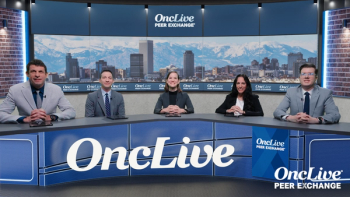
The panel concludes by offering final thoughts and insights on recent advancements from EHA 2024.
Key opinion leaders provide concise insights on the potential of bispecific antibodies as emerging novel therapeutic agents for relapsed/refractory chronic lymphocytic leukemia.
Nicole Lamanna, MD, offers expert insights on the emerging data for second-generation BCL2 inhibitors in relapsed/refractory chronic lymphocytic leukemia, highlighting recent advancements in the field.
Key opinion leaders analyze the potential significance of preliminary data on BGB-16673, a BTK inhibitor degrader, in anticipation of its presentation at EHA 2024.
The panel explores potential applications and impact of BTK inhibitor degraders as an emerging class of novel agents for treating relapsed/refractory chronic lymphocytic leukemia.
Key opinion leaders analyze the implications of the FDA's accelerated approval for lisocabtagene maraleucel (liso-cel) in chronic lymphocytic leukemia, based on promising results from the TRANSCEND CLL 004 trial.
A medical expert offers commentary on the recent FDA accelerated approval of pirtobrutinib, discussing the implications of the BRUIN trial findings that supported this decision for chronic lymphocytic leukemia treatment.
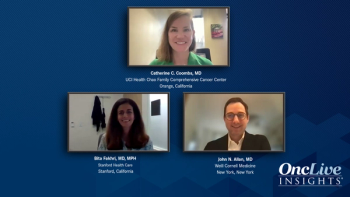
The panel concludes its discussion with a look to the future of CLL treatment, focusing on emerging novel agents and exciting clinical research.
Highlighting recent clinical trial data on pirtobrutinib in patients with chronic lymphocytic leukemia, the panel shares their experience utilizing it in clinical practice.
Bita Fakhri, MD, MPH, shares her general approach to managing common cardiovascular adverse events associated with BTK inhibitors in patients with chronic lymphocytic leukemia.
The panel addresses the intricacies of treating patients with chronic lymphocytic leukemia who experience treatment resistance.
Experts on chronic lymphocytic leukemia discuss treatment practices for patients with relapsed/refractory CLL and provide insights on the role for venetoclax in patients who previously received BTK inhibitors.
A hematology and oncology specialist presents the case of a 66-year-old man with chronic lymphocytic leukemia.
Catherine C. Coombs, MD, outlines considerations for long-term treatment planning, particularly in younger patients with chronic lymphocytic leukemia.
John N. Allan, MD, provides clinical insights on how appropriate dose ramp-up practices for venetoclax can minimize adverse events and optimize patient outcomes.
Bita Fakhri, MD, MPH, discusses the importance of patient involvement in the shared decision-making process to individualize treatment and improve outcomes.
Experts on chronic lymphocytic leukemia detail how clinical trial data on doublet therapies help inform treatment decisions in the first line.
Focusing on the CLL13 and CLL14 studies, Bita Fakhri, MD, MPH, provides insights on the role of venetoclax-based first-line combination strategies and factors that inform treatment selection.
Catherine C. Coombs, MD, discusses the value of real-world data in informing the treatment of patients with chronic lymphocytic leukemia.
John N. Allan, MD, describes how he selects patients for first-line treatment with continuous BTK inhibitor therapy, referencing data from the RESONATE-2, ELEVATE-TN, and SEQUOIA studies.
Bita Fakhri, MD, MPH, outlines factors she considers when choosing between fixed-duration and continuous BTK inhibitor therapy and discusses how she approaches treatment discussions with patients.
A panel of experts on chronic lymphocytic leukemia (CLL) review a patient case and describe their initial impressions on treatment decisions.
Catherine C. Coombs, MD, discusses the efficacy of the FLT3 inhibitor quizartinib in acute myeloid leukemia.