
Opinion|Videos|November 23, 2026
Access, Equity, and the Logistics of Delivering CAR T and Bispecifics Beyond Academic Centers
Caregiver support, prior authorization, overnight monitoring for tarlatamab, and whether bispecifics and off-the-shelf options can bridge the CAR T access gap.
Advertisement
Episodes in this series
Chen: Dr. Cui, what are you most excited about in the pipeline, and what are the biggest access or equity challenges in getting these to our patients?
Cui: Great question. Taking small cell lung cancer as an example, we have DLL3 bispecific T-cell engagers in the pipeline that may move from the relapsed setting for extensive-stage small cell lung cancer into first-line maintenance. The data will be presented at ESMO this year, and we’re all excited to see it. This also creates equity challenges — tarlatamab administration, for example, currently requires overnight observation and inpatient monitoring at a tertiary center for cytokine release syndrome. How we deliver this safely and effectively in local settings will be the big question as clinical demand grows. How about in GI oncology — any wisdom you’d share?
Chen: A lot is happening in the pipeline with RAS-directed therapies, which we’ll touch on shortly. But first, Dr. Buradkar, what would you add about equity challenges with cellular therapies and bispecifics?
Buradkar: An important point. CAR T-cell therapy is extremely expensive and comes with real logistical challenges. A patient who lives far from the hospital may not be an eligible candidate — so how do we bring the novel treatment closer to home? A bispecific can be one answer. The other is caregiver support — patients receiving these therapies need someone close by to monitor for side effects. And insurance prior authorization is a big, often underrecognized hurdle. We have to overcome these to make treatment accessible. Innovation is not just about effective treatment and complete responses — it’s also about safer, more deliverable therapy that patients can access regardless of socioeconomic circumstance.
Cui: Agreed. Off-the-shelf options and in vivo delivery for bispecifics are exciting innovations in that direction.
Buradkar: One thing I’m most excited about is that these novel treatments are moving closer to the frontline setting every day. The most recent example that comes to mind was published at ASCO 2026 — the FRONTMIND trial, which added tafasitamab plus lenalidomide to R-CHOP in high-risk DLBCL. I can’t wait to talk about it.
Chen: A great segue. Let’s move into the trial deep dives.
Advertisement
Related to this article

The top 5 OncLive TV videos of the week cover insights in NSCLC, HER2+ gastroesophageal cancer, low-grade glioma, HR+ breast cancer, and CML.
The FDA approved giredestrant plus everolimus in ESR1-mutated breast cancer and neladalkib in ALK+ NSCLC, issued a CRL to ivonescimab, and more.

Daraxonrasib plus gemcitabine/nab-paclitaxel yielded a 60.7% ORR and 12.8-month median PFS in first-line metastatic pancreatic adenocarcinoma.

Sac-TMT improved OS vs treatment of physician’s choice in pretreated gastroesophageal adenocarcinoma, but TroFuse-015 missed its PFS secondary end point.

A gift to MD Anderson Cancer Center supports innovative pancreatic cancer research.

Gynecologic oncologists answer FAQs on LGSOC targeted therapy, PARP inhibitor maintenance, and emerging ADCs in ovarian cancer.

Did you catch all of this week's top oncology news? Test your knowledge with OncLive's Weekly News Quiz.
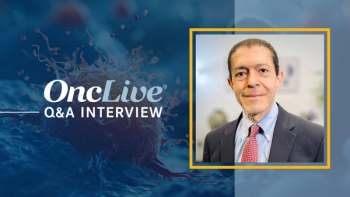
Jorge Cortes, MD, discusses response-based ponatinib dosing, mutation testing, and managing cardiovascular risk in resistant CML.
Advertisement
Advertisement
Trending on OncLive
1
Daraxonrasib Plus Gemcitabine/Nab-Paclitaxel Generates Durable Responses in First-Line Metastatic PDAC
2
Five Under 5: Top Oncology Videos for the Week of 11/20
3
TroFuse-015 Meets Primary OS End Point With Sac-TMT in Third-Line or Later Gastroesophageal Adenocarcinoma
4
Dr Gutierrez on Considerations for Investigating SAR445877 in MSS CRC
5