
Opinion|Videos|November 23, 2026
What Counts as Clinically Meaningful — Biomarker Selection and Sequencing Across GI, DLBCL, and Lung
Durability, toxicity, and access as the three tests — and how biomarker selection drives sequencing across HER2+ gastric, PD-L1+ disease, and relapsed DLBCL.
Advertisement
Episodes in this series
Chen: Dr. Buradkar, when a new therapy demonstrates promising results, how do you decide whether the findings are clinically meaningful for your patients?
Buradkar: An important question. What makes a treatment meaningful comes down to three things: is the treatment durable, is the toxicity profile safe enough, and is the treatment accessible to the patient? All of these are increasingly personalized and more promising than what we had before. I can point to ZUMA-7, which showed that axicabtagene ciloleucel (axi-cel) — and the TRANSCEND NHL 001 and TRANSFORM trials, which showed that lisocabtagene maraleucel (liso-cel) — can be used in relapsed/refractory diffuse large B-cell lymphoma (DLBCL), with incredible overall survival and event-free survival. Earlier, autologous stem cell transplant following salvage chemotherapy was the only option, and patients suffered significant transplant-related complications. Bringing these novel therapies earlier in the treatment landscape has really helped our patients.
Cui: An important point — we’re moving new therapies into earlier lines, and we have to manage new toxicities we didn’t see in the chemotherapy era. With CAR T-cell therapy and bispecific T-cell engagers, for example, cytokine release syndrome (CRS) and neurotoxicity are new challenges to manage day to day.
Chen: When we think about novel therapies and which patient population will benefit, we also think about biomarker selection. In GI cancers — especially upper GI — we have meaningful biomarkers. With HER2-directed therapy in KEYNOTE-811 and in HORIZON for HER2-positive patients, we can demonstrate benefit of adding these agents. Similarly, for zolbetuximab and claudin 18.2–directed therapy, benefit is identified in patients with staining in 75% or more of cells. Drilling down to the subsets that benefit is really important.
Chen: The next question: How do you decide when to adopt a new therapy and where to sequence it, and how do you counsel patients on newer toxicity profiles? Dr. Buradkar?
Buradkar: Right therapy, right patient, right time — that’s what makes the most impactful outcome. Adopting novel treatments often requires higher-level expertise and a tertiary cancer center, and we have to work through the logistics: Does the patient have access to an academic institution nearby? Are we overcoming insurance prior-authorization barriers and the need for a caregiver? At the same time, we factor in prior therapies, performance status, and comorbidities to help sequence appropriately. I acknowledge the real phenomenon of signal loss — patients may lose response — and we account for that as we plan the next sequencing options.
Cui: A good point — we always think one or two steps ahead when we talk about sequencing. Innovation is not only finding new targets — in my cell therapy research, it’s not just intracellular or surface protein targets, it’s how we deliver safely and practically. In vivo delivery, for example, is emerging as a way to deliver these therapies safely, closer to the local setting.
Buradkar: Bringing it back to toxicity — it’s important to make patients aware of what they might experience, not to scare them, but so they know what they’re getting into. With CAR T-cell therapy there are two prominent toxicities. Cytokine release syndrome (CRS) typically presents with fever, hypoxia, or hypotension in the first 3 days. Immune effector cell–associated neurotoxicity syndrome (ICANS) presents with confusion, difficulty finding words, and in severe cases seizures or coma. Patient awareness and close monitoring are extremely important.
Cui: And nursing support, pharmacy systems, emergent-care pathways, and toxicity management protocols vary by institution. It’s critical that those are all in place before we set up a system to deliver these safely.
Chen: From a GI perspective, when we think about sequencing in upper GI, we consider four main biomarkers in order: mismatch repair–deficient (dMMR) status, HER2 status, PD-L1 status, and claudin 18.2. If dMMR is present, immunotherapy is first. For HER2-positive disease, we can introduce trastuzumab or, more recently, zanidatamab as HER2-directed therapy. For PD-L1, benefit scales with the combined positive score (CPS) — we need at least 1, and higher CPS (5 to 10) brings more incremental benefit.
Advertisement
Related to this article

The top 5 OncLive TV videos of the week cover insights in NSCLC, HER2+ gastroesophageal cancer, low-grade glioma, HR+ breast cancer, and CML.
The FDA approved giredestrant plus everolimus in ESR1-mutated breast cancer and neladalkib in ALK+ NSCLC, issued a CRL to ivonescimab, and more.

Daraxonrasib plus gemcitabine/nab-paclitaxel yielded a 60.7% ORR and 12.8-month median PFS in first-line metastatic pancreatic adenocarcinoma.

Sac-TMT improved OS vs treatment of physician’s choice in pretreated gastroesophageal adenocarcinoma, but TroFuse-015 missed its PFS secondary end point.

A gift to MD Anderson Cancer Center supports innovative pancreatic cancer research.

Gynecologic oncologists answer FAQs on LGSOC targeted therapy, PARP inhibitor maintenance, and emerging ADCs in ovarian cancer.

Did you catch all of this week's top oncology news? Test your knowledge with OncLive's Weekly News Quiz.
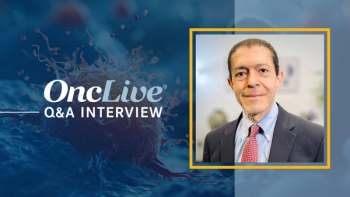
Jorge Cortes, MD, discusses response-based ponatinib dosing, mutation testing, and managing cardiovascular risk in resistant CML.
Advertisement
Advertisement
Trending on OncLive
1
Daraxonrasib Plus Gemcitabine/Nab-Paclitaxel Generates Durable Responses in First-Line Metastatic PDAC
2
Five Under 5: Top Oncology Videos for the Week of 11/20
3
TroFuse-015 Meets Primary OS End Point With Sac-TMT in Third-Line or Later Gastroesophageal Adenocarcinoma
4
Dr Gutierrez on Considerations for Investigating SAR445877 in MSS CRC
5