
Opinion|Videos|July 17, 2026
Addressing Unmet Need in Second-Line NSCLC Without Actionable Alterations
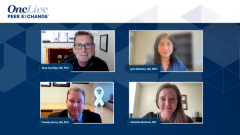
Faculty consider the greatest areas of unmet need in second-line NSCLC, particularly for patients without actionable driver alterations who progress after chemotherapy or chemoimmunotherapy.
Advertisement
Episodes in this series
Faculty consider the greatest areas of unmet need in second-line NSCLC, particularly for patients without actionable driver alterations who progress after chemotherapy or chemoimmunotherapy. The panel discusses emerging strategies including PRMT5 inhibition in MTAP-deleted tumors, reviewing the molecular rationale, observed response rates, and questions surrounding resistance and biology in this molecularly selected population. Discussion also addresses antibody-drug conjugates directed at broadly expressed targets, as well as emerging immunotherapy approaches following prior checkpoint inhibition. Faculty share perspectives on novel agents generating interest in this difficult-to-treat setting, including targeted approaches showing promising activity in later lines.
Advertisement
Related to this article
The FDA has approved lutetium Lu 177 dotatate injection for SSTR-positive GEP-NETs, including foregut, midgut, and hindgut NETs.

Strong overall response rates with pirtobrutinib in relapsed/refractory CLL previously treated with covalent BTK inhibitors were shown in a pooled analysis.

Real-world tumor lysis syndrome occurred in less patients with CLL who received venetoclax-based regimens than those with MCL.

Dana-Farber Cancer Institute is launching Solavia Decision Suite to bring clinical expertise and evidence-based treatment pathways directly into clinicians’ workflows.

The FDA indication for adagrasib plus cetuximab for KRAS G12C–mutated locally advanced or metastatic colorectal cancer has been removed.

The updated tarlatamab label reduces post-infusion monitoring after each of the first two doses to 6 to 8 hours, down from 22 to 24 hours.
TLX101-Px, an FET-PET imaging agent, was FDA approved to differentiate treatment-related changes from recurrent or progressive glioma.
The FDA approved aminolevulinic acid hydrochloride plus PDT for the treatment of superficial basal cell carcinoma.
Advertisement
Advertisement
Trending on OncLive
1
FDA Approves Lutetium Lu 177 Dotatate Injection for SSTR+ GEP-NETs
2
FDA Withdraws Indication for Adagrasib Plus Cetuximab in Previously Treated, KRAS G12C–Mutated mCRC
3
Venetoclax-Based Regimens Show Lower TLS Rates in CLL vs MCL
4
Pirtobrutinib Elicits Responses After Covalent BTK Inhibitor Failure in R/R CLL
5