Timothy F. Burns, MD, PhD
Articles by Timothy F. Burns, MD, PhD
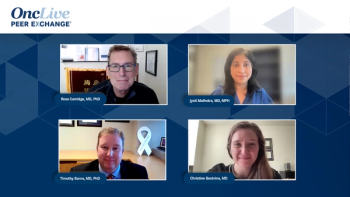
The Future of Antibody-Drug Conjugates and Oncogene-Directed Therapy in NSCLC
ByRoss Camidge, MD, PhD,Jyoti Malhotra, MD, MPH,Timothy F. Burns, MD, PhD,Christine Bestvina, MD In the closing segment, faculty discuss the broader future of antibody-drug conjugate development beyond TROP2, reviewing agents directed at targets including MET and integrin beta-6, and the importance of payload selection and biomarker-guided patient selection.
Differentiating TROP2-Directed Antibody-Drug Conjugates in NSCLC
ByRoss Camidge, MD, PhD,Jyoti Malhotra, MD, MPH,Timothy F. Burns, MD, PhD,Christine Bestvina, MD Faculty examine the expanding role of TROP2-directed antibody-drug conjugates, emphasizing that agents within this class are not interchangeable.
Adjuvant Targeted Therapy and Molecular Testing in Early-Stage NSCLC
ByRoss Camidge, MD, PhD,Jyoti Malhotra, MD, MPH,Timothy F. Burns, MD, PhD,Christine Bestvina, MD This segment reviews data on adjuvant targeted therapy for RET fusion-positive NSCLC in patients treated with curative-intent surgery, with faculty discussing the strongly positive phase 3 results and their clinical implications.
Addressing Unmet Need in Second-Line NSCLC Without Actionable Alterations
ByRoss Camidge, MD, PhD,Jyoti Malhotra, MD, MPH,Timothy F. Burns, MD, PhD,Christine Bestvina, MD Faculty consider the greatest areas of unmet need in second-line NSCLC, particularly for patients without actionable driver alterations who progress after chemotherapy or chemoimmunotherapy.
Patient Selection, Sequencing, and Co-Mutations in KRAS G12C-Mutant NSCLC
ByRoss Camidge, MD, PhD,Jyoti Malhotra, MD, MPH,Timothy F. Burns, MD, PhD,Christine Bestvina, MD This segment focuses on individualized treatment approaches for KRAS G12C-mutant NSCLC.
Frontline Combination Strategies in KRAS G12C-Mutant NSCLC
ByRoss Camidge, MD, PhD,Jyoti Malhotra, MD, MPH,Timothy F. Burns, MD, PhD,Christine Bestvina, MD Faculty discuss the evolving frontline treatment landscape for KRAS G12C-mutant NSCLC, noting the limited outcomes achieved with current standard chemoimmunotherapy approaches. The panel reviews data on a next-generation KRAS G12C inhibitor studied in combination with immunotherapy, with or without chemotherapy, across a range of PD-L1 expression levels, including response rates and duration of response observed in early-phase and safety cohort data. Discussion addresses how these agents may benefit patients regardless of PD-L1 status and considers the broader class of KRAS G12C inhibitors in development. Faculty examine the observation that adding chemotherapy has not consistently improved response rates, explore hepatic toxicity and its clinical management, and discuss the biological rationale and evidence for potential synergy between KRAS G12C inhibition and immunotherapy.
Neuroprotective Rationale and Emerging Agents in ALK-Positive NSCLC
ByRoss Camidge, MD, PhD,Jyoti Malhotra, MD, MPH,Timothy F. Burns, MD, PhD,Christine Bestvina, MD In this segment, faculty examine emerging data on the role of tropomyosin receptor kinase (TRK) activity in central nervous system disease, discussing a recent study evaluating TRK-inhibiting therapy in patients with leptomeningeal disease who lacked TRK alterations. The panel reviews how this activity may contribute to reductions in brain metastases and leptomeningeal disease. Discussion then turns to next-generation ALK inhibition, with faculty reviewing efficacy and safety data for a fourth-generation ALK inhibitor presented at ASCO, including activity across treatment-naive and pretreated cohorts, patients resistant to prior therapy, and those with on-target compound resistance mutations. The panel considers where such an agent may fit within the treatment continuum, how it compares against the high bar set by long-term frontline data, and the critical importance of biopsy at progression to distinguish ALK-based resistance from alternative mechanisms such as MET amplification.
Managing Long-Term Toxicities and Emerging Therapies in ALK-Positive NSCLC
ByRoss Camidge, MD, PhD,Jyoti Malhotra, MD, MPH,Timothy F. Burns, MD, PhD,Christine Bestvina, MD In this segment, faculty discuss long-term safety considerations associated with lorlatinib treatment in ALK-positive NSCLC. The panel reviews adverse events reported during extended follow-up, including hyperlipidemia, weight gain, edema, and neurocognitive effects, and discusses approaches to monitoring and management in clinical practice. Faculty describe strategies for dose modifications, supportive care interventions, and patient education throughout treatment. The discussion also addresses the role of multidisciplinary care and caregiver involvement when evaluating cognitive and behavioral changes that may occur during therapy. In addition, panelists review factors that may influence decisions regarding treatment continuation and long-term management. The segment provides an overview of safety considerations associated with prolonged ALK inhibitor therapy.
Interpreting Long-Term Outcomes From the CROWN Trial
ByRoss Camidge, MD, PhD,Jyoti Malhotra, MD, MPH,Timothy F. Burns, MD, PhD,Christine Bestvina, MD Faculty review findings from the 7-year update of the CROWN trial and discuss how long-term efficacy data are informing the management of ALK-positive NSCLC. The panel examines outcomes related to progression-free survival, durability of response, and intracranial disease control, and considers how these findings contribute to current treatment discussions. The conversation explores patterns observed over extended follow-up and addresses how long-term data may help clinicians communicate treatment expectations with patients. Faculty also discuss differences in patient outcomes over time and consider factors that may influence long-term disease control. This segment focuses on the interpretation and application of mature clinical trial data within contemporary practice.
Selecting and Sequencing First-Line Therapy in ALK-Positive NSCLC
ByRoss Camidge, MD, PhD,Jyoti Malhotra, MD, MPH,Timothy F. Burns, MD, PhD,Christine Bestvina, MD This segment focuses on treatment selection and disease monitoring for patients with ALK-positive NSCLC. Faculty discuss factors that influence frontline treatment decisions, including central nervous system involvement, disease burden, and patient-specific considerations. The panel reviews approaches to counseling patients prior to treatment initiation and examines how efficacy and tolerability factor into therapeutic decision-making. Discussion also addresses strategies for monitoring treatment response, evaluating disease progression, and incorporating tissue and liquid biopsy at progression. In addition, faculty review resistance mechanisms that may emerge during treatment and discuss how molecular findings can help guide subsequent management decisions. The conversation highlights considerations involved in the ongoing care of patients receiving ALK-directed therapies.
Optimizing Identification and Molecular Testing for ALK-Positive NSCLC
ByRoss Camidge, MD, PhD,Jyoti Malhotra, MD, MPH,Timothy F. Burns, MD, PhD,Christine Bestvina, MD In this segment, faculty discuss the biology of ALK rearrangements and their role in driving tumor growth in non-small cell lung cancer (NSCLC). The panel reviews clinical and demographic characteristics commonly associated with ALK-positive disease and examines the rationale for broad molecular testing regardless of patient presentation. Discussion focuses on testing strategies used to identify ALK rearrangements, including next-generation sequencing and liquid biopsy approaches, as well as practical considerations related to tissue availability and turnaround time. The faculty also address how comprehensive molecular profiling supports treatment planning and helps identify patients who may be eligible for targeted therapies. Throughout the conversation, panelists share perspectives on integrating biomarker testing into routine clinical practice and ensuring timely identification of actionable alterations in advanced NSCLC.

Timothy Burns, MD, PhD, discusses the evolving use of antibody-drug conjugates in HER2-mutant non–small cell lung cancer.

Timothy F. Burns, MD, PhD, discusses key developments in the frontline treatment of patients with RET-positive non–small cell lung cancer.

Timothy F. Burns, MD, PhD, discusses the promise of combination regimens for patients with EGFR exon 20 insertion– and KRAS G12C–mutated non–small cell lung cancer.
Timothy F. Burns, MD, PhD, discusses methods of identifying genetic alterations in lung cancer.