
Opinion|Videos|March 13, 2026
Applying Long-Term Survival Evidence in Maintenance Therapy Decisions
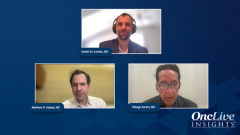
This segment explores how long-term survival data and real-world experience inform decisions about maintenance immunotherapy in advanced urothelial (bladder) cancer.
Advertisement
Episodes in this series
This segment explores how long-term survival data and real-world experience inform decisions about maintenance immunotherapy in advanced urothelial (bladder) cancer. The discussion emphasizes that pivotal first-line maintenance trials now have more than five years of follow-up, reinforcing a meaningful overall survival benefit. These data frame conversations around patient life goals, such as reaching key family milestones, and how maintenance therapy can help align treatment with what matters most to each individual.
The speakers compare patients’ typical experience on platinum chemotherapy with that on immune checkpoint inhibitors, noting that although immunotherapy is not free of toxicity, many patients find it more tolerable and compatible with daily life. They also address the difficult question of treatment duration, when, if ever, to stop immunotherapy in patients doing well without side effects, stressing that this remains highly individualized. Finally, the segment highlights how real-world data help extend clinical trial findings to patients who would not have met strict eligibility criteria.
Advertisement
Related to this article

Epcoritamab plus R-CHOP reduced the risk of progression or death by 51% vs R-CHOP alone in newly diagnosed DLBCL.

The 19-year veteran of CU Anschutz will be the fourth director in the 41-year history of Colorado’s only NCI-designated comprehensive cancer center.

The estimated 3-year OS rate with botensilimab plus balstilimab was 48% in heavily pretreated recurrent ovarian cancer in the phase 1b C-800-01 trial.

PRV111 produced pathologic complete responses in 21 of 22 patients with noninvasive oral cancer or high-grade dysplasia.

A patient treated at the highest dose level of lira-cel to date had stable disease 90 days after infusion in a phase 1 trial in recurrent ovarian cancer.
A randomized phase 2 trial of berzosertib plus carboplatin in pretreated mCRPC stopped for futility amid fewer responses and more high-grade toxicity than the control arm.

The top 5 OncLive TV videos of the week cover insights in MDS, multiple myeloma, pancreatic cancer, colorectal cancer, and uveal melanoma.

The combination nearly doubled the confirmed response rate in the randomized phase 2 portion of HexAgon-HN, with the greatest benefit in HPV-positive disease.
Advertisement
Advertisement
Trending on OncLive
1
INBRX-106 Plus Pembrolizumab Improves Responses and PFS in First-Line PD-L1–Positive HNSCC
2
FDA Approves Pirtobrutinib for Previously Untreated CLL/SLL
3
Epcoritamab Plus R-CHOP Meets PFS End Point in Newly Diagnosed DLBCL
4
‘Our Impact Will Be Broad and Transformative’: Wells Messersmith, MD, Takes the Reins at CU Anschutz Cancer Center
5