
Opinion|Videos|April 3, 2026
Applying Real-World Evidence to Individualized Treatment Sequencing in Advanced Urothelial Carcinoma
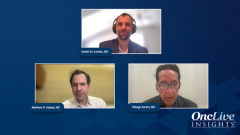
This segment focuses on how clinicians use real-world evidence to individualize treatment sequencing in advanced urothelial (bladder) cancer, especially when patients do not fit classic clinical trial profiles.
Advertisement
Episodes in this series
This segment focuses on how clinicians use real-world evidence to individualize treatment sequencing in advanced urothelial (bladder) cancer, especially when patients do not fit classic clinical trial profiles. The discussion reviews options after platinum-based chemotherapy and maintenance immunotherapy, including antibody–drug conjugates and biomarker-driven approaches targeting FGFR3 alterations and HER2 overexpression.
The speakers explain how trial results, typically reported as median outcomes, mask wide variation: some patients do much better, others worse. Real-world data help refine expectations and guide choices when actual responses diverge from what trials predict. The segment emphasizes the “art of medicine” within guideline-based care, adapting therapy to comorbidities, prior tolerance, patient goals, and evolving evidence.
Looking forward, the conversation highlights the convergence of better therapeutics and better diagnostics, such as minimal residual disease testing and more sensitive imaging, as a near-term opportunity to redefine how bladder cancer is managed across the disease continuum.
Advertisement
Related to this article

Epcoritamab plus R-CHOP reduced the risk of progression or death by 51% vs R-CHOP alone in newly diagnosed DLBCL.

The 19-year veteran of CU Anschutz will be the fourth director in the 41-year history of Colorado’s only NCI-designated comprehensive cancer center.

The estimated 3-year OS rate with botensilimab plus balstilimab was 48% in heavily pretreated recurrent ovarian cancer in the phase 1b C-800-01 trial.

PRV111 produced pathologic complete responses in 21 of 22 patients with noninvasive oral cancer or high-grade dysplasia.

A patient treated at the highest dose level of lira-cel to date had stable disease 90 days after infusion in a phase 1 trial in recurrent ovarian cancer.
A randomized phase 2 trial of berzosertib plus carboplatin in pretreated mCRPC stopped for futility amid fewer responses and more high-grade toxicity than the control arm.

The top 5 OncLive TV videos of the week cover insights in MDS, multiple myeloma, pancreatic cancer, colorectal cancer, and uveal melanoma.

The combination nearly doubled the confirmed response rate in the randomized phase 2 portion of HexAgon-HN, with the greatest benefit in HPV-positive disease.
Advertisement
Advertisement
Trending on OncLive
1
INBRX-106 Plus Pembrolizumab Improves Responses and PFS in First-Line PD-L1–Positive HNSCC
2
FDA Approves Pirtobrutinib for Previously Untreated CLL/SLL
3
Epcoritamab Plus R-CHOP Meets PFS End Point in Newly Diagnosed DLBCL
4
‘Our Impact Will Be Broad and Transformative’: Wells Messersmith, MD, Takes the Reins at CU Anschutz Cancer Center
5