
Opinion|Videos|November 19, 2026
Bridging Therapy Before CAR T-Cell Therapy in DLBCL
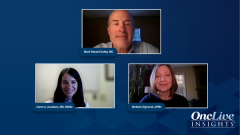
In this segment, Dr. Caron A. Jacobson discusses the role of bridging therapy for patients with diffuse large B-cell lymphoma (DLBCL) awaiting CAR T-cell infusion.
Advertisement
Episodes in this series
In this segment, Dr. Caron A. Jacobson discusses the role of bridging therapy for patients with diffuse large B-cell lymphoma (DLBCL) awaiting CAR T-cell infusion. She explains that observational studies have reported differing associations between bridging therapy and outcomes, partly reflecting differences in patient populations and disease characteristics. Patients who receive bridging therapy may have more aggressive disease, greater tumor burden, elevated lactate dehydrogenase (LDH), or increased inflammatory markers, which can also influence outcomes following CAR T-cell therapy. Dr. Jacobson describes considering bridging treatment for patients with lymphoma-related symptoms or a high risk of progression during the interval before infusion. Treatment selection depends on prior therapies, response history, current symptoms, and laboratory findings. She also emphasizes coordination between the CAR T-cell center and community oncologist to schedule bridging therapy around leukapheresis, lymphodepleting chemotherapy, and infusion, while promptly communicating unexpected toxicities that could affect treatment timing. The discussion highlights individualized treatment decisions and ongoing communication to support safe, timely care.
Advertisement
Related to this article
The FDA granted fast track designation to elticertinib for pretreated EGFR exon 20 insertion–mutated NSCLC.

Phase 2 NB2012 data showed a 3-year event-free survival rate of 73.7% with daretabart plus induction chemotherapy.
Deepa Rangachari, MD, discusses community oncology training, goal-concordant mentorship, genomic fluency, and multidisciplinary care.
Mayo Clinic researchers identified BRCA2 variants linked to moderate breast cancer risk, potentially informing personalized screening and prevention.
Experts weigh in on standout breast cancer, lung cancer, melanoma, and kidney cancer data presented at the 2026 ESMO Congress.
Maintenance galinpepimut-S extended overall survival in transplant-ineligible AML in second or later remission.
Longer follow-up of KANDLELIT-001 supports frontline calderasib plus pembrolizumab in KRAS G12C–mutated metastatic non–small cell lung cancer.
The CHMP backed sintilimab plus chemotherapy in NSCLC; the FDA issued a complete response letter for the regimen in 2022.
Advertisement
Advertisement
Trending on OncLive
1
NATALEE, DeLLphi-305, INTerpath-001, and LITESPARK-012 Headline Key Oncology Data From ESMO 2026
2
Elticertinib Receives FDA Fast Track Designation in EGFR Exon 20–Mutated NSCLC
3
FDA Grants Breakthrough Therapy Designation to Daretabart for Newly Diagnosed High-Risk Neuroblastoma
4
Exploratory Insights into Early Tolerability and Treatment Experience with VYLOY® (zolbetuximab-clzb) in SPOTLIGHT and GLOW
5