
Opinion|Videos|March 16, 2026
Clinical Implications of TROP2 Expression and the Importance of Drug Internalization
Trop-2 ADC trials in lung cancer show H-score fails to predict benefit, spotlighting drug internalization and target engagement as key efficacy drivers.
Advertisement
Episodes in this series
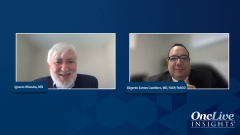
This segment examines the clinical relevance of TROP2 expression levels in the context of ADC therapy and highlights key biologic factors that influence treatment response. Dr. Santos reviews outcomes from phase 1 and phase 3 clinical trials evaluating TROP2-directed ADCs, including studies of sacituzumab govitecan (EVOKE-01) and datopotamab deruxtecan (TROPION-Lung01). Although TROP2 is broadly expressed across both squamous and non-squamous NSCLC, analyses using conventional IHC-based H-scoring did not demonstrate a clear association between higher expression levels and improved clinical outcomes. These findings suggest that traditional expression-based scoring may not adequately identify patients most likely to benefit from TROP2-targeted therapies.
The discussion shifts to emerging efforts to improve patient selection using more quantitative approaches, such as quantitative continuous scoring (QCS), which has shown early signals of correlation with clinical outcomes and may provide a more informative assessment of target biology.
Dr. Wistuba expands on the mechanistic basis for these observations by emphasizing that TROP2 expression alone does not determine ADC efficacy. Effective treatment depends on several components of ADC function: antibody binding to the cell-surface target, internalization of the antibody–target complex, and intracellular release of the cytotoxic payload. Preclinical studies in NSCLC cell lines demonstrate that higher levels of drug internalization correlate with increased intracellular drug delivery and greater antitumor activity. Importantly, internalization capacity varies across tumors and does not always parallel surface expression levels.
Overall, this segment highlights a critical concept: functional target engagement, particularly internalization, may be more relevant than expression alone, reinforcing the need for more biologically informative biomarkers such as TROP2 normalized membrane ratio (NMR).
Advertisement
Related to this article

The FDA approved pirtobrutinib for untreated chronic lymphocytic leukemia, granted priority review to elinzanetant for breast cancer hot flashes, and more.

The 2026 amendment adds 40 new recommendations, including active surveillance, office-based treatment, and chemoablation for select recurrent low-grade disease.

The FDA has approved pirtobrutinib for the treatment of adult patients with previously untreated CLL or SLL harboring no known 17p deletion.

By finding a way to attack the most important human oncogene, KRAS, the UCSF chemical biologist launched a new era in cancer treatment.

TRE-515 earned fast track status in combination with KRAS inhibitors for G12C-mutated NSCLC after anti–PD-(L)1 therapy and platinum-based chemotherapy.

An NDA for zipalertinib in EGFR exon 20 insertion–positive NSCLC is being supported by phase 3 REZILIENT3 data.
Did you catch all of this week's top oncology news? Test your knowledge with OncLive's Weekly News Quiz.
Aglatimagene besadenovec plus EBRT was linked to a 41% lower risk of prostate cancer recurrence or death, alongside durable immune activity.
Advertisement
Advertisement
Trending on OncLive
1
FDA Approves Pirtobrutinib for Previously Untreated CLL/SLL
2
The OncFive: Top Oncology Articles for the Week of 9/27/2026
3
FDA Grants Fast Track Designation to TRE-515 Plus KRAS Inhibitors in Pretreated KRAS G12C+ NSCLC
4
FLORA-2 Updates at World Lung: Biomarker Analysis, Safety Follow-Up, and ctDNA Monitoring
5