
Opinion|Videos|March 23, 2026
Interpreting the TROP2 NMR Readout and What the Current Evidence Means Clinically
How Trop-2 NMR scoring may predict response to Trop-2 ADCs in NSCLC, why lower ratios matter, and what validation comes next.
Advertisement
Episodes in this series
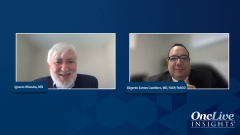
This segment transitions the conversation from biologic rationale to the practical interpretation of clinical and translational data supporting TROP2 NMR as a predictive biomarker for TROP2-directed ADCs. Dr. Wistuba explains that the value of NMR lies not only in what it measures (relative membrane versus cytoplasmic TROP2 signal) but also in how rigorously it is derived. Unlike conventional IHC scoring, which relies on semi-quantitative categorical grading, the NMR is calculated using computational pathology at the single-cell level. The algorithm evaluates at least 100 malignant cells per tumor sample, computes the ratio cell-by-cell, and then summarizes these measurements into an interpretable biomarker call.
A key point is that the NMR definition can feel counterintuitive: the ratio is calculated as membrane expression divided by total expression (membrane plus cytoplasmic). As a result, a lower NMR implies relatively greater cytoplasmic signal and is associated with improved therapeutic response, which is consistent with the biologic premise that cytoplasmic localization may reflect internalization and intracellular processing of the ADC. Dr. Wistuba clarifies the operational threshold used in current datasets: an NMR value of ≤0.56 is the cell-level cutoff, and a tumor is considered “NMR-positive” when ≥75% of malignant cells meet that criterion. The experts acknowledge the complexity of the definition but emphasize the core takeaway for communication and future implementation: lower NMR at the cell level, present across a high proportion of tumor cells, aligns with better outcomes.
Dr. Santos then addresses the real-world clinical question: could he use TROP2 NMR today to inform decision-making? He frames NMR as addressing a major unmet need. TROP2 ADCs have shown activity, but clinicians have lacked a reliable way to identify who is most likely to benefit. Based on currently available (largely retrospective) analyses, he describes the NMR findings as “provocative” and internally consistent, suggesting potential utility for risk stratification and tailoring follow-up intensity, even while acknowledging it is not yet prospectively validated or broadly available.
The segment closes with a forward-looking pathology perspective. Dr. Wistuba describes that biomarkers must be driven by clinical need rather than novelty; if TROP2 NMR proves predictive in prospective trials, pathology will have a responsibility to implement it correctly, whether as a companion diagnostic or future laboratory-developed test, within an increasingly digital pathology ecosystem.
Advertisement
Related to this article
VS-7375 produced a responses previously treated metastatic pancreatic ductal adenocarcinoma.
SurVaxM missed the SURVIVE trial OS end point in newly diagnosed glioblastoma, whereas a subgroup of patients 65 or younger had significantly improved OS.
The resubmission follows a third complete response letter issued in July 2026 that cited manufacturing deficiencies rather than efficacy or safety concerns.
The FDA has approved atezolizumab in combination with chemotherapy for some patients with stage 3 colon cancer following surgery.

The FDA approved nogapendekin alfa inbakicept plus BCG for BCG-unresponsive NMIBC with high-grade papillary-only tumors.

The FDA set a PDUFA target action date of March 31, 2027, for tabelecleucel in relapsed or refractory EBV-positive post-transplant lymphoproliferative disease.
Experts in gynecologic oncology overview top research being presented at the 2026 ESMO Congress.

Matthew P. Goetz, MD, explores menopausal status, recurrence risk, and adjuvant CDK4/6 inhibitor selection in HR-positive breast cancer.
Advertisement
Advertisement
Trending on OncLive
1
FDA Approves Nogapendekin Alfa Inbakicept Plus BCG for High-Grade, Papillary-Only BCG-Unresponsive NMIBC
2
Real-World, First-Line IO-Based Combos Are Associated With Improved OS vs TKI Monotherapy in Advanced RCC
3
CDK4/6 Inhibitors Anchor First-Line Metastatic Breast Cancer Care, But Oral SERDs May Fall Short
4
Tenumomeran/Raplemomeran Plus Pembrolizumab Misses PFS End Point in HPV16+ HNSCC
5