
Opinion|Videos|June 18, 2026
Clinical Practice Guidelines, Patient Support Resources, and Key Takeaways
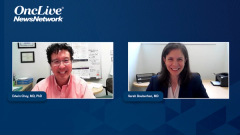
Author(s)Edwin Choy, MD, PhD, Sarah Bouberhan, MD
Learn practical ways to prevent and treat mTOR inhibitor mouth sores, from oral hygiene and rinses to ice chips and targeted mouthwashes.
Advertisement
Episodes in this series
Dr. Bouberhan references MASCC/ISOO clinical practice statements providing targeted therapy guidance for stomatitis management in patients receiving mTOR inhibitors. Guidelines recommend topical steroids as first-line treatment for established lesions, with corticosteroid gels or pastes appropriate for single lesions and broader solutions for extensive mucosal involvement. However, guidelines avoid blanket recommendations for prophylactic dexamethasone rinses, supporting individualized management approaches.
Dr. Choy emphasizes physical examination importance through additional clinical examples, reinforcing that common treatment-related toxicities require differential diagnosis consideration rather than automatic attribution to therapy effects. This vigilance prevents inappropriate treatment of unrelated conditions while ensuring optimal supportive care delivery.
The discussion transitions to patient support considerations given PEComa rarity. Dr. Bouberhan raises concerns about support system challenges for patients with extraordinarily rare diagnoses, asking about Dr. Choy's experience with patient support needs and helpful resources. Dr. Choy highlights pharmaceutical company support through nab-sirolimus manufacturer customer care programs. These companies demonstrate significant investment in patient outreach to optimize product utilization, providing comprehensive support for treatment-related toxicity management including mouth sore guidance. He utilizes these resources to maintain patients on recommended dosing and frequency, finding them valuable for optimal treatment adherence.
Beyond pharmaceutical support, Dr. Choy acknowledges grassroots patient advocacy development, suggesting probable existence of social media support groups for patients with PEComas. He describes typical evolution patterns where small patient groups expand into larger organizations capable of hosting conferences, inviting physician speakers, and funding research initiatives. This organic support network development provides hope for expanded patient resources as awareness increases throughout the oncology community.
Advertisement
Related to this article

The top 5 OncLive TV videos of the week cover insights in MDS, multiple myeloma, pancreatic cancer, colorectal cancer, and uveal melanoma.

The combination nearly doubled the confirmed response rate in the randomized phase 2 portion of HexAgon-HN, with the greatest benefit in HPV-positive disease.

The FDA approved pirtobrutinib for untreated chronic lymphocytic leukemia, granted priority review to elinzanetant for breast cancer hot flashes, and more.

The 2026 amendment adds 40 new recommendations, including active surveillance, office-based treatment, and chemoablation for select recurrent low-grade disease.
The FDA has approved pirtobrutinib for the treatment of adult patients with previously untreated CLL or SLL harboring no known 17p deletion.

By finding a way to attack the most important human oncogene, KRAS, the UCSF chemical biologist launched a new era in cancer treatment.

TRE-515 earned fast track status in combination with KRAS inhibitors for G12C-mutated NSCLC after anti–PD-(L)1 therapy and platinum-based chemotherapy.

An NDA for zipalertinib in EGFR exon 20 insertion–positive NSCLC is being supported by phase 3 REZILIENT3 data.
Advertisement
Advertisement
Trending on OncLive
1
INBRX-106 Plus Pembrolizumab Improves Responses and PFS in First-Line PD-L1–Positive HNSCC
2
FDA Approves Pirtobrutinib for Previously Untreated CLL/SLL
3
The OncFive: Top Oncology Articles for the Week of 9/27/2026
4
NDA Submission Is Initiated for Zipalertinib Plus Chemotherapy in Frontline EGFR Exon 20 Insertion+ NSCLC
5