
Opinion|Videos|June 11, 2026
Stomatitis Management and Treatment-Related Toxicity
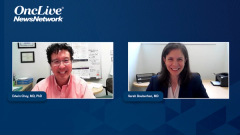
Author(s)Edwin Choy, MD, PhD, Sarah Bouberhan, MD
Experts weigh first-line nab-sirolimus for metastatic PEComa, comparing chemo, immunotherapy and VEGF options, and when molecular subtype matters.
Advertisement
Episodes in this series
Dr. Bouberhan initiates discussion of treatment-related side effects, particularly stomatitis management strategies for patients receiving nab-sirolimus or everolimus. Dr. Choy acknowledges extensive experience managing mouth sores across various sarcoma treatments, implementing comprehensive oral hygiene protocols as foundational care.
Standard preventive measures include twice-daily brushing and flossing with gentle toothpaste to minimize oral irritation. For nab-sirolimus specifically, where mouth sores occur commonly, patients receive recommendations for baking soda or warm salt water rinses performed 2 to 3 times daily, which adequately controls symptoms for many patients. An innovative though unproven technique involves ice chip mouth cooling during infusions, theoretically causing vasoconstriction to reduce chemotherapy delivery to oral mucosa. Although uncertain about mechanism effectiveness, some patients report symptomatic improvement in subsequent cycles.
Dr. Bouberhan discusses evidence-based stomatitis mitigation from non-PEComa literature, highlighting the SWISH trial investigating prophylactic dexamethasone mouthwash in patients with breast cancer receiving everolimus plus exemestane combination therapy. The intervention involved dilute dexamethasone elixir swished for 2 minutes 4 times daily during the first 8 treatment weeks, demonstrating marked stomatitis reduction from 39% grade 2 or higher in controls to only 2% in the intervention group.
However, dexamethasone rinses carried side effects including hyperglycemia from routine steroid exposure. Dr. Choy indicates infrequent steroid mouthwash prescription in his practice, preferring Peridex (non-alcoholic chlorhexidine) for oral hygiene maintenance and nystatin mouthwash for Candida-associated mouth sores, with swallow instructions to address potential esophageal involvement.
Physical examination importance emerges through differential diagnosis considerations, as Dr. Bouberhan notes that inappropriate dexamethasone administration could worsen candidiasis. Dr. Choy shares a clinical case where presumed treatment-related stomatitis actually represented herpes simplex virus infection, resolving rapidly with valacyclovir therapy. This emphasizes that although stomatitis represents common mTOR inhibitor toxicity, clinicians must avoid automatic assumptions and perform appropriate evaluations.
Advertisement
Related to this article

The top 5 OncLive TV videos of the week cover insights in MDS, multiple myeloma, pancreatic cancer, colorectal cancer, and uveal melanoma.

The combination nearly doubled the confirmed response rate in the randomized phase 2 portion of HexAgon-HN, with the greatest benefit in HPV-positive disease.

The FDA approved pirtobrutinib for untreated chronic lymphocytic leukemia, granted priority review to elinzanetant for breast cancer hot flashes, and more.

The 2026 amendment adds 40 new recommendations, including active surveillance, office-based treatment, and chemoablation for select recurrent low-grade disease.
The FDA has approved pirtobrutinib for the treatment of adult patients with previously untreated CLL or SLL harboring no known 17p deletion.

By finding a way to attack the most important human oncogene, KRAS, the UCSF chemical biologist launched a new era in cancer treatment.

TRE-515 earned fast track status in combination with KRAS inhibitors for G12C-mutated NSCLC after anti–PD-(L)1 therapy and platinum-based chemotherapy.

An NDA for zipalertinib in EGFR exon 20 insertion–positive NSCLC is being supported by phase 3 REZILIENT3 data.
Advertisement
Advertisement
Trending on OncLive
1
INBRX-106 Plus Pembrolizumab Improves Responses and PFS in First-Line PD-L1–Positive HNSCC
2
FDA Approves Pirtobrutinib for Previously Untreated CLL/SLL
3
The OncFive: Top Oncology Articles for the Week of 9/27/2026
4
NDA Submission Is Initiated for Zipalertinib Plus Chemotherapy in Frontline EGFR Exon 20 Insertion+ NSCLC
5