
Opinion|Videos|January 9, 2026
Comparing BCMA Bispecific Options and Exploring Combination and Future Strategies
Author(s)Hans Lee, MD, Paul Richardson, MD
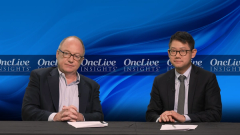
Drs Paul Richardson and Hans Lee compare the three currently available BCMA-directed bispecific antibodies and discuss how differences in administration, logistics, and emerging data influence treatment selection in relapsed or refractory multiple myeloma.
Advertisement
Episodes in this series
Drs Paul Richardson and Hans Lee compare the three currently available BCMA-directed bispecific antibodies and discuss how differences in administration, logistics, and emerging data influence treatment selection in relapsed or refractory multiple myeloma. While acknowledging the strong efficacy shared across the class, the conversation focuses on practical differentiators, including step-up dosing cadence, feasibility in community settings, and performance in difficult-to-treat subgroups such as patients with high disease burden or extramedullary disease. The faculty also explore the growing role of combination strategies, highlighting how bispecific antibodies may be partnered with immunomodulatory agents, proteasome inhibitors, or CD38-directed monoclonal antibodies to enhance depth and durability of response. Mechanistic considerations around cytopenias and inflammatory marrow effects are reviewed, along with supportive care approaches. Looking ahead, the discussion highlights emerging data on linvoseltamab in earlier-line and consolidation settings, underscoring its potential to expand access to highly active immunotherapy beyond specialized academic centers and into broader real-world practice.
Advertisement
Related to this article
The NCCN update adds locally advanced CSCC to the category 2A listing cosibelimab received in metastatic disease in 2025.

In TASKIN, the 12-month OS rate was 61.3% with vilamakitug vs 55.7% with placebo plus trifluridine/tipiracil.

The 510(k) clearance covers an MRI-derived AI risk score for stage I to IIIA disease; the high-risk category carried an HR of 2.81 for recurrence.

The FDA has approved dostarlimab for MSI-H or dMMR locally advanced rectal cancer.

The FDA accepted an NDA for UGN-103 for recurrent low-grade intermediate-risk NMIBC, with a target action date of June 14, 2027.

Ulrich Steidl, MD, PhD, has finalized his Montefiore Einstein Comprehensive Cancer Center senior leadership team.

The CirCLIQ Injector approval for subcutaneous isatuximab in multiple myeloma is the first anticancer treatment delivered via an on-body injector in Japan.

The top 5 OncLive TV videos of the week cover insights in multiple myeloma, HR+ breast cancer, CAR T-cell therapy, CLL, and oral SERDs.
Advertisement
Advertisement
Trending on OncLive
1
FDA Clears TumorSight Risk, an MRI-Derived AI Recurrence Tool for HR+, HER2– Breast Cancer
2
Dr Cercek on the FDA Approval of Dostarlimab for dMMR/MSI-H Locally Advanced Rectal Cancer
3
Vilamakitug Meets OS Threshold in Phase 1/2 Refractory mCRC Trial
4
Weigh Benefit Against Burden: Defining Lurbinectedin’s Role in a Shifting Small Cell Lung Cancer Landscape
5