
Opinion|Videos|January 23, 2026
Expanding Targets, Combination Strategies, and the Future Direction of BCMA Bispecific Therapy
Author(s)Hans Lee, MD, Paul Richardson, MD
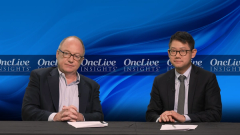
In this closing segment, Drs Paul Richardson and Hans Lee look ahead to how BCMA-directed bispecific antibodies may continue to evolve within an increasingly complex treatment landscape.
Advertisement
Episodes in this series
In this closing segment, Drs Paul Richardson and Hans Lee look ahead to how BCMA-directed bispecific antibodies may continue to evolve within an increasingly complex treatment landscape. The discussion contrasts BCMA targeting with alternative antigens such as GPRC5D, highlighting differences in efficacy, tolerability, and on-target toxicities that influence sequencing decisions. The faculty review where GPRC5D-directed therapy may fit, particularly in patients with high disease burden or extramedullary disease, while reinforcing BCMA as the preferred initial target for many patients. Attention then turns to emerging combination strategies, including partnerships with proteasome inhibitors, immunomodulatory agents, and CD38-directed antibodies, as well as the growing interest in consolidation approaches following induction therapy. Drawing on recent clinical data, the speakers emphasize immunogenic cell death, infection risk mitigation, and real-world feasibility as key considerations. Together, this segment underscores the momentum behind bispecific antibody development and outlines a future in which linvoseltamab and related agents may move earlier in therapy through rational sequencing and thoughtfully designed combinations.
Advertisement
Related to this article
The NCCN update adds locally advanced CSCC to the category 2A listing cosibelimab received in metastatic disease in 2025.

In TASKIN, the 12-month OS rate was 61.3% with vilamakitug vs 55.7% with placebo plus trifluridine/tipiracil.

The 510(k) clearance covers an MRI-derived AI risk score for stage I to IIIA disease; the high-risk category carried an HR of 2.81 for recurrence.
The FDA has approved dostarlimab for MSI-H or dMMR locally advanced rectal cancer.

The FDA accepted an NDA for UGN-103 for recurrent low-grade intermediate-risk NMIBC, with a target action date of June 14, 2027.

Ulrich Steidl, MD, PhD, has finalized his Montefiore Einstein Comprehensive Cancer Center senior leadership team.

The CirCLIQ Injector approval for subcutaneous isatuximab in multiple myeloma is the first anticancer treatment delivered via an on-body injector in Japan.

The top 5 OncLive TV videos of the week cover insights in multiple myeloma, HR+ breast cancer, CAR T-cell therapy, CLL, and oral SERDs.
Advertisement
Advertisement
Trending on OncLive
1
FDA Clears TumorSight Risk, an MRI-Derived AI Recurrence Tool for HR+, HER2– Breast Cancer
2
Dr Cercek on the FDA Approval of Dostarlimab for dMMR/MSI-H Locally Advanced Rectal Cancer
3
Vilamakitug Meets OS Threshold in Phase 1/2 Refractory mCRC Trial
4
Weigh Benefit Against Burden: Defining Lurbinectedin’s Role in a Shifting Small Cell Lung Cancer Landscape
5