Half of lenalidomide-refractory patients with 1 to 3 prior lines remained alive and progression free at least 5 years after a single cilta-cel infusion.
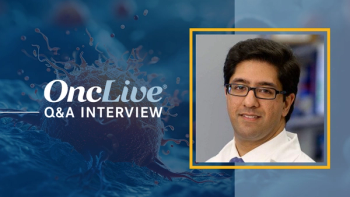
Marwan G. Fakih, MD, discusses the clinical coordination of liquid and tissue biopsies and identifies when repeat ctDNA testing is over-utilized.
"There is no question that there are’ a plethora of tests out there…but the advantage of circulating tumor DNA testing or genomic testing is that it gives you a very quick result... One of the disadvantages is that some of the tests are not fully validated…what is currently not there yet is the same sensitivity for all the fusions [that there is for somatic mutations].”
Marwan G. Fakih, MD, a professor in the Department of Medical Oncology & Therapeutics Research; associate director of Clinical Sciences; medical director of the Briskin Center for Clinical Research; division chief of GI Medical Oncology; and co-director of the Gastrointestinal Cancer Program at City of Hope, discussed the practical integration of liquid and tissue biopsies in colorectal cancer (CRC).
At the 11th Annual School of Gastrointestinal Oncology®, an event held by Physicians’ Education Resource, LCC, Fakih delivered a presentation on concordance of liquid and tissue biopsy in CRC and detailed several case studies to illustrate the advantages vs limitations of using either method.
Although clinicians in the United States have a "privilege" of access to a plethora of genomic tools, the key to effective care lies in the rational application of these tests, Fakih emphasized. In everyday clinical practice, liquid biopsy—or circulating tumor DNA (ctDNA) testing—offers a significant lead-time advantage, typically providing results within 1 week to 8 days. Fakih noted that although genomic results are highly concordant with tissue biopsies for somatic alterations, liquid biopsies currently lack full validation for identifying fusions, standardizing tumor mutational burden (TMB), or interpreting certain amplifications. Consequently, he emphasized that tissue remains the diagnostic standard, though baseline liquid biopsies serve as a helpful "hedge" to capture a comprehensive picture of dominant metastatic disease.
Fakih provided specific "everyday life" examples regarding the over-utilization of repeat testing in the community. For instance, he noted a trend of repeating ctDNA in patients with a known KRAS G12D driver mutation following progression on chemotherapy. He argued that this practice does not uncover new biomarkers and serves only to drive up health care costs without patient benefit.
Conversely, he identified scenarios where repeat ctDNA testing is clinically data-driven. This includes monitoring patients who progress on anti-EGFR therapies, such as cetuximab (Erbitux) or panitumumab (Vectibix), to identify specific resistance mechanisms. Furthermore, repeat testing is vital for an anti-EGFR rechallenge; if a liquid biopsy performed 6 to 8 months after the cessation of initial therapy shows that resistance mutations have cleared, a rechallenge may be appropriate. Ultimately, Fakih concluded that while both liquid and tissue data are essential, their use must be governed by rational clinical questions.