
|Videos|September 28, 2019
ESMO 2019: Dr. McGregor Highlights Impactful 2019 Prostate Cancer Studies
Advertisement
Episodes in this series

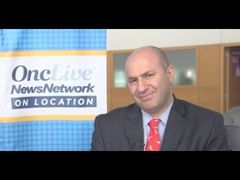
Bradley McGregor, MD, clinical director, Lank Center for Genitourinary Oncology, senior physician, Dana-Farber Cancer Institute, and instructor of medicine, Harvard Medical School, discusses the most impactful trials in prostate cancer presented at the 2019 ESMO Congress.
In the era of personalized precision medicine, results from
The PROfound trial compared olaparib (Lynparza) with physician’s choice of enzalutamide (Xtandi) or abiraterone acetate (Zytiga) in patients with heavily pretreated, metastatic castration-resistant prostate cancer (mCRPC) who harbor homologous recombination repair (HRR) gene alterations. Notably, up to 30% of patients with mCRPC harbor DNA damage repair alterations. In the trial, olaparib was found to improve radiographic progression-free survival (rPFS) compared with enzalutamide or abiraterone. The median rPFS for patients with BRCA1/2 or ATM alterations (cohort A) was 7.39 months versus 3.55 months for patients treated with hormonal therapy (HR, 0.34; P <.0001). A slight trend was reported for benefit in patients with an alteration in BARD1, BRIP1, CDK12, CHEK1/2, FANCL, PALB2, PPP2R2A, RAD51B/C/D, or RAD54L (cohort B), but it was not statistically significant for rPFS (HR, 0.88).
Interim analysis of the GALAHAD trial, investigating single-agent niraparib (Zejula), also demonstrated encouraging activity in patients with mCRPC. Specifically, among patients with BRCA-mutated biallelic DNA-repair gene defects. The objective response rate for patients with biallelic BRCA1/2 mutations was 41% compared with 9% for patients with non-BRCA biallelic DRD. Although the trial is ongoing, these data suggest a potential role for niraparib monotherapy in this patient population, says McGregor.
Chemotherapy still plays a role in prostate cancer as demonstrated by the randomized
Finally, an updated analysis of the phase III SPARTAN trial showed an improvement in metastasis-free survival (MFS) with the addition of apalutamide (Erleada) to androgen-deprivation therapy for men with nonmetastatic CRPC. Median MFS was 40.5 months for patients treated with apalutamide compared with 16.2 months with placebo (HR, 0.28; 95% CI, 0.23-0.35; P <.0001). OS has not yet been reached, says McGregor, but there is a trend toward improvement with apalutamide. Although the P value wasn’t statistically significant, the data are clinically significant, says McGregor.
The field of prostate cancer is rapidly evolving, McGregor concludes. Going forward, additional biomarkers and novel targeted agents may lead to further disease control and more durable responses.
Advertisement
Related to this article

The FDA approved imlunestrant plus abemaciclib in breast cancer and photodynamic therapy in skin cancer, and more.

The FDA approved lirafugratinib in FGFR2+ cholangiocarcinoma and belzutifan plus lenvatinib in advanced ccRCC, and more.

Did you catch all of this week's top oncology news? Test your knowledge with OncLive's Weekly News Quiz.

The top 5 OncLive TV videos of the week cover insights in NSCLC, large granular lymphocytic leukemia, ovarian cancer, and myelofibrosis.

Did you catch all of this week's top oncology news? Test your knowledge with OncLive's Weekly News Quiz.

Researchers at Wake Forest University School of Medicine identified a protein that may help breast cancer spread to the brain and evade immune defenses.

Benjamin Weinberg, MD, discusses the FDA approval of daraxonrasib, RASolute 302 survival data, safety considerations, and future RAS-targeted therapies in pancreatic cancer.

An NDA seeks FDA approval of savolitinib plus osimertinib for EGFR-mutated NSCLC with MET overexpression or amplification after EGFR TKI therapy.
Advertisement
Advertisement
Trending on OncLive
1
Savolitinib Plus Osimertinib NDA Submitted to FDA for MET-Driven, EGFR-Mutated NSCLC After EGFR TKI
2
FDA Grants Priority Review to Elinzanetant for Endocrine Therapy–Associated Vasomotor Symptoms in HR+ Breast Cancer
3
Calculating the Real Cost of False Positive Findings in Cancer Screening
4
China's NMPA Approves Pirtobrutinib Across CLL
5