The FDA approved daraxonrasib for pancreatic cancer, cleared zanidatamab-based regimens for HER2-positive gastric cancer, and more.

Drs Razavi and Ross note the evolution of ESR1 mutation–directed breast cancer management, including the role of genomic testing at metastatic recurrence.
Welcome to OncLive On Air®! I'm your host today, Ashling Wahner.
OncLive On Air is a podcast from OncLive®, which provides oncology professionals with the resources and information they need to provide the best patient care. In both digital and print formats, OncLive covers every angle of oncology practice, from new technology to treatment advances to important regulatory decisions.
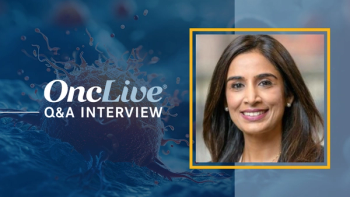
In today’s episode, we welcomed Pedram Razavi, MD, PhD, and Dara S. Ross, MD. Dr Razavi is a breast medical oncologist and director of Liquid Biopsy & Genomics at Memorial Sloan Kettering Cancer Center in New York, New York. Dr Ross is an associate attending pathologist at Memorial Sloan Kettering Cancer Center.
In our exclusive interview, Drs Razavi and Ross discussed the evolution of ESR1 mutation–directed breast cancer management, emphasizing the role of comprehensive genomic testing at metastatic recurrence, including liquid biopsy and tissue sequencing. They highlighted that ESR1 mutations can develop in patients receiving aromatase inhibitors and that the detection of these mutations is crucial for treatment decisions. They also highlighted findings from the phase 3 SERENA-6 trial (NCT04964934), which tested switching to camizestrant upon the emergence of an ESR1 mutation during treatment with an aromatase inhibitor and a CDK4/6 inhibitor ahead of radiographic disease progression in patients with hormone receptor–positive, HER2-negative metastatic breast cancer. Despite concerns from the FDA's Oncologic Drugs Advisory Committee (ODAC) about SERENA-6’s design and overall survival outcomes, the experts praised the trial's innovative approach to personalizing breast cancer management based on biomarkers and noted ways that the ODAC decision may affect future clinical research in this field.
_____
That’s all we have for today! Thank you for listening to this episode of OncLive On Air. Check back throughout the week for exclusive interviews with leading experts in the oncology field.
For more updates in oncology, be sure to visit www.OncLive.com and sign up for our e-newsletters.
OncLive is also on social media. On X and BlueSky, follow us at @OncLive. On Facebook, like us at OncLive, and follow our OncLive page on LinkedIn.
If you liked today’s episode of OncLive On Air, please consider subscribing to our podcast on Apple Podcasts, Spotify, and many of your other favorite podcast platforms,* so you get a notification every time a new episode is posted. While you are there, please take a moment to rate us!
Thanks again for listening to OncLive On Air.
*OncLive On Air is available on: Apple Podcasts, Spotify, CastBox, Podcast Addict, Podchaser, RadioPublic, and TuneIn.
This content is a production of OncLive; this OncLive On Air podcast episode is supported by funding, however, content is produced and independently developed by OncLive.