
Opinion|Videos|November 27, 2026
HER2-Mutant NSCLC: Subsequent Therapies and T-DXd Safety
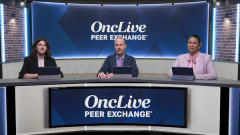
In this segment of the OncLive Peer Exchange®, Dr. Benjamin P. Levy, Dr. Julia Rotow, and Dr. Narjust Florez discuss subsequent treatments received by patients in the DESTINY-Lung04 trial and their potential impact on overall survival outcomes.
Advertisement
Episodes in this series
In this segment of the OncLive Peer Exchange®, Dr. Benjamin P. Levy, Dr. Julia Rotow, and Dr. Narjust Florez discuss subsequent treatments received by patients in the DESTINY-Lung04 trial and their potential impact on overall survival outcomes. Dr. Rotow explains that access to subsequent therapy was similar between treatment arms, but the types of treatments received differed, with patients in the chemotherapy arm having greater access to HER2-targeted therapies after progression. The panel considers how the rapid evolution of treatment availability during the study may have influenced the overall survival results. Dr. Rotow notes that efficacy appeared broadly consistent across the examined subgroups, without a clear patient population showing a distinct differential benefit. The discussion then shifts to safety, particularly interstitial lung disease (ILD) associated with trastuzumab deruxtecan (T-DXd). Dr. Florez highlights the approximately 20% ILD rate observed in the first-line setting, noting that most cases were grade 1 or 2, although some higher-grade events occurred. The panel emphasizes the importance of understanding and monitoring this risk when considering T-DXd as initial therapy for HER2-mutant NSCLC.
Advertisement
Related to this article
Did you catch all of this week's top oncology news? Test your knowledge with OncLive's Weekly News Quiz.

UCLA’s Mina Sedrak, MD, MS, receives an ACS grant to study lower-dose trastuzumab deruxtecan in older adults with advanced breast cancer.

Adding the DPP-4 inhibitor sitagliptin to antithymocyte globulin–based prophylaxis significantly reduced grade 2 to 4 acute GVHD by day +100 in a randomized phase 3 trial.

Benjamin Bleiberg, MD, discusses first-line regimen selection, toxicity-focused shared decision-making, and molecular profiling in EGFR-mutant NSCLC.

GFH375 monotherapy yielded responses in heavily pretreated patients with KRAS G12D–mutated cholangiocarcinoma or colorectal cancer.

Thoracic oncologists discuss how KRAS, STK11, and KEAP1 alterations inform first-line immunotherapy decision-making in nonsquamous metastatic NSCLC.

Laura S. Graham, MD, discusses the rationale, safety, PSA responses, and next steps for JNJ-87189401 plus pasritamig in pretreated mCRPC.

BMX-001 was safe and showed encouraging quality-of-life findings in a phase 1/2 head and neck cancer study, supporting randomized evaluation.
Advertisement
Advertisement
Trending on OncLive
1
GFH375 Shows Antitumor Activity in KRAS G12D–Mutated CCA and CRC
2
Dr. Mina Sedrak Awarded ACS Grant to Improve Breast Cancer Treatment for Older Adults
3
Sitagliptin Added to ATG-Based Prophylaxis Reduces Acute GVHD After Alternative Donor Transplant in Hematologic Malignancies
4
Molecular Profiling and Shared Decision-Making Guide First-Line EGFR-Mutant NSCLC
5