
Opinion|Videos|November 20, 2026 (Updated: November 18, 2026)
How the First-Line EGFR-Mutated NSCLC Landscape Has Changed
Author(s)Lyudmila Bazhenova, MD, Edward S. Kim, MD, MBA
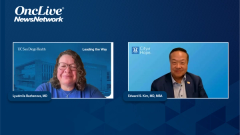
Lyudmila Bazhenova, MD, of University of California San Diego Moores Cancer Center, opens this OncLive News Network discussion with Edward S. Kim, MD, MBA, of City of Hope Orange County, by asking how first-line treatment of EGFR-mutated non–small cell lung cancer (NSCLC) has changed. Dr Kim recalls when all EGFR mutations were grouped into one bucket and treatment meant a single tyrosine kinase inhibitor (TKI), with rash and diarrhea as the main problems to manage.
Advertisement
Lyudmila Bazhenova, MD, of University of California San Diego Moores Cancer Center, opens this OncLive News Network discussion with Edward S. Kim, MD, MBA, of City of Hope Orange County, by asking how first-line treatment of EGFR-mutated non–small cell lung cancer (NSCLC) has changed. Dr Kim recalls when all EGFR mutations were grouped into one bucket and treatment meant a single tyrosine kinase inhibitor (TKI), with rash and diarrhea as the main problems to manage. He says the field now separates sensitizing, less common, and resistance mutations, and that therapies have become more potent with different or fewer toxicities. With several first-line options and new data arriving all the time, he says it is hard to pick the best treatment for each person, and the choice is not yet defined by the exact type of sensitizing mutation. Dr Bazhenova previews the program’s focus on first-line choices, options at progression, and patient communication.
Advertisement
Related to this article
Jorge Cortes, MD, discusses response-based ponatinib dosing, mutation testing, and managing cardiovascular risk in resistant CML.

The EC approved every-6-week maintenance dosing and shorter 350-mg infusions for cemiplimab across all 6 EU indications.

Faculty convened at an OncLive Scientific Interchange and Workshop to guide oncology fellows through designing a cancer clinical trial development program, from concept to approval.

The FDA granted priority review to sonesitatug vedotin for previously treated CLDN18.2-positive advanced gastroesophageal cancers.

UCLA Health performs its first single-port robotic lobectomy, using a new technique that could reduce pain and make recovery easier for patients with lung cancer.

Narek Shaverdian, MD, outlines how novel strategies may reshape unresectable stage III NSCLC management.

In case you missed any, read a recap of the episodes of OncLive On Air that aired in October 2026.

The FDA granted fast track designation to elticertinib for pretreated EGFR exon 20 insertion–mutated NSCLC.
Advertisement
Advertisement
Trending on OncLive
1
FDA Grants Priority Review to Sonesitatug Vedotin in CLDN18.2+ Gastroesophageal Cancer
2
EC Approves Extended Cemiplimab Dosing in Skin, Lung, and Cervical Cancers
3
Dose Optimization, Evidentiary Bars, and Patient Selection Shape Trial Design in EGFR- and HER2-Mutant NSCLC
4
Defining High-Risk Localized Prostate Cancer and the DASL-HiCaP Trial
5