Now Playing
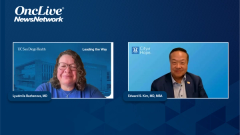
Lyudmila Bazhenova, MD, of University of California San Diego Moores Cancer Center, asks Edward S. Kim, MD, MBA, of City of Hope Orange County, for the one message community oncologists should take away about talking with patients about EGFR-mutated non–small cell lung cancer (NSCLC) in 2026.
Lyudmila Bazhenova, MD, of University of California San Diego Moores Cancer Center, asks Edward S. Kim, MD, MBA, of City of Hope Orange County, for the one message community oncologists should take away about talking with patients about EGFR-mutated non–small cell lung cancer (NSCLC) in 2026. Dr Kim says the field has moved from gefitinib to multiple first-line therapies and options after progression. He says more choices bring more responsibility, so clinicians need to weigh the patient, the course of the disease, and the adverse effects of each therapy. His plea is to get biomarker testing done up front and, when treatment fails, to repeat the biopsy and the markers because the disease can change. Dr Bazhenova agrees and stresses that he means a tissue biopsy. She warns that a liquid biopsy alone will miss small cell transformation, which changes the chemotherapy used, and can miss acquired changes such as MET overexpression and amplification.
Lyudmila Bazhenova, MD, of University of California San Diego Moores Cancer Center, asks Edward S. Kim, MD, MBA, of City of Hope Orange County, for the one message community oncologists should take away about talking with patients about EGFR-mutated non–small cell lung cancer (NSCLC) in 2026. Dr Kim says the field has moved from gefitinib to multiple first-line therapies and options after progression. He says more choices bring more responsibility, so clinicians need to weigh the patient, the course of the disease, and the adverse effects of each therapy. His plea is to get biomarker testing done up front and, when treatment fails, to repeat the biopsy and the markers because the disease can change. Dr Bazhenova agrees and stresses that he means a tissue biopsy. She warns that a liquid biopsy alone will miss small cell transformation, which changes the chemotherapy used, and can miss acquired changes such as MET overexpression and amplification.