
Opinion|Videos|November 13, 2026
Interpreting CLL17 and Depth of Response in Frontline CLL
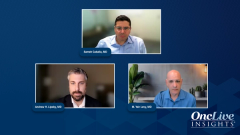
Sameh Gaballa, MD, of Moffitt Cancer Center, asks the faculty to interpret CLL17, the first phase 3 trial to compare fixed-duration and continuous therapy in treatment-naive chronic lymphocytic leukemia (CLL).
Advertisement
Episodes in this series
Sameh Gaballa, MD, of Moffitt Cancer Center, asks the faculty to interpret CLL17, the first phase 3 trial to compare fixed-duration and continuous therapy in treatment-naive chronic lymphocytic leukemia (CLL). Andrew H. Lipsky, MD, of Columbia University Irving Medical Center, likens the 3-year readout to checking a marathon at mile 3: all 3 strategies are well tolerated and progression-free survival (PFS) is similar, but separation in CLL emerges later, since the TP53 signal with Bruton tyrosine kinase (BTK) inhibitors takes 5 to 6 years to appear. M. Yair Levy, MD, of Texas Oncology–Baylor Charles A. Sammons Cancer Center, notes that subgroups with 17p deletion or TP53 mutation already show shorter PFS than continuous BTK inhibition and expects that gap to widen. On depth of response, Dr Lipsky considers measurable residual disease irrelevant for continuous therapy and only partly predictive for time-limited therapy, since many patients become MRD positive again.
Advertisement
Related to this article
Did you catch all of this week's top oncology news? Test your knowledge with OncLive's Weekly News Quiz.

Age, geographic location, transportation barriers, and language and communication barriers may limit patient opportunities to participate in research.

Targeting two alternate pathways at the same time led to improved outcomes in multiple preclinical models of advanced breast cancer.

Updated LEGEND cohort 1 data showed a 56% CR rate and a 24% 12-month CR rate with detalimogene in BCG-unresponsive, high-risk NMIBC with CIS.

Phase 2 Co-PSMA data showed higher lesion detection with 64Cu-SAR-bisPSMA vs 68Ga-PSMA-11 in biochemical recurrence after prostatectomy.

Mary Ann Anderson, MBBS, FRACP, FRCPA, PhD, discusses CLL17 trial data, resistance mechanisms, and emerging BTK degraders and bispecifics in CLL.
Check out this October recap of OncLive’s coverage of the top news and expert insights in gastrointestinal cancers.

Thomas Powles, MBBS, MRCP, MD, discusses LITESPARK-022 QOL findings and patient selection for adjuvant belzutifan plus pembrolizumab in RCC.
Advertisement
Advertisement
Trending on OncLive
1
FDA Grants Breakthrough Therapy Designation to 64Cu-SAR-bisPSMA for PSMA PET in Biochemically Recurrent Prostate Cancer
2
Detalimogene Responses Improve With Longer Follow-Up in BCG-Unresponsive NMIBC Ahead of BLA Submission
3
Combination Therapy Overcomes Treatment Resistance in Breast Cancer Models
4
Dr Wander on the Evolving First-Line and Post–T-DXd Landscape in HER2+ Metastatic Breast Cancer
5