
Opinion|Videos|April 7, 2026
Key Takeaways and Future Considerations in Advanced DTC Management
Author(s)Gregory W. Randolph, MD
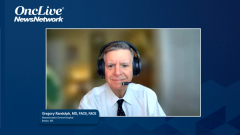
In this closing segment, Dr. Greg Randolph distills key lessons for clinicians managing patients with differentiated thyroid cancer (DTC), particularly those whose disease progresses over time.
Episodes in this series
In this closing segment, Dr. Greg Randolph distills key lessons for clinicians managing patients with differentiated thyroid cancer (DTC), particularly those whose disease progresses over time. He emphasizes that optimal care depends on a truly multidisciplinary model, involving surgeons, endocrinologists/endocrine oncologists, and medical oncologists working in close coordination rather than in silos.
For patients with metastatic disease and local–regional recurrence, surgeons help determine whether reoperation or ablative approaches are safe and beneficial. Endocrinologists guide TSH suppression, calcium/vitamin D management, radioactive iodine use, and consideration of redifferentiation strategies. Medical oncologists and endocrine oncologists lead systemic therapy selection and sequencing, often informed by NGS testing.
Dr. Randolph also highlights the importance of smooth transitions between specialties, communicating vocal cord status, imaging timing, biochemical parameters, and disease trajectory. Early involvement of medical oncology, even before systemic therapy is needed, helps ensure that when progression occurs, patients receive timely, well-coordinated, and personalized care.
Supported in part by Eisai, content independently produced by OncLive.
Related to this article

The final OS analysis of PAPILLON did not reach statistical significance in the ITT population, but a pre-specified crossover-adjusted analysis showed a 43% reduction in the risk of death.

An exploratory landmark analysis of the phase 3 ADAURA trial showed 8-year OS rates of 79% versuss 64% with placebo, with benefit maintained across stages and subgroups.
Frontline zidesamtinib produced a 94% response rate and 100% intracranial response rate in TKI-naive ROS1-positive advanced NSCLC.

First-line trastuzumab deruxtecan reduced the risk of progression or death by 37% compared with pembrolizumab plus chemotherapy in HER2-mutant non–small cell lung cancer.
Edgardo S. Santos Castillero, MD, discusses MAVERICK, B7-H3 ADC data, and tarlatamab sequencing in SCLC, plus molecular testing in a value-based practice.
Adding intercalated gefitinib to adjuvant chemotherapy improved DFS vs chemotherapy alone in completely resected stage II-IIIB EGFR-mutant NSCLC in a phase 3 trial.

The top 5 OncLive TV videos of the week cover insights in polycythemia vera, myelodysplastic syndrome, myelofibrosis, and acute myeloid leukemia.
A real-world study found just one-third of patients remained on adjuvant osimertinib at 3 years, with early discontinuation linked to worse disease-free survival.
Trending on OncLive
1
Ris-Rez Extends Median OS to 18.5 Months vs Topotecan in Relapsed SCLC
2
Tam-Peli Reduces Risk of Death by 54% vs Topotecan in Relapsed SCLC
3
Early Discontinuation of Adjuvant Osimertinib Doubles Recurrence Risk in EGFR-Mutated NSCLC
4
DESTINY-Lung04 Showcases PFS Benefit With First-Line T-DXd in HER2-Mutant NSCLC
5