Now Playing
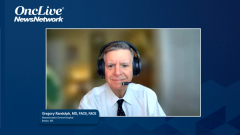
In this segment, Dr. Greg Randolph outlines the foundational principles of managing advanced differentiated thyroid cancer (DTC), emphasizing the central role of surgery. He explains that for most solid tumors, including DTC, surgery remains the optimal initial therapy when it can be performed safely and completely. Surgery is typically followed by radioactive iodine, forming the mainstay of first-line treatment.
In this segment, Dr. Greg Randolph outlines the foundational principles of managing advanced differentiated thyroid cancer (DTC), emphasizing the central role of surgery. He explains that for most solid tumors, including DTC, surgery remains the optimal initial therapy when it can be performed safely and completely. Surgery is typically followed by radioactive iodine, forming the mainstay of first-line treatment.
Dr. Randolph stresses that the primary surgical goal is complete resection of gross disease, while microscopic nodal disease and close (R1) margins are of lesser concern compared with avoiding an R2 (gross residual) outcome. He then describes how “advanced” DTC can be defined through multiple lenses: structurally (e.g., visceral invasion on imaging), molecularly (such as BRAF and TERT co-mutations), and biochemically (e.g., thyroglobulin or calcitonin doubling times). These factors help clinicians characterize disease severity and guide initial treatment strategy in patients with more complex DTC presentations.
Supported in part by Eisai, content independently produced by OncLive.