
Opinion|Videos|May 14, 2026
MET Alterations in NSCLC: Amplification, Mutations, and Therapeutic Strategies
Author(s)Eric K. Singhi, MD, Chinmay Jani, MD
Decode MET-altered lung cancer: amplification, exon 14 skipping and co-mutations, plus evolving targeted therapies and tumor board insights.
Advertisement

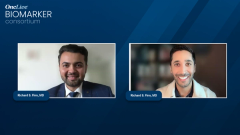
In this segment, Dr. Singhi opens by noting that MET nomenclature is already confusing and asks Dr. Jani to walk through what MET-altered NSCLC means. Dr. Jani distinguishes two main facets: MET amplification and MET alterations or mutations. He notes that depending on the type, various TKIs and MET-directed therapies may be utilized. He highlights amivantamab as having dual EGFR/MET receptor blockade but acknowledges that evidence for how to approach cases with co-occurring alterations at baseline remains limited, with evolving data on TKI use at progression and in earlier settings.
Dr. Jani emphasizes the role of the molecular tumor board, particularly when multiple co-mutations are present, such as EGFR plus MET plus TP53. He stresses that molecular tumor boards should not be limited to academic centers, as expanding access is a critical unmet need. He notes these boards include not only thoracic oncologists but also breast and GU oncologists who can contribute cross-disciplinary insights.
Dr. Singhi adds that MET-altered NSCLC encompasses three distinct entities: MET protein overexpression, which may qualify a patient for an antibody-drug conjugate; MET amplification, a common resistance mechanism in EGFR-directed therapy; and MET exon 14 skipping mutations. He underscores that this complexity, compounded by co-alterations, reinforces the need for multidisciplinary collaboration to improve patient outcomes.
In the next episode, "Gaps and Future Directions in NSCLC Biomarker Testing," the panel examines liquid biopsy, MRD, and non-actionable alterations to guide future testing and therapy.
Advertisement
Related to this article
A pilot study represents a milestone toward testing a faster, more powerful, and potentially less-toxic form of radiation therapy for cancer treatment.
Oral azacitidine and cedazuridine met the end point of total cycle azacitidine exposure vs subcutaneous azacitidine in MDS or CMML.
UTRxMYCN M1-14 received orphan drug status for soft tissue sarcoma and RPDD for rhabdomyosarcoma.

Interim data showed that the BCMA-directed CAR T-cell therapy NXC-201 generated complete responses in relapsed/refractory AL amyloidosis.

Estelamari Rodriguez, MD, MPH, discusses the rationale, design, and practice implications of the phase 3 RELATIVITY-1093 trial in nonsquamous NSCLC.
Experts spotlight the variety of breast cancer research being presented at the 2026 ESMO Congress.

The third BLA submission for tabelecleucel follows 2 CRLs and includes updated ALLELE data with additional patients and longer follow-up.

A New England Journal of Medicine report describes complete hepatoblastoma regression in a 3-year-old treated with a novel immunotherapy.
Advertisement
Advertisement
Trending on OncLive
1
FDA Grants Fast Track Designation to Plinabulin Plus Docetaxel in Post-ICI Non-Squamous NSCLC
2
Breast Cancer Experts Highlight Abstracts to Watch at ESMO 2026
3
Navigating DLL3-Targeting T-Cell Engagers and the Evolving Small Cell Lung Cancer Treatment Landscape
4
FDA Approves Denosumab Biosimilar for Skeletal-Related Events, GCTB, and Hypercalcemia of Malignancy
5