
Opinion|Videos|August 28, 2026
Multidisciplinary CA LEMS Care Models in Small Cell Lung Cancer: Workflows, Treatment Outcomes, Evidence Gaps, and Closing Pearls
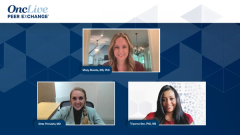
Dr. Primdahl describes optimal multidisciplinary CA LEMS care models.
Advertisement
Episodes in this series
Dr. Primdahl describes optimal multidisciplinary CA LEMS care models. Academic and community settings will differ in structure but should share the same goals. At Northwestern, she co-directs a paraneoplastic and immune toxicity clinic that provides rapid-access evaluation and prospective data collection, a model that also enables multi-institutional collaboration needed to build evidence in a rare condition. Key principles are avoiding clinical silos, maintaining a low threshold for specialist-to-specialist communication, and building order sets that facilitate rather than replace critical clinical thinking. Bundled VGCC testing and neurology referral orders, triggered by SCLC diagnosis plus relevant symptom coding, reduce friction in the workflow.
Dr. Sen emphasizes that the optimal system is one where everyone on the team thinks about CA LEMS, not just one designated person. Tumor boards are underused venues for flagging patients with SCLC and unexplained weakness. Borderline or positive VGCC results must be treated as critical lab values requiring proactive outreach rather than passive electronic health record posting. Three structured questions at every SCLC clinic visit can catch cases without adding substantial visit time: can you rise from a chair without your arms? Is your mouth dry? Are you walking less?
With effective treatment, patients can experience stabilization or meaningful improvement in proximal strength, walking endurance, and autonomic symptoms. Untreated CA LEMS risks progressive functional decline, falls, muscle atrophy, and reduced ability to receive cancer-directed therapy. Optimizing LEMS symptoms with amifampridine improves performance status and expands treatment eligibility.
Closing pearls: Dr. Sen urges community oncologists not to overthink VGCC testing; it is a standard blood draw requiring no neurology sign-off first. The most common error is interpreting antibody results as binary; titers do not correlate with severity, seronegative cases are real, and results must always be read alongside clinical findings and electrophysiology. Building a multidisciplinary pathway does not require a mature program on day 1. One reliable trigger point and one neurology contact is enough to start. Dr. Primdahl reinforces the low threshold for testing and referral, adding a critical message: patients with CA LEMS and SCLC consistently show better outcomes than those with de novo SCLC without paraneoplastic syndrome. This should not prompt therapeutic nihilism; it should prompt oncologists to identify and treat CA LEMS so these patients can receive the cancer-directed therapies they stand to benefit from.
Advertisement
Related to this article

In TASKIN, the 12-month OS rate was 61.3% with vilamakitug vs 55.7% with placebo plus trifluridine/tipiracil.

The 510(k) clearance covers an MRI-derived AI risk score for stage I to IIIA disease; the high-risk category carried an HR of 2.81 for recurrence.

The FDA has approved dostarlimab for MSI-H or dMMR locally advanced rectal cancer.

The FDA accepted an NDA for UGN-103 for recurrent low-grade intermediate-risk NMIBC, with a target action date of June 14, 2027.

Ulrich Steidl, MD, PhD, has finalized his Montefiore Einstein Comprehensive Cancer Center senior leadership team.

The CirCLIQ Injector approval for subcutaneous isatuximab in multiple myeloma is the first anticancer treatment delivered via an on-body injector in Japan.

The top 5 OncLive TV videos of the week cover insights in multiple myeloma, HR+ breast cancer, CAR T-cell therapy, CLL, and oral SERDs.
Moh’d Khushman, MD, discusses INCA33890’s mechanism of action, phase 1 safety and efficacy data, and the design of NEXERA-303 in MSS colorectal cancer.
Advertisement
Advertisement
Trending on OncLive
1
FDA Approves Dostarlimab for dMMR/MSI-H Locally Advanced Rectal Cancer
2
FDA Clears TumorSight Risk, an MRI-Derived AI Recurrence Tool for HR+, HER2– Breast Cancer
3
Vilamakitug Meets OS Threshold in Phase 1/2 Refractory mCRC Trial
4
Dr Cercek on the FDA Approval of Dostarlimab for dMMR/MSI-H Locally Advanced Rectal Cancer
5