The National Comprehensive Cancer Network (NCCN) has accepted an inaugural class of fellows into its new NCCN Advocacy Academy program, with the intention of preparing the next generation of oncologists to drive effective cancer policy in a shifting health landscape, according to Alyssa Schatz, DrPH.1,2
“We launched this program because we’ve seen in recent years some pretty significant shifts in terms of public opinion on medicine, science, and the policy landscape for medical and scientific expertise,” Schatz said in an interview with Oncology Fellows. “This has made many of us in the advocacy community realize the critical importance of making sure that scientific and medical leaders have the skills that they need to be able to communicate effectively with policymakers. That’s essential to being able to drive evidence-based, effective, successful health policy.”
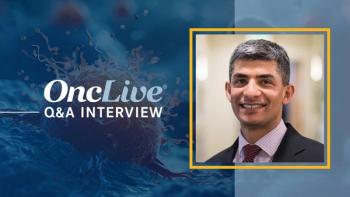
In the interview, Schatz, the vice president of policy and advocacy at the NCCN, discussed the blueprint for the NCCN Advocacy Academy, what type of research is a good fit for submission, and the NCCN’s plans for the program.
NCCN Advocacy Academy Welcomes Inaugural Class of Fellows
- The new NCCN Advocacy Academy welcomed its inaugural class of 12 fellows.
- Twelve early-career oncologists were selected to participate in the new program.
- The fellows will learn from national leaders in their areas of interest, receive coaching and mentorship, and attend meetings with congressional delegations, to advance a key health policy project of their choosing.
Oncology Fellows: What is the NCCN Advocacy Academy?
Schatz: This is a yearlong, 6-module, project-based fellowship, and it is targeted specifically to emerging leaders who are junior faculty, oncology fellows, and residents. The idea is that we’re giving them hands-on policy and advocacy skills that they can take throughout their career. It includes a coaching and a mentorship component. We pair [fellows] with a coach throughout the program so that they can benefit from direct coaching in addition to what they’ll learn from their peers in the cohort, from our team, and from guest lecturers.
What should fellows who participate in the program expect from the training sessions?
Throughout the different modules within the program, fellows are going to gain knowledge on a variety of topics, including things like the impact of federal and state policy on cancer care and research, the different roles of federal policy vs state policy, regulatory policy vs legislative policy, and quality measurement and value-based models of care. [Participants will learn] how all these different levers are ways for us to make systems-level change, and how you might want to pick a different mechanism depending on the issue that you’re interested in working on. We also have modules on strategies to advocate for equity and access and the critical role of physicians as advocates within the program.
There are also 2 culminating events. One is the presentation of the advocacy project that each fellow will be working on throughout the program that will be given at the 2027 NCCN Annual Conference. The second is a hill day at the end of the program, where we’ll take all the skills that they’ve gained throughout the program and put them to work on the hill with their congressional delegations.
What types of projects are a good fit for this program?
We intentionally kept this [area] pretty broad. We wanted [fellows] to be able to work on their specific passion area. The only real bounds and guardrails were that it should align in some way with the NCCN’s mission and with 3 of our high-level policy priorities. That includes advancing the use of guidelines in health policy, improving equitable access to optimal care, and improving the quality of cancer care.
That gave [applicants] a lot of flexibility within their interest areas. It worked out well because we received a huge range of project proposals. We were so impressed by the depth and the quality of all the projects we received. The current fellows that we’ve accepted are working on a huge range across the continuum, including working to improve patient access to evidence-based biomarker testing, improving network adequacy and Medicaid so patients can access the right provider for them, and addressing cancer risks that are posed by environmental hazards. This [program] runs the entire continuum of care.
What are looking for in terms of fellows and projects that get selected for the program?
We have a diversity of projects and interest areas, as well as specialties within oncology. We have surgical fellows, medical oncologists, pediatricians, and individuals interested in palliative care. We’re very interested in having a diverse group in terms of their interest areas.
What I would say unites them is their systems-level thinking and their ability to take those patient challenges that they’re seeing beyond the bedside. So, saying, “I’m seeing a lot of [patients] coming in with this issue, I think this might be a larger macro systems problem.” Secondly, [they need to] have the passion and the dedication to want to address that at a larger level, to solve big problems for many patients. That is what we were so incredibly impressed with in this cohort. Their tenacity, passion, and dedication for making change, not just on the individual level, but also at the systems level, [were] excellent.
What could the potential effects on care delivery from this program produce?
In terms of the impact on direct clinical care, the possibilities are endless. [The fellows] are working on these big, macro systems-level issues, because they’re pressing issues. The challenges might be starting [at a high level], but they are impacting [providers and patients] every day, so it’s our hope that ultimately this will lead to greater patient access through their insurer, better models of care delivery, and innovations in care delivery.
We’re really excited about the myriad possibilities that exist with this program in terms of the direct impact. It’s also our hope over time that this cohort of physicians will grow and will become a large, prepared cohort that is ready to make their voices heard with policymakers, and that they carry that throughout their career and hopefully evangelize and pass it on to others as well.
How could the NCCN Advocacy Academy evolve over time?
This is our inaugural year, which is exciting. We are also calling it our learning year. We’re big believers in continuous quality improvement, so we’ll be collecting data points throughout the program and getting feedback from our fellows and from others involved in the program to make sure that we’re making it the best possible program it can be.
We want to grow the program. This year, we accepted 12 fellows, all outstanding individuals. There were so many more who were also outstanding that for this initial year we couldn’t accept due to bandwidth. But next year, we’re planning to grow [the program] to at least 20 fellows. In the next application cycle, we’ll be accepting more [individuals], and we’re hoping to continue to grow this so that we can grow the impact of the program.
References
- NCCN announces first fellows for New Advocacy Academy to help drive effective cancer policy. News release. National Comprehensive Cancer Network. April 7, 2026. Accessed April 27, 2026. https://www.nccn.org/home/news/newsdetails?NewsId=5438
- NCCN Advocacy Academy. National Comprehensive Cancer Network. Accessed April 27, 2026. https://www.nccn.org/business-policy/policy-and-advocacy-program/nccn-advocacy-academy