Benjamin Weinberg, MD, discusses the FDA approval of daraxonrasib, RASolute 302 survival data, safety considerations, and future RAS-targeted therapies in pancreatic cancer.
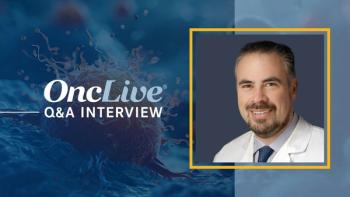
Megan M. Dupuis, MD, PhD, discusses how oncology fellows can keep their personal and professional curiosities alive during fellowship.
As an early faculty member in oncology at Vanderbilt University Medical Center (VUMC), I had the pleasure of seeing a new patient in one of our more rural community clinics. In our initial one-hour consultation, I learned that she had gone to school in a one-room schoolhouse without running water; she hated potatoes because her family had eaten them for every meal growing up; and she was an excellent cook because she had raised her many younger siblings. I was impressed, and after that visit, I immediately found a colleague and excitedly recounted all these incredible details about the patient’s life.
When we consider how an oncologist derives meaning from their work, it is clear that we find deep satisfaction in knowing the data inside and out; from working collaboratively with colleagues; and from delivering care that is equitable and efficient. For me, although these elements are important, it is the discovery of the seemingly small details of a patient’s life that most enriches the experience. Although cancer is deeply important in their lives, it is not overly interesting: They did not choose it. In fact, it interrupts the things that are interesting: hobbies, spending time with family, travel, work, religious practices, and service. For me, discovering these pieces of a patient is what brings meaning to the encounter.
To fully understand the “thickness” of a patient’s narrative, as Rita Charon, MD, PhD, would put it,1 I would argue that we must remain genuinely curious about the human being in front of us. Who are their people? What are they proud of? How do they spend their time? What do they value? These are the questions that I encourage my trainees to ask when we are seeing a new patient, and they are the same questions that I ask in my own clinic visits.
And yet, curiosity is hard. The wonderful Faith Fitzgerald, MD (1943-1921), argued that genuine curiosity is at risk in our trainees, in part due to the structure of modern medical education and, in part, due to the demands for efficiency in our health system.2 Nevertheless, it remains key to knowing our patients; she argued that curiosity “converts strangers (the objects of analysis) into people we can empathize with. To participate in the feelings and ideas of one's patients—to empathize—one must be curious enough to know the patients: their characters, cultures, spiritual and physical responses, hopes, past, and social surrounds.”
However, curiosity requires time, a luxury that can be difficult to come by for trainees. The vast amount of ever-expanding knowledge one must learn, coupled with long hours and little personal control, married with a demanding medical system, and topped off with the pressures of caring for a critically ill and vulnerable population, can be a recipe for burnout—and a subsequent loss of curiosity.
So, what is the dedicated oncology fellow to do? I would argue that the conscious, deliberate practice of narrative medicine can reignite our curiosity about others. Narrative medicine is an academic framework dedicated to “understanding patients’ lives, caring for the caregivers, and giving voice to suffering.”3 In practice, it encourages learners to flex their analytical muscles with “close reading” of art, music, and literature, learning how to critically assess these works by asking questions about the details, narration, point of view, feelings, and direction of the piece. These same skills may then be applied to patient stories and encounters, to understand the human being sharing their illness narrative.
At VUMC, we have done this work more formally through a longitudinal graduate medical education certificate program in the medical humanities that I codirect with my colleagues Chase Webber, DO, and Katie Van Schaik, MD, PhD. Trainees from intern to fellow are welcomed from across the institution and come together over the course of a year to do flash writing, close reading of art and literature, collect patients’ oral histories, and discuss their own works. Recognizing that there are specific needs for our oncology fellows, I also run similar seminars quarterly for the fellowship program. In these sessions, I challenge fellows to close read a poem, take 5 minutes to respond to a prompt, or discuss the first patient story that comes to mind. By using protected conference time, we give the space that allows our trainees to get curious (again) about their patients. I ask them the whys about their stories. Why did the patient say that? Why did you feel frustrated during this encounter? Why do you think they declined to take chemotherapy?
However, not all fellows are at institutions that have this kind of programming readily available. Below are some of my favorite tips for engaging with narrative medicine that do not require formal programming.
I will conclude with this question: When you went into medicine, what kind of doctor did you imagine that you would be? I had always imagined that I would be a gatherer of stories; I wanted to be able to contextualize complex medical choices within the fabric of each patient’s life. If this is similar to who you thought you’d be, then I think narrative medicine as a means to engage with patients is absolutely the practice for you. And who knows, it may just reawaken your spirit of curiosity.