
|Videos|April 22, 2014
Personalizing Analgesic Selection for Breakthrough Pain
Advertisement
Episodes in this series
For High-Definition, Click
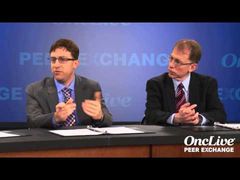
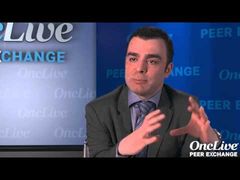
The pharmacokinetics are similar between the varying transmucosal immediate-release fentanyl (TIRF) products, making treatment selection difficult in terms of efficacy. As a result, the optimal therapy to administer should be tailored based on patient characteristics, notes Marc Rappaport, DO.
If a patient has mucositis, sublingual TIRF products are better tolerated than fentanyl nasal sprays, which adhere directly to the mucosa. Rappaport recommends developing familiarity with several of the available TIRF products, in order to be able to personalize the treatment decision.
Advertisement
Related to this article

Updated FONTANA data show torvu-sam activity across FRα expression levels in platinum-resistant ovarian cancer.
In HARMONi-GI1, ivonescimab plus chemotherapy extended survival over durvalumab plus chemotherapy in untreated advanced biliary tract cancer.

Sonesitatug vedotin is a potential new SOC in select Claudin 18.2–positive gastroesophageal carcinoma.

Divarasib extended survival over first-generation KRAS G12C inhibitors in a head-to-head phase 3 trial in previously treated lung cancer.

In SAFFRON, the oral EGFR/MET inhibitor pairing extended survival over platinum/pemetrexed in MET-driven lung cancer that progressed on osimertinib.
Tovecimig plus paclitaxel improved objective response over paclitaxel alone in previously treated advanced biliary tract cancer in COMPANION-002.

Adding LK101 to tislelizumab-based first-line maintenance yielded early antitumor activity and signs of immune activation in advanced NSCLC.
Adding durvalumab and enfortumab vedotin around cystectomy extended survival in muscle-invasive bladder cancer without cisplatin options.
Advertisement
Advertisement
Trending on OncLive
1
Ivonescimab Plus Chemotherapy Represents a New SOC in First-Line Biliary Tract Cancer
2
CLARITY-Gastric01 Shows OS Benefit With Sonesitatug Vedotin in Pretreated CLDN18.2+ Gastroesophageal Carcinoma
3
Divarasib Improves Survival and Paves Way for New SOC in Pretreated KRAS G12C–Mutated NSCLC
4
Dr Chase on the Potential Role of B7-H4–Targeted ADCs in Platinum-Resistant Ovarian Cancer
5