Now Playing
In this segment the panelists, Dr. Samir Parekh and Dr. Saurabh Mehandru, both of Mount Sinai in New York, open their discussion of gastrointestinal toxicity following anti-B-cell maturation antigen chimeric antigen receptor (CAR) T-cell therapy for relapsed multiple myeloma.
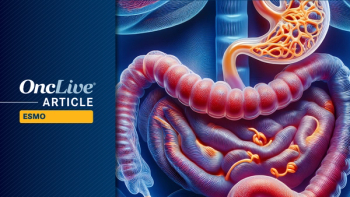
In this segment the panelists, Dr. Samir Parekh and Dr. Saurabh Mehandru, both of Mount Sinai in New York, open their discussion of gastrointestinal toxicity following anti-B-cell maturation antigen chimeric antigen receptor (CAR) T-cell therapy for relapsed multiple myeloma. Dr. Parekh notes that CAR T-cell therapy has moved into earlier lines, now approved after a single relapse, which makes late toxicities more consequential to recognize. Dr. Mehandru frames the intestine as an immune organ populated by B cells and plasma cells, and explains that depleting those cells creates the potential for gastrointestinal toxicity. The panelists agree that recognition cannot wait, since the longer the syndrome goes unidentified, the more complex and harder to treat it becomes. Dr. Mehandru describes a presentation that can span diarrhea, abdominal pain, bloating, weight loss, and malabsorption with vitamin and ion deficiencies, appearing within a few months of therapy or considerably later in patients whose marrow and immunoglobulins fail to recover.
Sponsored by Johnson & Johnson and Legend Biotech USA Inc. Content independently developed and published by OncLive.