
Opinion|Videos|August 6, 2026
Treatment Strategies Following Progression in EGFR-Mutant NSCLC
Author(s)Mark A. Socinski, Susan Scott, MD
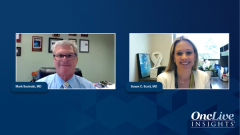
This segment examines treatment approaches following disease progression in EGFR-mutant non-small cell lung cancer (NSCLC), with a focus on the role of continuing osimertinib beyond progression.
Advertisement
Episodes in this series
This segment examines treatment approaches following disease progression in EGFR-mutant non-small cell lung cancer (NSCLC), with a focus on the role of continuing osimertinib beyond progression. Dr. Mark Socinski and Dr. Susan Scott discuss findings from the COMPEL trial and how these data have influenced their clinical practice. Dr. Scott explains that when transitioning to platinum-based chemotherapy, she often continues osimertinib, particularly in patients with limited sites of progression or ongoing clinical benefit, including maintenance of central nervous system (CNS) disease control. The discussion highlights the biological heterogeneity of disease progression, emphasizing that not all metastatic lesions develop resistance simultaneously. Although acknowledging the limitations of the relatively small COMPEL study, both experts note that its progression-free survival findings and CNS outcomes provide reassurance for continuing EGFR-targeted therapy in selected patients. They also emphasize the need for continued research to further define optimal sequencing strategies after frontline osimertinib.
Advertisement
Related to this article

The first MRD data from the phase 3 EXCALIBER-RRMM trial support iberdomide-based triplet therapy as early as first relapse, with PFS follow-up ongoing.
After nearly 7 years of follow-up, daratumumab added to VRd continued to improve PFS, PFS2, and sustained MRD negativity in transplant-eligible myeloma.
The FDA approved lirafugratinib in FGFR2+ cholangiocarcinoma and belzutifan plus lenvatinib in advanced ccRCC, and more.

Did you catch all of this week's top oncology news? Test your knowledge with OncLive's Weekly News Quiz.

Daiichi Sankyo and Merck withdrew the I-DXd BLA in ES-SCLC after FDA discussions found phase 2 IDeate-Lung01 data insufficient for accelerated approval.

Monthly etentamig significantly improved response and PFS over standard available therapies in the phase 3 CERVINO trial, with low rates of high-grade CRS.

FDA grants priority review to durvalumab plus enfortumab vedotin for cisplatin-ineligible MIBC based on positive phase 3 VOLGA data.

R. Lor Randall, MD, FACS, outlines how AI may affect oncology training, how to properly work alongside AI, and AI-patient conversations.
Advertisement
Advertisement
Trending on OncLive
1
Ifinatamab Deruxtecan BLA Voluntarily Withdrawn in Previously Treated Extensive-Stage SCLC
2
Dr Voorhees on Eligibility Criteria for the CERVINO Trial in Multiple Myeloma
3
Etentamig Improves Response and PFS vs Standard Therapies in Triple-Class Exposed Relapsed/Refractory Myeloma
4
Long-Term PERSEUS Data Confirm Durable PFS Benefit With D-VRd in Transplant-Eligible Newly Diagnosed Myeloma
5