
Opinion|Videos|September 3, 2026
Addressing Access Barriers and Financial Toxicity in EGFR-Mutant NSCLC
Author(s)Mark A. Socinski, Susan Scott, MD
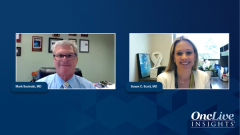
This segment examines the real-world challenges of ensuring timely access to effective therapies for patients with EGFR-mutant non-small cell lung cancer (NSCLC).
Advertisement
Episodes in this series
This segment examines the real-world challenges of ensuring timely access to effective therapies for patients with EGFR-mutant non-small cell lung cancer (NSCLC). Drs. Mark Socinski and Susan Scott discuss how insurance authorization requirements, high out-of-pocket costs, treatment logistics, and administrative delays can postpone initiation of targeted therapies despite their proven clinical benefit. They emphasize the importance of patient assistance programs, multidisciplinary coordination, and proactive navigation of financial barriers to reduce treatment delays and improve the patient experience. Through clinical examples, the faculty illustrate how prompt initiation of EGFR-targeted therapy can rapidly improve symptoms and, in some cases, prevent hospitalization or intensive care admission. The discussion underscores that minimizing financial toxicity and streamlining access to appropriate therapies are essential components of delivering high-quality, patient-centered care for individuals with EGFR-mutant NSCLC.
Advertisement
Related to this article

Uma Borate, MBBS, MS, discusses data for different azacitidine and venetoclax schedules from the Beat AML master clinical trial.

A pharmacokinetic sub-study found that TAMP-mediated gemcitabine reduced systemic drug exposure in patients with locally advanced pancreatic cancer.
A donation from Mario Germano Giuliani and Lisa Giuliani will support research in multiple myeloma at Dana-Farber Cancer Institute.

JBS-003 will be evaluated in an ongoing phase 3 trial designed to determine whether investigators can identify patients who can safely receive less radiation.
Here is your cheat sheet to all therapeutic options that were cleared by the FDA in August 2026 spanning tumor types.
Faculty convened at an OncLive Scientific Interchange and Workshop to weigh how new regimens should reshape sequencing in prostate cancer.

Faculty convened at an OncLive Scientific Interchange and Workshop to discuss optimizing first-line treatment selection and second-line sequencing in EGFR-mutated NSCLC.
MT027, an off-the-shelf B7-H3–directed CAR T-cell therapy, earned FDA fast track designation for recurrent glioblastoma.
Advertisement
Advertisement
Trending on OncLive
1
August Roundup of FDA Approvals in Oncology: Daraxonrasib Highlights 5 Decisions to Know
2
New Biomarker-Driven Regimens Prompt Debate Over Treatment Intensification in Advanced Prostate Cancer
3
FDA Grants Breakthrough Therapy Designation to JBS-003 for Radiation De-Escalation in HPV+ Oropharyngeal Cancer
4
TP53 Status and Treatment Toxicity Burden Guide Sequencing in EGFR-Mutated NSCLC
5