David R. Gandara, MD, discusses why PD-L1 scoring in NSCLC undercounts immunotherapy benefit and where TMB and plasma proteomics fit alongside it.
In part 2, the debaters map the trial that could settle the question and agree that, for now, individualized care and closer monitoring should guide high-risk early MF.
See who your patient is — age, location, work, the impact the disease is having on quality of life — and then you can decide either treating not so aggressively but following the patient closely, or, if there are too many symptoms and you have possibilities with less toxicity, maybe treating earlier with a systemic treatment.
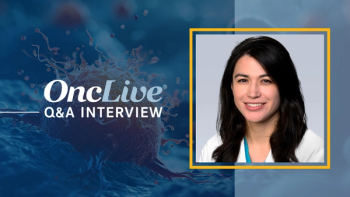
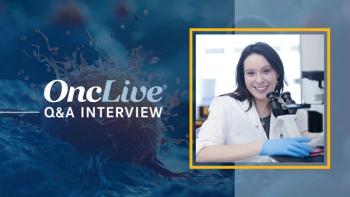
Jade Cury-Martins, MD, PhD, a dermatologist in the Department of Dermatology at the University of São Paulo Medical School and Maarten H. Vermeer, MD, PhD, professor and chair of the Department of Dermatology at Leiden University Medical Center, continued their debate on whether early-stage mycosis fungoides (MF) with poor prognostic features warrants different treatment from the onset.
At the
On whether such a study is even ethical, Cury-Martins argued the bigger obstacle is that high-risk patients are already managed differently in practice. Retrospective data — including a large cohort study — show that patients with large-cell transformation or follicular tropic MF are already treated more aggressively, so a trial that randomized the worst-prognosis patients to no additional therapy could raise ethical concerns.
Her preferred path is to study prognostic markers within patients who are already being treated, following them to learn which baseline features separated those who did well from those who progressed.
Vermeer sketched the design more concretely. Using accepted high-risk markers — extensive body surface area, infiltrated plaques, follicular tropism, with or without large-cell transformation — investigators could identify a poor-prognosis group and randomize them to different treatments. Because survival endpoints would take far too long in a disease this indolent, he proposed alternatives: recurrence, time to next treatment, progression-free survival, and quality of life.
He stressed pairing any such trial with translational research to interrogate why patients behaved as they did.
Both flagged real-world caveats. Large-cell transformation has a definition, Vermeer noted, but it may not be applied consistently across pathology centers, and a single small biopsy may not represent the entire skin surface. Cury-Martins added that drug access shapes what is feasible: she favors interferon as a relatively nontoxic option that can alter the disease course, but supply is unreliable, and treatment options in Brazil are more limited than in Europe.
For the clinician seeing a poor-prognosis early-stage patient today, the speakers converged on individualized management. Patients with multiple high-risk features warrant closer follow-up — every 2 - 3 months rather than every 6 — and decisions should weigh age, occupation, disease location, symptom burden, and quality-of-life impact, with earlier systemic therapy reserved for those with high symptom burden when lower-toxicity options exist. As Cury-Martins concluded, a one-size-fits-all approach does not work for cutaneous lymphoma.
Reference
1. WCCL Debate: Treating Poor Mycosis Fungoides Prognosis Early. OncLive. Accessed June 25, 2026.