
Matthew J. Matasar, MD, discusses the prospect of using minimal residual disease to guide treatment decisions in mantle cell lymphoma.
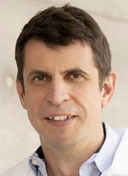
Alexey Danilov, MD, PhD, is the Marianne and Gerhard Pinkus Professor of Early Clinical Therapeutics, medical director of the Early Phase Therapeutics Program for the Systems Clinical Trials Office, co-director of the Toni Stephenson Lymphoma Center, and a professor in the Division of Lymphoma in the Department of Hematology & Hematopoietic Cell Transplantation at City of Hope
Matthew J. Matasar, MD, discusses the prospect of using minimal residual disease to guide treatment decisions in mantle cell lymphoma.
Boyu Hu, MD, and Bijal D. Shah, MD, provide their thoughts on the TRIANGLE study looking at ibrutinib versus stem cell transplant in MCL.
A patient profile of a 74-year-old man diagnosed with mantle cell lymphoma who receives treatment with a non-covalent BTK inhibitor is presented by Alexey V. Danilov, MD, PhD.
Alexey V. Danilov, MD, PhD, provides an overview of the pathophysiology, symptoms, and subtypes of mantle cell lymphoma.
Alexey V. Danilov, MD, PhD, discusses the key differences between covalent and noncovalent BTK inhibitors in mantle cell lymphoma.
Looking to the future, a panel of experts offers closing remarks on research in CLL and MCL including hopes for further data on bispecific antibodies, BTK degraders, CAR T-cell therapy, and pirtobrutinib.
The assembled faculty comment on data on the role of non-covalent BTK inhibitors in the CLL treatment landscape, with emphasis on the phase 1/2 BRUIN trial of pirtobrutinib.
Orienting the conversation around anti-CD20-drug-based combination and sequencing approaches, the panelists examine key takeaways from the CLL13 and CLL14 clinical trials as well as expectations for real-world data in the future.
Focusing the discussion on the current state of the COVID-19 pandemic, Catherine C. Coombs, MD, shares key insights into the use of COVID-19 pre-exposure prevention for patients with CLL or MCL.
Experts in hematologic malignancies reflect on clinical trials studying venetoclax combination approaches including the CAPTIVATE, FLAIR, GLOW, VISION, SEQUOIA, and MAJIC studies.
Panelists respond to a question from Michael Wang, MD, about the role of CAR T-cell therapy in CLL, and Brian T. Hill, MD, PhD, summarizes takeaways from the TRANSCEND CLL study.
The faculty members share expert insights into treatment approaches for patients with double-refractory chronic lymphocytic leukemia.
Brian T. Hill, MD, PhD, and Matthew S. Davids, MD, MMSc, address the role of study design in CLL to highlight the importance of patient-reported QOL outcomes and matching-adjusted indirect treatment comparisons (MAICs).
Key opinion leaders in CLL review factors driving therapeutic decision-making among the available second-generation BTK inhibitors including efficacy and safety considerations.
An expert in hematologic malignancies, Catherine C. Coombs, MD, shares insights gleaned from the ALPINE clinical trial of zanubrutinib vs ibrutinib for relapsed/refractory CLL.
Highlighting the ELEVATE TN and ASCEND clinical trials, panelists share expert insights into the next-generation BTK inhibitor acalabrutinib for CLL.
Catherine C. Coombs, MD, leads the faculty in a discussion of the current treatment landscape for CLL with a review of considerations for patients with high-risk or relapsed/refractory disease.
Thought leaders in hematologic malignancies reflect on studies of ROR1 and share perspectives on advancements on the horizon for mantle cell lymphoma.
A panel of distinguished faculty builds a lively conversation on the emergence of pirtobrutinib and its effect on treatment sequencing strategies in MCL as well as the overall role of doublet and triplet regimens.
Michael Wang, MD, guides the panel in a discussion on CAR T-cell therapy for relapsed/refractory MCL including a summary of key takeaways from the ZUMA-2 trial and a conversation on real-world vs clinical trial data.
Panelists discuss treatment considerations in the use of BTK inhibitors for relapsed/refractory mantle cell lymphoma, with Matthew S. Davids, MD, MMSc, reviewing strategies for the management of AEs.
Key opinion leaders in mantle cell lymphoma discuss the emergence of more effective novel therapies such as BTK inhibitors and BCL-2 inhibitors and whether there is a continued role for lenalidomide-based regimens.
A panel of experts in hematologic malignancies discusses maintenance strategies for mantle cell lymphoma with particular emphasis on treatment considerations related to the COVID-19 pandemic and real-world data.
Focusing on the differences in treatment considerations between younger and older patients, Michael Wang, MD, discusses the current treatment landscape in mantle cell lymphoma.
Anthony R. Mato, MD, MSCE, introduces the panel, and Alexey V. Danilov, MD, PhD, provides an overview of the incidence, presentation, pathologic features, and treatment landscape for mantle cell lymphoma.
Alexey V. Danilov, MD, PhD, discusses the reduced use of chemoimmunotherapy in chronic lymphocytic leukemia.
Drs Alexey Danilov and Anthony Mato respond to a variety of questions pertaining to the assessment and treatment of patients with chronic lymphocytic leukemia.
Circumstances for which MRD testing may be considered for patients with chronic lymphocytic leukemia.
Considerations for using novel fixed-duration regimens and triplet therapy to treat patients with chronic lymphocytic leukemia.
Drs Alexey Danilov and Anthony Mato review treatment options available for newly diagnosed chronic lymphocytic leukemia and describe decisions for monotherapy vs combination therapy.