
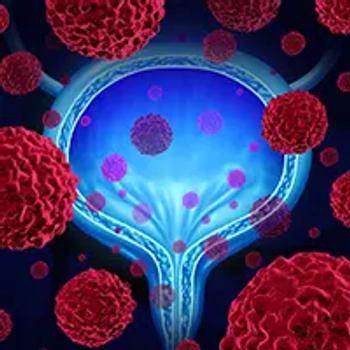
Antibody titers and fold changes may prove to be a prognostic marker for the efficacy of nadofaragene firadenovec for the treatment of patients with bacillus Calmette-Guérun unresponsive non-muscle invasive bladder cancer.

Managing Editor, OncLive®
Brittany Lovely is a managing editor for the OncologyLive® print publication and editor of the Miami Breast Cancer Conference® and Chemotherapy Foundation Symposium® dailies. Email: blovely@mjhassoc.com
Antibody titers and fold changes may prove to be a prognostic marker for the efficacy of nadofaragene firadenovec for the treatment of patients with bacillus Calmette-Guérun unresponsive non-muscle invasive bladder cancer.
The safety and efficacy of the quadruplet regimen of fixed-dose isatuximab-irfcc in combination with bortezomib, lenalidomide, and dexamethasone were confirmed for patients with newly diagnosed multiple myeloma with no immediate intent for transplant.

Updated data from a phase 2 trial presented at the 2021 World Conference on Lung Cancer showed that neoadjuvant osimertinib induced a pathologic complete response among patients with surgically resectable EGFR-mutant non–small cell lung cancer.

Triplet regimens leveraging novel agents targeted at overcoming mechanisms of resistance in combination with immune checkpoint inhibitors and anti-angiogenic therapies represent the next frontier in hepatocellular carcinoma.

A new era for patients with newly diagnosed Philadelphia chromosomepositive acute lymphoblastic leukemia may be on the horizon as investigative efforts aimed away from chemotherapy-based regimens prove efficacious.

If there is one touchstone that emerges from Dr. Margaret A. Tempero's career of studying and treating pancreatic cancer, it is her persistence in simply trying to help her patients.

A collaborative initiative between the American Society of Clinical Oncology and the American Medical Association has the goal of improving well-being and reducing burnout by leveraging a quality improvement framework and model.
The discovery of an agent with a unique mechanism of action led investigators to examine sabizabulin, an oral therapy that binds to the colchicine binding site on the microtubule to crosslink α and β tubulin and inhibits microtubule polymerization.
TheraSphere Y-90 glass microspheres offer a precision medicine technique aimed at delivering high-dose radiation directly to tumors.
Strategies focused on improving the efficacy of the EGFR tyrosine kinase inhibitor osimertinib in the first line setting are the key to unlocking the next wave of success in treating lung cancer.

Updated overall survival data from the APACT trial suggest improved outcomes for patients with resected pancreatic cancer who receive adjuvant nab-paclitaxel plus gemcitabine despite missing the primary end point in earlier analysis.
Doublet and triplet chemotherapy-based therapies are standard treatment options for patients with BRAF V600–mutant metastatic colorectal cancer.
Investigators demonstrated that the benefit of androgen deprivation therapy was extended with the addition of apalutamide for patients with metastatic castration-sensitive prostate cancer regardless of disease volume.

Therapeutic breakthroughs for patients with metastatic pancreatic cancer have eluded investigators for decades, with chemotherapeutic combination strategies serving as the insurmountable standard of care.
Rates of clinical trial initiation, novel drug development, and collaborative research and development deals were oncology.
The potential role for antibody-drug conjugates for treating patients with non–small cell lung cancer continues to evolve as new data challenge investigators to reexamine their approaches.

Final results of the DESTINY-CRC01 trial were consistent with primary analysis, establishing the benefit of fam-trastuzumab deruxtecan-nxki in patients with HER2-overexpressing metastatic colorectal cancer.

Adjuvant treatment with gefitinib delayed early relapse in patients with completely resected EGFR-mutant non–small cell lung cancer. However, the EGFR inhibitor did not significantly improve disease-free survival or overall survival compared with cisplatin/vinorelbine.
Data from the phase 2 NIFTY trial demonstrated that liposomal irinotecan in combination with 5-fluorouracil/leucovorin significantly improved progression-free survival and overall survival for patients with metastatic biliary tract cancer whose disease had progressed following first-line line gemcitabine/cisplatin.

Encouraging initial durability has been observed with afamitresgene autoleucel in patients with advanced synovial sarcoma or myxoid/round cell liposarcoma, according to data from the phase 2 SPEARHEAD-1 trial.

New triplet combinations anchored by anti-CD38 antibodies are expanding the therapeutic landscape for relapsed or refractory multiple myeloma, providing exciting options that extend progression-free survival windows from months to years for heavily pretreated patients.
Although chemotherapy is not likely to lose its place in the frontline treatment of patients with B-cell lymphomas, encouraging data from early-phase studies evaluating the use of targeted agents in combination with and without chemotherapy are capturing the interest of investigators in the field.

Dual inhibition of the MAPK pathway using the BRAF and MEK inhibitors dabrafenib and trametinib, respectively, resulted in durable clinical benefit for patients with BRAF V600E mutant low- and high-grade glioma.

As longer-term follow-up data become available for several agents approved for HER2-positive metastatic breast cancer, investigators are looking closely at the characteristics of patients enrolled in those clinical trials to determine appropriate treatment strategies in the third-line setting and beyond.
Findings from recent analyses have kindled hope that novel agents with manageable toxicity profiles may begin to bridge the gap for patients with HER2-positive metastatic breast cancer.

Debu Tripathy, MD, discusses some of the unanswered clinical questions that remain for patients with HER2-positive disease and some strategies for personalizing treatment in the neoadjuvant and adjuvant settings.

January 30, 2021 - Data from the phase 3 CONFIRM trial support single-agent nivolumab as an effective treatment approach for patients with previously treated malignant mesothelioma.

The current standard of care for patients with non–small cell lung cancer does not include therapies targeting HER2, a mutation that occurs in up to 4% of cases. However, data from recent studies of antibody-drug conjugates directed at HER2 activity are generating excitement about the potential utility of ADCs in this space.

January 5, 2020 - Boehringer Ingelheim will add to its cancer cell-directed therapies portfolio with the acquisition of NBE-Therapeutics, the developer of NBE-002, an anti-ROR1 antibody-drug conjugate.
December 11, 2020 - Use of a novel HER2 quantitative continuous score was better able to provide an objective and quantitative assessment of HER2 expression to identify patients who are most likely to respond to fam-trastuzumab deruxtecan-nxki.