
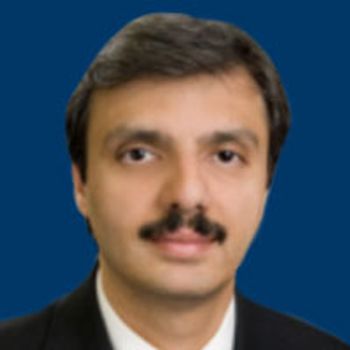
Mehmood Hashmi, MD, discusses the newly defined landscape of nonmetastatic castration-resistant prostate cancer, the potential with immunotherapy, and emerging imaging modalities.
Managing Editor, OncLive®
Caroline Seymour is your initial point of contact for the OncLive® podcast, OncLive On Air™. She joined the company in 2018 as an assistant editor, with expertise in video production and print/digital publication. Email: cseymour@onclive.com
Mehmood Hashmi, MD, discusses the newly defined landscape of nonmetastatic castration-resistant prostate cancer, the potential with immunotherapy, and emerging imaging modalities.
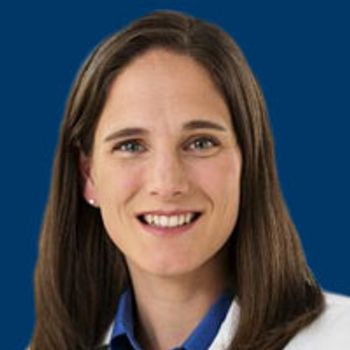
Jessica Bauman, MD, addresses current and emerging therapeutic options for patients with BRAF, ROS1, and RET abnormalities in non–small cell lung cancer.
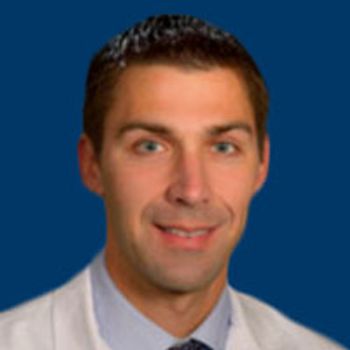
John A. Kosteva, MD, discusses the adoption of immunotherapy into the treatment paradigm for patients with non–small cell lung cancer.
Peter J. Van Veldhuizen, MD, discusses available and emerging therapies for patients with kidney cancer.
Yelena Novik, MD, shares her thoughts on the use of biosimilars in oncology and their potential impact on practice.
Charu Aggarwal, MD, discusses the latest developments in EGFR-mutant lung cancer.
Yelena Novik, MD, discusses the application of CDK4/6 inhibition and methods to overcome resistance in ER-positive breast cancer.
Liza C. Villaruz, MD, addresses the immunotherapy clinical trials that have informed the treatment of patients with NSCLC and the current state of biomarkers in the field.
Deborah Krakow, MD, discusses the value of a patient’s family history and its implications on genetic counseling.
Christopher J. Pietras, MD, discusses the elements of palliative care for patients with ovarian cancer.
Sanaz Memarzadeh, MD, PhD, details the early developments of antibody-directed therapies and restoring p53 function in the treatment of patients with ovarian cancer.
Gottfried E. Konecny, MD, discusses developments in the understanding of response to PARP inhibition in ovarian cancer.

John A. Glaspy, MD, discusses challenges and progress with immunotherapy in gynecologic cancers.
Maryann J. Kwa, MD, discusses the optimal duration of endocrine therapy in the treatment of patients with early-stage ER-positive breast cancer.
Alex E. Denes, MD, discusses the mixed results looking at the optimal duration of adjuvant endocrine therapy in postmenopausal women with breast cancer.
Stephen Liu, MD, addresses the use of available therapies and the methods of overcoming acquired resistance in patients with ALK-positive non–small cell lung cancer.
Petros Grivas, MD, PhD, discusses ongoing clinical trials exploring novel approaches with the potential to change practice in advanced bladder cancer.
David B. Page, MD, discusses emerging treatment approaches for patients with triple-negative breast cancer.
Francisco J. Esteva, MD, PhD, discusses recent advances and clinical findings with HER2-targeted therapies across the neoadjuvant, adjuvant, and metastatic settings.
Scott Samuelson, MD, discusses frontline treatment of patients with prostate cancer and subsequent sequencing.
Dennis J. Slamon, MD, PhD, discusses new opportunities for treatment advances in ovarian cancer.
Lyudmila A. Bazhenova, MD, discusses treatments for patients with ALK-positive NSCLC, as well as the progress in less common oncogenic drivers, such as NTRK fusions.
Kathryn A. Gold, MD, discusses the evolving management of EGFR-mutant non–small cell lung cancer and the latest developments in small cell lung cancer.
Ramesh K. Ramanathan, MD, discusses sequencing strategies and emerging therapeutic targets in pancreatic cancer.
Axel Grothey, MD, discusses sidedness and first- and second-line treatments for patients with metastatic colorectal cancer.
Bert H. O’Neil, MD, discusses the prevalence of neuroendocrine tumors and the agents that are used to treat patients who present with them.
Tanios Bekaii-Saab, MD, outlines clinical trials that have defined the current landscape of metastatic colorectal cancer and what research is underway.
Zahi Mitri, MD, discusses adjuvant advances and other emerging trends in the treatment of patients with HER2-positive breast cancer.
Neeraj Agarwal, MD, discusses his preferred sequencing strategies for treating patients with kidney cancer, and ongoing immunotherapy research in the field.
Arun S. Singh, MD, discusses current and emerging treatment strategies for patients with uterine leiomyosarcoma and other sarcomas.