
Lori A. Leslie, MD, discusses the current treatment landscape in mantle cell lymphoma, factors to consider when selecting between BTK inhibitors, and other treatment options on the horizon.

Assistant Editor, OncLive®
Jessica joined the company in August 2019 and is one of the point contacts for the OncLive On Air™ podcast. She is a Rider University alumna and holds a degree in journalism and biology. Prior to joining MJH Life Sciences, she interned with the Ireland-based social media monitoring agency Olytico and served as a copy editor and writer for The Rider News. Email: jhergert@onclive.com
Lori A. Leslie, MD, discusses the current treatment landscape in mantle cell lymphoma, factors to consider when selecting between BTK inhibitors, and other treatment options on the horizon.
The Multiple Myeloma Research Foundation CureCloud® is a first-of-its-kind research initiative, developed to help arm researchers with the information they need to accelerate development of novel therapeutic strategies, provide a precision medicine approach to help inform providers’ and patients’ treatment decisions, and ultimately, find a cure for multiple myeloma.

The growing number of treatments within the HER2-positive breast cancer armamentarium signals a need to redefine and tailor neoadjuvant and adjuvant strategies to individual patients.
Ian W. Flinn, MD, PhD, discusses the adverse effects associated with BTK inhibitors in B-cell malignancies, as well as the design of an ongoing phase 2 study with zanubrutinib.
The investigational TKI pyrotinib demonstrated encouraging antitumor activity and a manageable toxicity profile in patients with heavily pretreated HER2-mutant non–small cell lung cancer, as well as other advanced solid tumors harboring activating HER2 alterations.

Lurbinectedin was added to the Clinical Practice Guidelines in Oncology by the National Comprehensive Cancer Network on July 7, 2020 for the treatment of patients with small cell lung cancer.

The treatment landscape of advanced hepatocellular carcinoma has been subject to rapid development in the last few years, says Amit G. Singal, MD, MS.
The investigational small molecule RAS mimetic rigosertib in combination with azacitidine elicited encouraging efficacy and a tolerable safety profile in patients with higher-risk myelodysplastic syndromes, acute myeloid leukemia, or chronic myelomonocytic leukemia.
Shubham Pant, MD, discusses key data that emerged in the gastrointestinal oncology space from the 2020 ASCO Virtual Scientific Program.
Kamran A. Ahmed, MD, discusses the evolution of treatment for patients with breast cancer brain metastases, recent pivotal findings that have significantly improved survival for these patients, and a number of agents on the horizon.
Zev. A. Wainberg, MD, discusses findings from a phase 1/2 study of NALIRIFOX in patients with pancreatic ductal adenocarcinoma.
Bruno Sangro, MD, PhD, discusses the efficacy and safety findings from a study of combination durvalumab and tremelimumab, as well as the clinical need for alternative combination regimens in advanced hepatcellular carcinoma.
Bruno Sangro, MD, PhD, discusses the efficacy and safety findings from the long-term analysis of the CheckMate-459 trial in advanced hepatocellular carcinoma.
Dawn L. Hershman, MD, MS, spotlights important data pertaining to cancer care delivery, prevention, symptom management, and survivorship that were presented at the 2020 ASCO Virtual Scientific Program.
The field of gynecologic oncology gained a number of important updates at the 2020 ASCO Virtual Scientific Program. As part of the ASCO Direct Highlights webcast, Jubilee Brown, MD, provided insight on key trials that were presented at the program.
The novel BET inhibitor CPI-0610 demonstrated clinical activity with or without ruxolitinib in patients with JAK inhibitor-naïve and JAK inhibitor-exposed or -intolerant myelofibrosis.
The recent approval of selinexor (Xpovio) provides a novel treatment for patients with diffuse large B-cell lymphoma who have exhausted available options.
The quadruplet regimen of isatuximab-irfc, carfilzomib, lenalidomide, and dexamethasone elicited a 100% overall response rate and high rates of minimal residual disease negativity in high-risk newly diagnosed multiple myeloma.
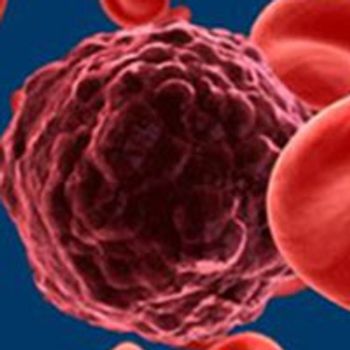
The combination of the antibody-drug conjugate loncastuximab tesirine and ibrutinib showed early clinical activity with manageable toxicity in patients with relapsed/refractory diffuse large B-cell lymphoma and mantle cell lymphoma.
Caron Jacobson, MD, discusses the initial ZUMA-5 findings and the next steps with axicabtagene ciloleucel in follicular lymphoma and marginal zone lymphoma.
Findings from an exploratory analysis of the phase 1/2 ZUMA-1 trial demonstrated clinical efficacy in patients with relapsed/refractory large B-cell lymphoma who were retreated with the CAR T-cell therapy axicabtagene ciloleucel.

Plasma-based next-generation sequencing continues to offer a minimally invasive, highly specific modality to identify patients with actionable alterations in non–small cell lung cancer.

The first multidisciplinary, consensus-driven framework for genetic testing in prostate cancer was borne out of the 2019 Philadelphia Prostate Cancer Consensus Conference, leading to the creation of comprehensive guidelines regarding the evaluation, management, and implementation therein.
Naveen Pemmaraju, MD, discusses what the early data with eprenetapopt in combination with azacitidine could mean for the future in MDS and AML.
Naveen Pemmaraju, MD, discusses the potential benefit of rechallenging ruxolitinib in patients with myelofibrosis.

The novel HER2-directed antibody-drug conjugate trastuzumab deruxtecan-nxki demonstrated promising antitumor activity in patients with heavily pretreated, HER2 low-expressing advanced or metastatic breast cancer.
Neeraj Agarwal, MD, discusses the COSMIC-021 trial, the findings from cohort 6 in metastatic castration-resistant prostate cancer, and the planned phase 3 trial that will evaluate the combination on a larger scale.
Mark M. Awad, MD, PhD, discusses the findings from the study, the importance of identifying patients with METex14 mutations, and the importance of understanding acquired resistance in NSCLC.

Axel Hauschild, MD, PhD, discusses the 5-year findings from the COMBI-AD trial.
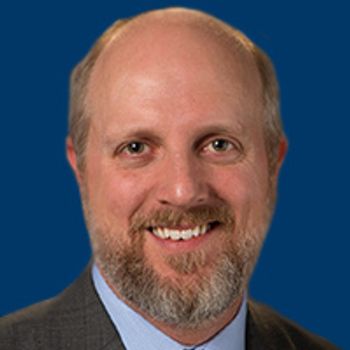
Scott Kopetz, MD, PhD, FACP, discusses the latest findings from the BEACON CRC study, the importance of testing for BRAF mutations in patients with CRC, and future directions with these agents.