
Thomas J. Polascik, MD, discusses the growing relevance of genetic testing for men with prostate cancer and those at a high risk of developing the disease.

Assistant Editor, OncLive®
Jessica joined the company in August 2019 and is one of the point contacts for the OncLive On Air™ podcast. She is a Rider University alumna and holds a degree in journalism and biology. Prior to joining MJH Life Sciences, she interned with the Ireland-based social media monitoring agency Olytico and served as a copy editor and writer for The Rider News. Email: jhergert@onclive.com
Thomas J. Polascik, MD, discusses the growing relevance of genetic testing for men with prostate cancer and those at a high risk of developing the disease.
Farrukh Awan, MD, discusses the introduction of acalabrutinib into chronic lymphocytic leukemia as well as other paradigm-shifting advances with BTK inhibitors, novel combinations, and emerging agents.
Douglas W. Blayney, MD, discusses phase II results of the combination of pegfilgrastim and plinabulin, as well as the importance of controlling chemotherapy-induced neutropenia for patients.
Richard L. Shapiro, MD, discusses the evolution and current role of surgery in advanced melanoma.
Madhuri Vusirikala, MD, discusses recent changes in the treatment paradigm of acute lymphoblastic leukemia, based on data from the 2019 ASH Annual Meeting.

Nina Shah, MD, discusses newer treatment options in the frontline and maintenance settings in multiple myeloma. 
Neil Dunavin, MD, MS, highlights criteria to consider when approaching treatment selection for patients with myelofibrosis and discussed next steps for the field.
Charalambos (Babis) Andreadis, MD, MSCE, discusses immunotherapeutic advances in MCL and DLBCL based on data from the 2019 ASH Annual Meeting.
He James Zhu, MD, PhD, discusses the role of elective nodal irradiation in breast cancer and research efforts that may answer some remaining questions with this modality.
David Polsky, MD, PhD, discusses the development and clinical utility of biomarkers in melanoma.
Denise Yardley, MD, discusses the implications of CDK4/6 inhibitors in hormone receptor-positive/HER2-negative breast cancer. 
A. Craig Lockhart, MD, MHS, discusses ongoing developments and the future of immunotherapy in colorectal cancer.
Sumanta Kumar Pal, MD, discusses novel strategies on the horizon in renal cell carcinoma.
Roy S. Herbst, MD, PhD, discusses the implication of the IMpower110 results in advanced non–small cell lung cancer.
Jonathan E. Brammer, MD, discusses the role of minimal residual disease and transplant in acute lymphoblastic leukemia, as well as the introduction of CAR T-cell therapy and other novel agents to the armamentarium.
A. Craig Lockhart, MD, MHS, discusses the current treatment landscape of pancreatic cancer and how the introduction of olaparib in the frontline maintenance setting may benefit patients.
Kaushal Parikh, MD, MBBS, reflects on pivotal lung cancer data shared at recent major oncology meetings.
Jamile M. Shammo, MD, FASCP, FACP, discusses the current treatment paradigm of myelofibrosis, criteria for ruxolitinib resistance and intolerance, and promising agents on the horizon.
Mike Cusnir, MD, discusses the evolving gastric cancer paradigm.
Ulka Vaishampayan, MD, discusses the role of frontline immunotherapy and patient selection in metastatic renal cell carcinoma. 
William G. Blum, MD, discusses the introduction of novel agents into acute myeloid leukemia treatment and how this is impacting the role of molecular testing for patients.
Michael Wang, MD, discusses the ZUMA-2 trial and the potential impact of CAR T-cell therapy on the treatment paradigm in mantle cell lymphoma.
Joseph Wynne, MD, discusses ongoing studies with blinatumomab and CAR T-cell therapy in acute lymphoblastic leukemia, as well as the importance of assessing minimal residual disease in this space.
Karl M. Kilgore, PhD, discusses how results of real-world analysis may impact the utilization of CAR T-cell therapy for older patients with relapsed/refractory diffuse large B-cell lymphoma.
Elisabeth I. Heath, MD, FACP, discusses 3 pivotal trials and how they have impacted clinical practice in nonmetastatic castration-resistant prostate cancer.
Agne Paner, MD, discusses the treatment paradigm in multiple myeloma and promising agents on the horizon.
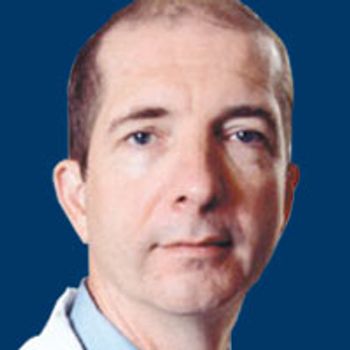
Robert J. Motzer, MD, discusses the current frontline treatment landscape of metastatic renal cell carcinoma amongst an influx of approvals.
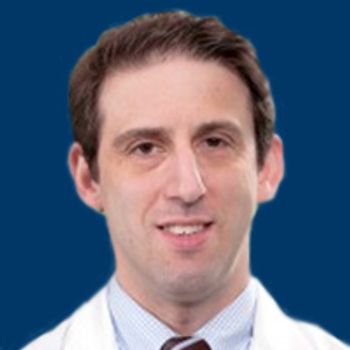
Eytan M. Stein, MD, discusses the introduction of novel agents, the relevancy of chemotherapy, and assessing minimal residual disease in acute myeloid leukemia.
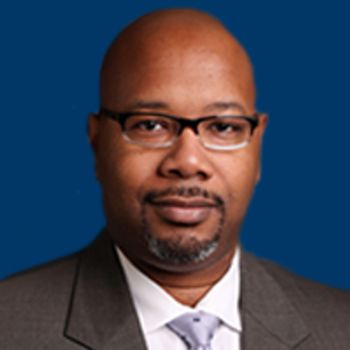
Kelvin Alexander Moses, MD, PhD, discusses relevant data and treatment decisions in metastatic hormone-sensitive prostate cancer, as well as the role of cytoreductive nephrectomy in RCC. 

In an era of personalized medicine in oncology, monoclonal antibodies, bispecific T-cell engagers, and CAR T-cell therapies are revolutionizing patient outcomes in multiple myeloma.