

Single-agent ibrutinib demonstrated an overall response rate of 91%, including a complete response rate of 14%, in patients with chronic lymphocytic leukemia or small lymphocytic lymphoma.
Single-agent ibrutinib demonstrated an overall response rate of 91%, including a complete response rate of 14%, in patients with chronic lymphocytic leukemia or small lymphocytic lymphoma.
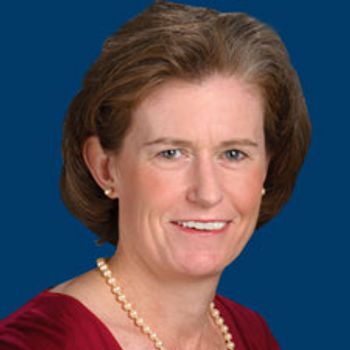
OncLive spoke with Elizabeth A. Mittendorf, MD, PhD, to learn more about the PRESENT trial and the potential impact of nelipepimut-S in breast cancer.

MM-302, a novel antibody-drug conjugate that specifically targets cancer cells overexpressing the HER2 receptor, showed signs of clinical activity in heavily pretreated patients with metastatic, HER2-positive breast cancer.

Treatment with AZD9291 at 80 mg per day elicited a response in 66% of patients with EGFR T790M-positive non–small cell lung cancer.

Brigatinib, an investigational ALK tyrosine kinase inhibitor, demonstrated significant intracranial antitumor activity in patients with ALK-positive non–small cell lung cancer and brain metastases.

Gary L. Johnson, PhD, discusses how BET bromodomain inhibitors could offer a potential solution to lapatinib resistance in patients with HER2-postive breast cancer.

M. Yair Levy, MD, discussed the impact of non-chemotherapeutic agents on the treatment of patients with NHL in an interview with OncLive.

To further understand how cytokines are used in today's landscape and what their role will be in the future, OncLive interviewed Sanjiv S. Agarwala, MD, Section Chief of Hematology/Oncology, St. Luke's Cancer Center, and professor of Medicine, Temple University.
Steven P. Treon, MD, PhD, discusses new findings from the pivotal phase II trial of ibrutinib in Waldenström's Macroglobulinemia.

One in five Medicare patients with melanoma waits more than 1.5 months after diagnosis to undergo surgery.

Sundar Jagannath, MD, discusses the latest research advances in myeloma, and how these steps will impact the future treatment paradigm for the disease.

In an interview with OncLive, James W. Fleshman Jr, MD, explained how technological advances and a growing commitment to a multidisciplinary approach have impacted the treatment of colorectal cancer.
A biomarker panel containing circulating tumor cell number and LDH level was shown to be a surrogate for overall survival in patients with metastatic castration-resistant prostate cancer.

In an interview with OncLive, Nancy E. Davidson discusses her leadership plans for the AACR, as well as precision medicine in oncology®, challenges with research funding, and the role of epigenetics in breast cancer.

Thomas Lynch, who is director of the Yale Cancer Center and physician-in-chief at the Smilow Cancer Hospital at Yale-New Haven, recently sat down with OncLive and discussed key strategies and trends in the management of lung cancer.

Patients with mantle cell lymphoma who develop ibrutinib resistance are unlikely to respond favorably to salvage chemotherapy.

In an interview with OncLive, William G. Wierda, MD, PhD, discusses the changing role of chemotherapy in the management of CLL and the integration of novel agents into clinical practice.

In an interview with OncLive, Don Dizon, MD, explains the advantages of IP therapy and why further research and education are necessary to bring it to the forefront of ovarian cancer treatment.

In an interview with OncLive, Mark D. Pegram, MD, discusses what available data suggest is the optimal use of pertuzumab for the management of HER2-positive breast cancer.

Progression on treatment with ibrutinib in patients with chronic lymphocytic leukemia was associated with pretreatment BCL6 abnormalities, acquired mutations in BTK and PLCG2, and complex karyotypes.
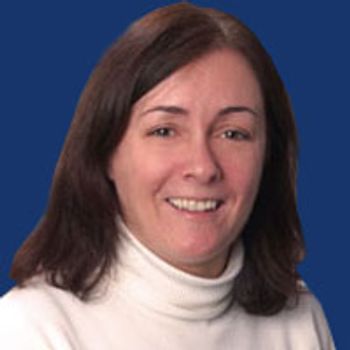
Ruth O'Regan, formally a professor of Hematology and Medical Oncology at Emory University, was recently appointed the division head of Hematology, Medical Oncology, and Palliative Care in the Department of Medicine at the University of Wisconsin School of Medicine and Public Health.

In an interview with OncLive, Randy Gascoyne, MD, explains how predictive biomarkers can help oncologists select the right therapies for their patients and why they are the critical next step to improving outcomes in NHL.

Patients with NRAS-mutated melanoma had better responses and improved treatment outcomes compared with those who did not harbor the mutation, according to a recent retrospective study.

In an interview with OncLive, Ahmad A. Tarhini, MD, PhD, discussed the benefits and challenges of ipilimumab and other immunotherapies and how they could change the adjuvant treatment paradigm for melanoma.

In an interview with OncLive, Leonard G. Gomella discusses the benefits, limitations, and considerations of sipuleucel-T for patients with prostate cancer.

OncLive spoke with Sanaz Memarzadeh, MD, on why ovarian and endometrial cancers are so challenging to treat, and what future research is needed to better understand these diseases.

OncLive interviewed Ravi Vij, MD, associate professor, Division of Oncology, Section of Bone Marrow Transplantation, Washington University School of Medicine and the Siteman Cancer Center, on what the future holds for stem cell transplantation in multiple myeloma.

Pacritinib, a JAK2/FLT3 multikinase inhibitor, significantly reduced spleen volume for patients with myeloproliferative neoplasms when compared to non-JAK2 inhibitors.
OncLive sat down with Edward Kim, MD, to learn more about the impact of recent advances in NSCLC and what the future treatment paradigm might look like.

Deanna J. Attai, MD, FACS, who interacts with her thousands of followers on Twitter, Facebook, YouTube, her blog, and other social media platforms, recently educated other physicians on what their role can be on social media.