

E. David Crawford, MD, discusses his view of the current role for PSA testing in prostate cancer and the need for continued innovation and advancement with new screening technologies.
E. David Crawford, MD, discusses his view of the current role for PSA testing in prostate cancer and the need for continued innovation and advancement with new screening technologies.

Combining nivolumab (Opdivo) with radiation therapy may provide better disease control and prolong overall survival in patients with melanoma whose disease has metastasized to the brain, compared with standard current treatment.

Jedd D. Wolchok, MD, discusses the implications of the expanded FDA approval of nivolumab, and the potential for the PD-1 inhibitor as both a single agent and as part of a combination regimen in advanced melanoma

Leonard G. Gomella, MD, discusses intermittent hormonal therapy for patients with prostate cancer as well as its benefits and challenges.

Renato Martins, MD, discusses what questions still remain regarding PD-L1 as a biomarker, sequencing, and how nivolumab and pembrolizumab compare head-to-head in non–small cell lung cancer.

Chandra P. Belani, MD, discusses the impact of clinical trials examining atezolizumab and the role of PD-L1 as a predictive and prognostic biomarker for response to the agent in non–small celll lung cancer.

Retreatment with radium-223 dichloride (Xofigo) after initial therapy and progression was determined to be safe in patients with bone-metastatic castration-resistant prostate cancer.

Mothaffar Rimawi, MD, discusses key recent data with HER2-targeted agents and the need to identify patients for whom optimal care may mean de-escalating therapy.

Phillip J. Koo, MD, discusses the benefits of radium-223 and why he thinks it is time the use of the drug becomes more widespread for the treatment of mCRPC, and potentially other cancers.

Kathryn Kolibaba, MD, discusses the significance of the PYRAMID and other studies, and how she hopes the treatment paradigm for diffuse large b-cell lymphoma will evolve in the future.

Steven Finkelstein, MD, explains why radiation and immunotherapy may be an effective combination in prostate cancer.

Yelena Y. Janjigian, MD, discusses possible causes of the negative LOGiC trial results, HER2 as a driver in esophagogastric cancer, and what the future holds for lapatinib.

John P. Leonard, MD, discusses the potential for lenalidomide, idelalisib, and ibrutinib in follicular lymphoma, possible combination therapies, and challenges that remain in the treatment of the disease.

Pamela L. Kunz, MD, discusses several recent studies that shown promise for the treatment of pancreatic neuroendocrine tumors (NETs), as well as other ongoing trials investigating the potential of immunotherapies in NETs.

Hope Rugo, MD, discusses the phase Ib KEYNOTE-028 trial and the impact of its results thus far, as well as the design, findings, and next steps for the trial.

The combination of atezolizumab (MPDL3280A) and vemurafenib (Zelboraf) yielded durable responses in patients with previously untreated BRAF V600–mutated metastatic melanoma in an ongoing phase Ib study.

Jason J. Luke, MD, discusses potential new methods for determining prognostic markers in melanoma and the challenges of balancing toxicity with efficacy in designing combination regimens.

Victoria Atkinson, MD, discusses the impact of the phase III CheckMate-066 trial and nivolumab’s future as both a monotherapy and in combination with other therapies.

Frederick Locke, MD, discusses the potential for KTE-C19 in non-Hodgkin lymphoma.

Adding brentuximab vedotin (Adcetris) to frontline R-CHOP produced a greater than 80% response rate—including complete remissions in three-fourths of patients—as a treatment for CD30+ diffuse large B-cell lymphoma.

Stephan Stilgenbauer, MD, discusses the significance of a clinical trial and the impact venetoclax could have on patients with CLL who harbor a 17p deletion.

Clifford Hudis, MD, discusses the evolving adjuvant therapy options in HER2-positive breast cancer.

Suresh Ramalingam, MD, discusses the evolving role of checkpoint inhibitors in lung cancer and what challenges still remain.

Naiyer A. Rizvi, MD, discusses results of a study looking at the combination of the anti-PD-L1 immune checkpoint inhibitor durvalumab (MEDI4736) with the anti–CTLA-4 monoclonal antibody tremelimumab in patients with advanced non–small cell lung cancer.

James Allison, PhD, discusses the rapidly expanding field of immunotherapy in melanoma.

Robert Andtbacka, MD, discusses how the role of oncolytic immunotherapies continues to evolve in melanoma and gives a better understanding of what is on the horizon for the novel therapeutics.
Not all HER2 genes are capable of causing cancer growth or spread, and thus may also fail to predict response to anticancer drugs that target the gene.

William G. Wierda, MD, PhD, gives a better understanding of the changing landscape of chronic lymphocytic leukemia and how treatment options vary among different patient subtypes.
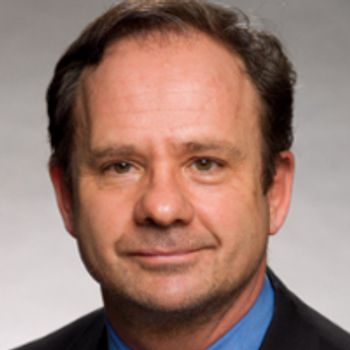
Dr. Andre Goy discusses combining novel agents with R-CHOP for the treatment of large-cell lymphoma.

Dr. Thomas Kipps discusses how challenges in CLL may be met in the future and the impact obinutuzumab, venetoclax, and other novel agents could have on CLL treatment.