Articles by Lindsay Fischer
Sandra Duncan, RN, BSN, shares her experience with the CheckMate-73L trial of ipilimumab/nivolumab in non–small cell lung cancer, efforts made to overcome communication challenges, and the importance of nurse coordinators in the realm of clinical trials.
The safety profile of daralutamide in combination with androgen-deprivation therapy was similar to placebo in patients with nonmetastatic castration-resistant prostate cancer.
Neoadjuvant treatment with cisplatin/pemetrexed plus atezolizumab, followed by maintenance atezolizumab, demonstrated early efficacy with acceptable safety in patients with resectable pleural mesothelioma.
Flexibilities in time and place were effective strategies to mitigate COVID–19-related patient concerns and to increase participation in international lung cancer clinical trials.
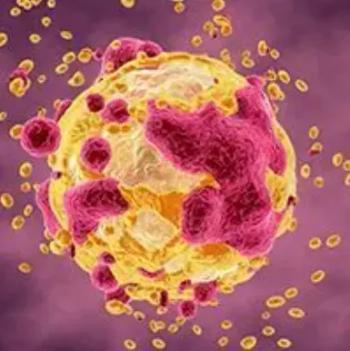
It’s imperative to stay diligent of the immune-related adverse events that patients with cancer may experience from checkpoint inhibitors and other immunotherapy agents, especially with regards to treatment continuation and keeping hospitalizations low.
Overall survival was significantly improved at 18.6 months in patients with non–small cell lung cancer who received targeted therapy compared with those who did not receive targeted therapy at 11.4 months, according to a pooled analysis of patients who received National Comprehensive Cancer Network-guided therapies in accordance with their biomarkers.
Due to the potency of CAR T-cell therapies and the associated adverse events that can to arise in patients receiving this type of treatment, oncology nurses need to be educated on how to best identify and manage these AEs.
Understanding the functionality and naming convention of biosimilars vs their biologic counterparts are important concepts to utilizing these agents in oncology, according to a presentation given by Teresa Knoop, MSN, RN, AOCN, during the 5th Annual School of Nursing Oncology Meeting.
