Articles by Nichole Tucker

In recent years, significant advances have been made regarding the treatment of patients with chronic graft-vs-host disease, with investigators developing an understanding of the pathophysiology of the disease, as well as how to integrate novel treatment modalities.

The addition of alrizomadlin to pembrolizumab yielded promising preliminary efficacy and was tolerable in patients with unresectable or metastatic melanoma or advanced solid tumors that have been resistant to immunotherapy agents.

Treatment with intra-tumoral SD-101 in combination with pembrolizumab and paclitaxel resulted in a non-statistically significant increase in estimated pathological complete response rates in patients with high-risk, HER2-negative stage II/III breast cancer across 3 HER2-negative biomarker signature groups.
Allogeneic hematopoietic cell transplantation was safe when used with a reduced-intensity conditioning regimen of bortezomib, fludarabine, and melphalan in patients with high-risk multiple myeloma.
The combination of parsaclisib and ruxolitinib has resulted in the improvement of spleen volume reduction and symptom burden in patients with myelofibrosis who have previously experienced a suboptimal response to a standard dose of single-agent ruxolitinib.

Maintenance niraparib demonstrated clinical benefit that persisted beyond first progression in patients with platinum-sensitive recurrent ovarian cancer with or without germline BRCA mutations.
February 9, 2021 - Ruxolitinib, when administered using a pediatric dosing algorithm, was found to elicit responses in patients with chronic graft-versus-host disease with acceptable safety.

January 31, 2021 - Repotrectinib, a next-generation ROS1 and TRK TKI, has demonstrated encouraging objective responses with acceptable tolerability in patients with ROS1 fusion–positive non–small cell lung cancer.

January 15, 2021 - Anlotinib, a multitarget kinase inhibitor, was found to significantly improve progression-free survival with a manageable safety profile when used in Chinese patients with refractory metastatic colorectal cancer.

December 10, 2020 - Treatment with abemaciclib in combination with endocrine therapy significantly reduced the risk of invasive disease recurrence or death in patients with hormone receptor–positive, HER2-negative, node-positive, early breast cancer who had high Ki-67 tumors, suggesting that this feature can be used in conjunction with high-risk features to select patients for abemaciclib in the adjuvant setting.

December 8, 2020 — The antibody-drug conjugate brentuximab vedotin demonstrated high response rates with durability, as well as a tolerable safety profile among older patients with comorbid classical Hodgkin lymphoma.

December 7, 2020 - Ponatinib resulted in high response rates and robust survival outcomes in patients with chronic-phase chronic myeloid leukemia who have progressed on previous treatment with a second-generation TKI.
December 6, 2020 — TTI-622, an investigational CD47 inhibitor, showed preliminary signs of clinical activity with a manageable safety profile among patients with relapsed/refractory lymphoma.
December 6, 2020 - Having a human leukocyte antigen–matching donor for allogeneic hematopoietic stem cell transplant has proven to lead to improved outcomes for patients who are between 50 and 75 years of age and have higher-risk myelodysplastic syndrome.

Oral azacitidine demonstrated sustained health-related quality of life compared with placebo in patients with acute myeloid leukemia, according to results of the phase 3 QUAZAR AML-001 trial.

Although historically considered to be undruggable, the KRAS G12C mutation has since emerged as an actionable alteration in the field of non–small cell lung cancer.
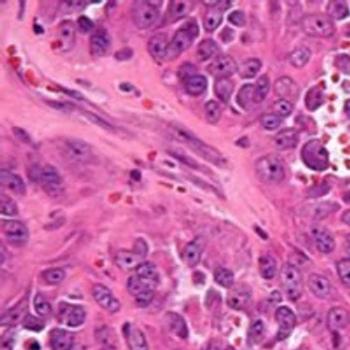
The feasibility of treatment with trabectedin in combination with durvalumab as treatment of patients with advanced or metastatic pretreated soft tissue sarcoma was demonstrated in the phase 1b TRAMUNE trial.

Potent and durable clinical activity was shown with pralsetinib as treatment of patients with RET-mutant advanced medullary thyroid cancer, regardless of the line of therapy.

Quality of life according to patient-reported outcomes was not reduced despite treatment toxicities in those with ovarian, primary peritoneal, or fallopian tube cancer treated with niraparib versus placebo in the PRIMA/ENGOT-OV26/GOG-3012 trial.

Neoadjuvant durvalumab achieved a satisfactory complete surgical resection rate in patients with resectable non–small cell lung cancer, demonstrating preliminary promise for this treatment strategy.

Although the genomic profiles of African American men with prostate cancer differ from those of European American men, new data show that the frequency of actionable mutations for which targeted therapies exist occurs at a comparable rate in both populations.

Circulating tumor DNA clearance of EGFR mutation may be predictive of prolonged progression-free survival for patients with EGFR-mutant, MET-amplified non–small cell lung cancer with detectable ctDNA at baseline.

Modest survival benefits were observed in patients with extensive-stage small cell lung cancer who received the combination of pembrolizumab and etoposide plus platinum compared with patients who received EP and placebo.

Gestational trophoblastic tumors (GTTs) that resist chemotherapy can be treated with frontline avelumab, making avelumab the first immunotherapy to show efficacy in treating patients with GTT, according to findings from a cohort of the ongoing phase 2 TROPHIMMUN trial.

Baseline clinical characteristics coupled with measurable cardiac parameters can be used to predict the risk of heart failure among adults with acute leukemia who receive anthracycline-based therapy, according to recent study findings.
Baseline clinical characteristics coupled with measurable cardiac parameters can be used to predict the risk of heart failure among adults with acute leukemia who receive anthracycline-based therapy, according to recent study findings.

Circulating tumor DNA may be a biomarker for the detection of postsurgical minimal residual disease and for determining the clonality of relapsing disease.

A cell-free DNA test demonstrated the potential to detect cancer and predict tissue of origin in patients with a suspicion of cancer, according to findings from the Circulating Cell-free Genome Atlas study presented at the 2020 AACR Virtual Annual Meeting I.

Craig Sauter, MD, discusses results of a retrospective, real-world review of patients with hematologic malignancies who developed cytopenia post-CAR T-cell therapy.

Martin T. King, MD, PhD, discusses the INTREPId trial exploring darolutamide plus radiation therapy in patients with prostate cancer.
