
Regional Cancer Care Associates LLC, one of the nation’s largest networks of oncology specialists, has appointed Iuliana Shapira, MD, its chief medical officer.
Regional Cancer Care Associates LLC, one of the nation’s largest networks of oncology specialists, has appointed Iuliana Shapira, MD, its chief medical officer.
OncLive has announced its steering committee for the first OncLive® Global Expo, which will take place Oct. 11-13, 2019, at the Orlando World Center Marriott in Orlando, Florida.
USC Norris Comprehensive Cancer Center has launched a study to determine how financial assistance for costs associated with clinical trial participation might increase enrollment, particularly among low-income patients and racial and ethnic minorities.

OncLive® is proud to announce the inductees of the 2019 Giants of Cancer Care® recognition program.
Mario M. Leitao Jr, MD, FACOG, FACS, and Dmitriy Zamarin, MD, PhD, of Memorial Sloan Kettering Cancer Center, discuss two common clinical scenarios faced in practice, and the data to support their approaches.
Rutgers Cancer Institute of New Jersey, the state’s only Comprehensive Cancer Center as recognized by the National Cancer Institute, has been awarded a $15.1 million grant as part of its successful 2019 redesignation.
Wistar’s Cancer Center became the first National Cancer Institute-designated basic cancer center in the nation in 1972 and has held this national recognition for the past 46 years.

Investigational data are associated with folate receptor alpha-targeting agents, with an emphasis on the recent development and therapeutic potential of antibody-drug conjugates for the treatment of patients with ovarian cancer.
We traveled to Houston, Texas, for a State of the Science Summit™ on Gastrointestinal Cancer, which focused on the rapidly evolving landscapes of colorectal cancer, gastric/GEJ cancer, pancreatic cancer, neuroendocrine tumors, and hepatocellular carcinoma.
The Sidney Kimmel Cancer Center – Jefferson Health recently welcomed Anjali Mishra, PhD, and Nitin Chakravarti, PhD, to a growing team of researchers focused on hematologic cancers.
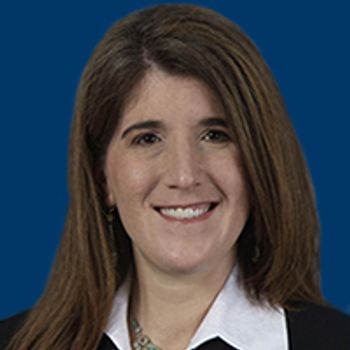
Kathleen N. Moore, MD, discusses the potential impact of antibody-drug conjugates on outcomes for patients with ovarian cancer.
City of Hope recently received $7.5 million in grant awards to study a rare type of blood cancer that affects the skin: cutaneous T cell lymphoma.
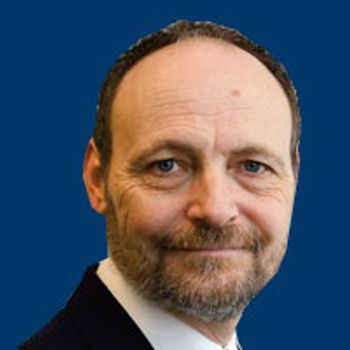
Michael Birrer, MD, PhD, discusses the evolution of folate receptor alpha-targeting agents in ovarian cancer.
Multiple agents that target folate receptor alpha have been developed and are currently under investigation for the treatment of patients with ovarian cancer.
Baylor Scott & White Health named Ronan Kelly, MBBCh, MD, MBA, chief of oncology for the organization's North Texas medical centers.
Larotrectinib showcased an overall response rate of 71% in patients with non–small cell lung cancer harboring NTRK gene fusions.
We traveled to Nashville, Tennessee, for a State of the Science Summit™ on Breast Cancer, which focused on some of the practice-changing updates that have been occurring in the field.
This year we are celebrating the 20th anniversary of our flagship publication OncologyLive. To mark the occasion, we are asking oncology leaders to reflect on the tremendous progress made in cancer research and practice over the past 2 decades.
In keeping up with the rapidly changing landscape of gastroesophageal junction cancer, we sat down with Joseph Chao, MD, to discuss a clinical scenario he faced in practice, and how he used the latest data available to inform his treatment for his patient.
A third of patients with advanced TRK fusion tumors had objective responses to the second-generation TRK inhibitor LOXO-195 after failure of initial anti-TRK therapy.
Tumor mutational burden identified patients who obtained a survival benefit with the PD-L1 inhibitor durvalumab, as initial therapy versus chemotherapy for advanced non–small cell lung cancer, even though the primary analysis of the randomized trial showed no difference between treatment groups, according to a new analysis.
A majority of patients with large triple-negative breast tumors achieved pathologic complete response when treated with the viral oncolytic talimogene laherparepvec plus neoadjuvant chemotherapy.
CAR T cells targeting mesothelin-expressing tumors demonstrated safety and efficacy in a preliminary clinical evaluation in patients with malignant pleural disease.
We traveled to Pasadena, California, for a State of the Science Summit™ on Genitourinary Malignancies, which focused on the rapidly evolving landscapes of kidney, bladder, and prostate cancer.
Ali McBride, PharmD, MS, BCOP, was named 2019-2020 President of the Association of Community Cancer Centers during its 45th Annual Meeting and Cancer Center Business Summit on March 22, 2019, in Washington, D.C.
We traveled to NewYork City, New York, for a State of the Science Summit™ on Breast Cancer, which focused on the latest updates in the rapidly evolving paradigms of triple-negative breast cancer, HER2-positive breast cancer, hormone receptor-positive, HER2-negative disease, and more.
We sat down with Marwan Fakih, MD, a professor in the Department of Medical Oncology and Therapeutics Research, associate director for Clinical Investigations at the Comprehensive Cancer Center, to discuss a clinical scenario he faced in practice, and how he used the latest data available to inform his treatment for his patient.
The National Cancer Institute (NCI) has designated NYU Langone Health’s Laura and Isaac Perlmutter Cancer Center as a Comprehensive Cancer Center, the highest rank awarded by the NCI. Perlmutter joins an elite group of 50 cancer centers across the country that have earned this distinction.
We traveled to Boston, Massachusetts, for a State of the Science Summit™ on Ovarian Cancer and Soft Tissue Sarcoma, which focused on the facets of genetic testing in ovarian cancer, surgical options available for patients with newly diagnosed disease, and emerging strategies for the treatment of patients with uterine sarcomas, among other key topics.
The standards for reporting findings from immunotherapy studies should reflect the unique efficacy and toxicity characteristics of this rapidily emerging modality, with detailed and transparent explanations of definitions.