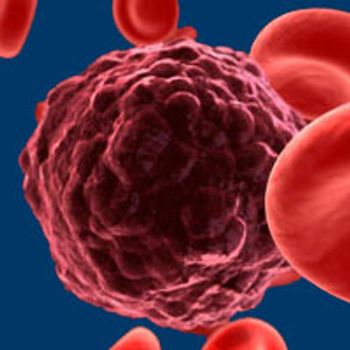
Despite the significant progress that has been made regarding the incidence, risk factors, and symptoms of hairy cell leukemia, diagnosis remains a challenge, due in part to the low incidence of the disease.
Despite the significant progress that has been made regarding the incidence, risk factors, and symptoms of hairy cell leukemia, diagnosis remains a challenge, due in part to the low incidence of the disease.

New findings may lead to novel immunotherapies against third-deadliest cancer.
Martin S. Tallman, MD, discusses the biology, presentation, and available therapeutic options in hairy cell leukemia.
The pathogenesis, diagnostic criteria, staging, and prognosis of hairy cell leukemia, an uncommon indolent B-cell lymphoid neoplasm, is examined.

Hairy cell leukemia is a rare malignancy for which treatment has progressed significantly in recent years.
For patients with chronic lymphocytic leukemia, including those with high-risk disease, the availability of novel targeted therapies and monoclonal antibodies offers an increased potential for improved outcomes.
There have been updates in chronic lymphocytic leukemia prevalence and diagnosis, with an emphasis on testing options.
In December 2018, pivotal trial data were presented at the ASH Annual Meeting that demonstrated promising results for the first-line treatment of patients with chronic lymphocytic leukemia (CLL) or small lymphocytic leukemia. In particular, new courses of CLL care in several patient populations emerged from the findings of 3 trials.
Jennifer Woyach, MD, discusses the current treatment spectrum of chronic lymphocytic leukemia and the significance of the ALLIANCE trial.
Matthew S. Davids, MD, MMSc, characterizes the significance of the ALLIANCE, ECOG E1912, and iLLUMINATE trials within the broader treatment spectrum for chronic lymphocytic leukemia.
We traveled to Boston, Massachusetts, for a State of the Science Summit™ on Hematologic Malignancies, which featured insights from the faculty from Dana-Farber Cancer Institute.
We traveled to Dallas, Texas, for a State of the Science Summit™ on Breast Cancer, where faculty relayed the prognostic value of genomic assays in breast cancer and the scope of established and ensuing treatment approaches for those with early-stage and advanced disease.
Among the most highly anticipated study results to be presented during the 2019 European Hematology Association Congress were those of the phase III ASCEND trial, which investigated the use of acalabrutinib monotherapy in patients with previously-treated chronic lymphocytic leukemia.
We recently traveled to Charlotte, North Carolina, for a State of the Science Summit™ on Gastrointestinal Cancers, which featured expert insight on treatment approaches across metastatic colorectal cancer, locally advanced and metastatic pancreatic cancer, advanced hepatocellular carcinoma, neuroendocrine tumors, and advanced gastric cancer.

The CDK4/6 inhibitor palbociclib exhibited preliminary activity in patients with acral lentiginous melanoma associated with CDK-pathway aberrations, according to results of a small phase II trial that were reported at the 2019 ASCO Annual Meeting.
Neoadjuvant treatment with the oncolytic immunotherapeutic agent talimogene laherparepvec (T-VEC; Imlygic) led to significant improvement in 1-year recurrence-free survival for patients with resectable advanced melanoma compared with surgery alone.
Five years out, one-third of patients with unresectable or metastatic BRAF V600-mutant melanoma remained alive following treatment with dual targeted therapy with dabrafenib (Tafinlar) plus trametinib (Mekinist), and 1 in 5 remained alive without progression.
Simultaneous targeting of Bruton’s tyrosine kinase and the CD20 antigen led to overall responses in more than 90% of patients with chronic lymphocytic leukemia, including untreated and relapsed/refractory disease.
A chemotherapy-free doublet for platinum-sensitive recurrent ovarian cancer more than doubled progression-free survival as compared with single-agent PARP inhibitor.
Patients with non–small cell lung cancer and baseline liver metastases had improved progression-free survival and overall survival with the addition of immunotherapy to bevacizumab and a chemotherapy doublet.
We traveled to New York City, New York, for a State of the Science Summit™ on Ovarian Cancer, where faculty shared their insight on the various surgical and medical treatment modalities in advanced ovarian cancer, as well as investigational interventions that may further define standards of care.
Gary D. Steinberg, MD, a nationally recognized specialist in the surgical management of bladder cancer, has been named director of the Goldstein Urology Bladder Cancer Program at NYU Langone Health.
We traveled to Durham, North Caroline, for a State of the Science Summit™ on Gastrointestinal Malignancies, where faculty shared key updates from the 2019 Gastrointestinal Symposium.
The University of Texas MD Anderson Cancer Center named David Jaffray, PhD, as its first-ever chief technology and digital officer.
We traveled to Chicago, Illinois, for a State of the Science Summit™ on Breast Cancer, where faculty provided a comprehensive look into present and potentially future standards of care in early-stage and advanced breast cancer subtypes.
Richard Bold, MD, chief of the Division of Surgical Oncology, has been named Physician-in-Chief of the UC Davis Comprehensive Cancer Center.

In 2018, primary care physicians faced many of the same challenges as oncologists, according to the 90th Annual Physician Report from Medical Economics.
We traveled to Washington, D.C., for a State of the Science Summit™ on Gastrointestinal Cancer, which focused on the clinically diverse and steadily expanding therapeutic armamentariums for patients with gastrointestinal malignancies.
We traveled to Kansas City, Missouri, for a State of the Science Summit™ on Hematologic Malignancies, which provided a comprehensive snapshot of the pivotal data that were presented at the 2018 ASH Annual Meeting.
The new online lung cancer screening (LCS) guide from the American Lung Association and the American Thoracic Society sets a clear pathway for physicians to surveil patients and provide follow-up from many institutions across the United States.