
Stephen V. Liu, MD, discusses the 5-year overall survival data with atezolizumab and chemotherapy in patients with extensive-stage small cell lung cancer.
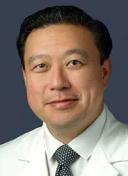
Stephen Liu, MD, is an associate professor of medicine at Georgetown University, as well as the director of Thoracic Oncology and head of Developmental Therapeutics at the Georgetown Lombardi Comprehensive Cancer Center in Washington, DC.
Stephen V. Liu, MD, discusses the 5-year overall survival data with atezolizumab and chemotherapy in patients with extensive-stage small cell lung cancer.
Stephen V. Liu, MD, discusses the importance of next-generation sequencing in non–small cell lung cancer, and details trials that have continued to move this treatment arena forward.
Stephen V. Liu, MD, discusses efforts to develop atezolizumab-based combination therapies for patients with small cell lung cancer.
Closing out their discussion on the treatment paradigm of advanced NSCLC, key opinion leaders review emerging targets and ongoing clinical trials.
Shared insight on the CheckMate 9LA trial, which combined dual IO therapy with chemotherapy in the setting of advanced non–small cell lung cancer.
Expert perspectives on the CheckMate 227 clinical trial, which combined ipilimumab and nivolumab IO therapy in patients with advanced NSCLC.
A brief discussion on when it is appropriate to discontinue chemoimmunotherapy in patients with advanced non–small cell lung cancer.
Shifting their focus to chemoimmunotherapy combinations in advanced NSCLC, experts review clinical trial data from KEYNOTE-189, IMpower150, and EMPOWER-Lung 3.
Shared insight on the optimal selection and use of single-agent immunotherapy guided by the testing and expression of PD-L1.
A brief review of AEs seen with immunotherapy in advanced non–small cell lung cancer followed by advice on how to nuance safety data in this setting.
Ben Levy, Mark Socinski, and Stephen Liu describe the current treatment options for patients with NTRK+ NSCLC. They also summarize recent clinical data for agents that target NTRK.
Mark Socinski and Stephen Liu describe the current treatment options for patients with RET+ NSCLC. They also summarize recent clinical data for agents that target RET.
Ben Levy, Mark Socinski, and Stephen Liu explain the role of a RET alteration in NSCLC and its value as a targetable biomarker.
Ben Levy, Mark Socinski, and Stephen Liu describe the current treatment options for patients with ROS1+ NSCLC. They also summarize recent clinical data for agents that target ROS1.
Ben Levy, Mark Socinski, and Stephen Liu explain the role of a ROS1 alteration in NSCLC and its value as a targetable biomarker.
Ben Levy, Mark Socinski, and Stephen Liu describe the current treatment options for patients with ALK+ NSCLC. They also summarize recent clinical data for ALK inhibitors.
Ben Levy, Mark Socinski, and Stephen Liu explain the role of an ALK alteration in NSCLC and its value as a targetable biomarker.
Ben Levy, Mark Socinski, and Stephen Liu explain the various types of genetic alterations and protein expressions that are targetable in NSCLC and the crucial role of comprehensive genetic testing at the time of diagnosis and at the time of disease progression.
An increased understanding of driver gene alterations in advanced non–small cell lung cancer (NSCLC) has led to the development of targeted therapies that offer improved patient outcomes. Ben Levy, MD; Mark A. Socinski, MD; and Stephen Liu, MD, share their thoughts on the emerging treatment landscape and remaining unmet needs.
Stephen Liu, MD, discusses the rationale for the ongoing phase 1/2 ARROW trial in RET fusion–positive non–small cell lung cancer.
Stephen Liu, MD, discusses common NRG1 fusion partners in patients with non–small cell lung cancer.
Stephen Liu, MD, discusses the rationale for examining afatinib in patients with non–small cell lung cancer harboring NRG1 fusions.
Stephen Liu, MD, discusses emerging research on antibody–drug conjugate in non–small cell lung cancer that were presented during the 2020 World Conference on Lung Cancer.