Articles by Vamsidhar Velcheti, MD
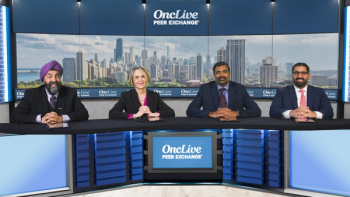
Panelists discuss how medical professionals envision the future of early-stage non–small cell lung cancer (NSCLC) treatment evolving through the integration of novel therapies, predictive biomarkers, and personalized strategies to address current gaps in care, emphasizing the need for continued research to optimize outcomes and tailor interventions in resectable disease.
Panelists discuss how targeted therapy with osimertinib has revolutionized treatment approaches for unresectable early-stage non–small cell lung cancer (NSCLC) patients with EGFR mutations, offering new hope for a previously underserved patient population.
Panelists discuss how PD-L1 expression levels significantly impact treatment decisions in unresectable early-stage non–small cell lung cancer (NSCLC), with consensus that biomarker status should be evaluated before finalizing treatment approaches.
Panelists discuss how advanced radiotherapy techniques, including stereotactic body radiation therapy (SBRT), combined with immunotherapy, have emerged as preferred treatment approaches for unresectable early-stage non–small cell lung cancer (NSCLC).
Panelists discuss how the diagnostic workup for unresectable stage III non–small cell lung cancer (NSCLC) requires comprehensive staging including imaging studies (PET-CT, brain MRI), tissue sampling through bronchoscopy or endobronchial ultrasound (EBUS), molecular and biomarker testing, and multidisciplinary evaluation to guide optimal treatment planning.
Panelists discuss how to treat patients who do not achieve a pathological complete response or major pathological response after neoadjuvant chemoimmunotherapy, considering options such as adjuvant therapy, close surveillance, or clinical trial enrollment based on individual risk factors and disease characteristics.
Panelists discuss how circulating tumor DNA could serve as a potential marker for minimal residual disease (MRD) in this setting, offering a noninvasive and sensitive method for monitoring treatment response and detecting relapse.
Panelists discuss how medical professionals are integrating targeted therapies, such as those for EGFR, ALK, and other mutations like RET and ROS1, into the treatment of resectable early-stage non–small cell lung cancer (NSCLC), with a focus on incorporating the ADAURA and ALINA regimens into clinical practice.
Panelists discuss how medical professionals identify patients who should receive neoadjuvant immune checkpoint inhibitors (ICI) before surgery based on tumor characteristics, patient health, and treatment response, and how factors such as surgical outcomes, recurrence risk, and molecular markers guide decisions on the need for additional adjuvant therapy post surgery.
Panelists discuss how the latest efficacy and safety data from AEGEAN, CheckMate 816, CheckMate 77T, and KEYNOTE-671, along with recent approvals in early-stage non–small cell lung cancer (NSCLC) treatment, are shaping optimized treatment approaches and influencing clinical practice.
Panelists discuss how a multidisciplinary team—including oncologists, thoracic surgeons, radiologists, and pathologists—collaborates to streamline the diagnostic process for patients with resectable non–small cell lung cancer (NSCLC), ensuring timely evaluation, accurate staging, and personalized treatment planning.
Panelists discuss how a multidisciplinary team (MDT) approach to resectable non–small cell lung cancer (NSCLC) involves an initial diagnostic workup with imaging (CT, PET-CT), histologic confirmation via biopsy, staging with mediastinal assessment (endobronchial ultrasound or mediastinoscopy), and timely molecular testing (eg, EGFR, ALK, PD-L1) integrated early in the process to guide perioperative treatment decisions.
Panelists discuss how a multidisciplinary approach enhances the early diagnosis of non–small cell lung cancer (NSCLC) by integrating insights from oncology, radiology, pathology, and surgery.
Panelists discuss how comprehensive biomarker testing in early-stage disease settings provides crucial molecular insights that guide surgical planning and inform critical decisions about neoadjuvant, perioperative, and adjuvant treatment strategies.
Panelists discuss how collaboration between pathologists, oncologists, and pulmonologists is essential for timely next-generation sequencing (NGS) testing in early-stage non–small cell lung cancer (NSCLC), emphasizing that molecular testing should ideally be ordered at diagnosis with prioritization of EGFR, ALK, ROS1, BRAF, MET, KRAS, RET, and NTRK biomarkers to guide treatment decisions before surgical intervention.
Panelists discuss how medical professionals frequently encounter tissue adequacy challenges in comprehensive genomic profiling for early-stage non–small cell lung cancer (NSCLC), employing strategies such as optimized biopsy techniques, efficient tissue triage protocols, and complementary liquid biopsies to ensure sufficient material for complete molecular analysis.
Panelists discuss how medical professionals currently approach molecular testing in early-stage non–small cell lung cancer (NSCLC) through comprehensive biomarker analysis, including targeted next-generation sequencing (NGS), to identify actionable mutations that guide adjuvant therapy decisions and improve patient outcomes.
Vamsidhar Velcheti, MD, discusses the significance of the FDA approval of the ROS1 TKI repotrectinib in patients with ROS1-positive metastatic non–small cell lung cancer.

Vamsidhar Velcheti, MD, discusses the evaluation of immunotherapy combination regimens for patients with metastatic non–small cell lung cancer.

Closing their discussion, the panel shares where they think the NSCLC treatment landscape will be in the future, and what to look forward to.
The panel explains their approaches to treating patients with mutated NSCLC with immunotherapy.

Dr Johnson reviews data from the ARC-7 trial investigating an anti-PD-L1 plus anti-TGIT combination treatment for advanced NSCLC.
Drs Peters and Velcheti provide an overview of the role of anti-TGIT immunotherapies in NSCLC treatment.
Solange Peters, MD, explains the currently available treatment options for patients with advanced NSCLC after progression on immunotherapy.
Melissa Johnson, MD, explains the design and outcomes of the multi-arm POSEIDON study, which featured a combination of 4 agents for the treatment of advanced NSCLC.
Key opinion leaders discuss data from the EMPOWER-Lung-3 study investigating the use of cemiplimab plus chemotherapy in both squamous and non-squamous NSCLC.
Dr Velcheti reviews data on the chemoimmunotherapy treatment of squamous NSCLC from the KEYNOTE-407 study.
Dr Vamsidhar Velcheti explains the 4-year data updates to the CheckMate 227 trial, which investigated PD-L1 monotherapy plus chemotherapy for advanced NSCLC.
Drs Peters and Johnson discuss recent updates in the treatment of advanced NSCLC with single- and dual-agent immunotherapy regimens.
Dr Melissa Johnson and Dr Myung-Ju Ahn emphasize the importance of a multidisciplinary approach to treatment and biomarker testing for patients with early-stage NSCLC.


