






Breast Cancer
Latest News
Advertisement
Latest Videos






































































Advertisement
More News

Erica L. Mayer, MD, MPH, discusses primary efficacy outcomes for giredestrant in the phase 3 evERA trial in ER-positive, HER2-negative advanced breast cancer.

Sacituzumab govitecan reduced the risk for disease progression or death by 38% vs chemotherapy in previously untreated, locally advanced, unresectable or metastatic triple-negative breast cancer.

Gedatolisib plus fulvestrant, with or without palbociclib, improved PFS in pretreated, HR-positive, HER2-negative, PIK3CA wild-type advanced breast cancer.

Sac-TMT bested chemotherapy in terms of PFS in previously treated HR+, HER2– metastatic breast cancer.
Giredestrant plus everolimus improved progression-free survival in ER-positive, HER2-negative advanced breast cancer after a prior CDK4/6 inhibitor.

Adjuvant Ribociclib Plus AI Therapy Has Long-Term Activity in HR+, HER2-Negative Early Breast Cancer
Adjuvant ribociclib plus an aromatase inhibitor was safe and displayed long-term efficacy in hormone receptor–positive, HER2-negative early breast cancer.

The addition of adjuvant abemaciclib to endocrine therapy provided an OS benefit vs endocrine therapy alone in hormone receptor–positive breast cancer.

Preview the top lung, breast, GI, GU, gynecologic, and hematologic oncology abstracts and topics ahead of the 2025 ESMO Congress.

The top 5 OncLive TV videos of the week cover insights in uterine leiomyosarcoma, myelofibrosis, polycythemia vera, breast cancer, and multiple myeloma.

The FDA approved adjuvant cemiplimab in cutaneous squamous cell carcinoma, issued a CRL to dasatinib in chronic myeloid leukemia, and more.

Alexis LeVee, MD, discusses the clinical implications of the ASCENT-04 trial data for patients with TNBC who relapse following prior PD-1 or PD-L1 therapy.

Dato-DXd displayed topline survival benefits in patients with recurrent/metastatic TNBC who could not receive immunotherapy.

Breast cancer experts vote on their most anticipated abstracts on social media ahead of the 2025 ESMO Congress.
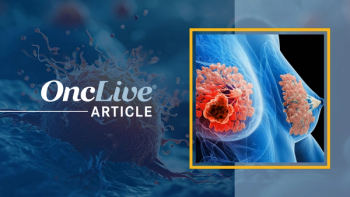
Paxalisib plus pembrolizumab and chemotherapy led to an 86% reduction in tumor burden in a patient with metastatic triple-negative breast cancer.
Here is your guide to all therapeutic options that were approved by the FDA in September 2025 spanning tumor types.

Panelists discuss how the rapidly evolving breast cancer treatment landscape includes promising developments in oral selective estrogen receptor degraders (SERDs), CDK4/6 inhibitor sequencing strategies, and antibody-drug conjugates (ADCs), with new targeted therapies and bispecifics continuing to emerge.

Alexis LeVee, MD, discusses how clinical trial design guides the practical application of data for ADC selection in breast cancer.

Here is your snapshot of all oncologic therapeutic options that were approved by the EMA in September 2025.
Panelists discuss how treatment decisions between antibody-drug conjugates (ADCs) and continued endocrine-based therapies in HER2-low disease depend on endocrine sensitivity, with ADCs reserved for endocrine-refractory tumors or primary endocrine-resistant cases with short initial response durations.
Panelists discuss how the ASCENT-04 trial findings establish sacituzumab govitecan (SG)plus pembrolizumab as an active standard-of-care combination for triple-negative breast cancer, with considerations needed for patients with prior immunotherapy exposure.

ETX-636, a selective PI3Kα inhibitor, has received FDA fast track designation for PIK3CA-mutant, HR-positive, HER2-negative advanced breast cancer.
The FDA accepted an sBLA seeking the approval of neoadjuvant T-DXd followed by THP for the management of high-risk, HER2-positive breast cancer.
Panelists discuss how DESTINY-Breast09 data support trastuzumab deruxtecan (T-DXd) plus pertuzumab in frontline HER2-positive disease for select patients with extensive disease or brain metastases while emphasizing individualized treatment decisions to avoid overtreatment.
Panelists discuss how prior adjuvant CDK4/6 inhibitor exposure complicates metastatic treatment decisions, with limited data supporting rechallenge strategies and the need for more targeted therapies such as CDK2- or CDK4-specific inhibitors.
The FDA approved Enoby and Xtrenbo, denosumab biosimilars referencing Prolia and Xgeva, respectively.
Advertisement
Advertisement
Trending on OncLive
1
FDA Approves Tucatinib Plus Trastuzumab/Pertuzumab as First-Line Maintenance in Advanced HER2+ Breast Cancer
2
VIR-5500 Receives FDA Fast Track Designation in mCRPC
3
Iberdomide Plus Daratumumab/Dexamethasone Yields Significant PFS Benefit in R/R Myeloma
4
FDA Approves Atezolizumab Plus Chemo for Stage III dMMR Colon Cancer
5